
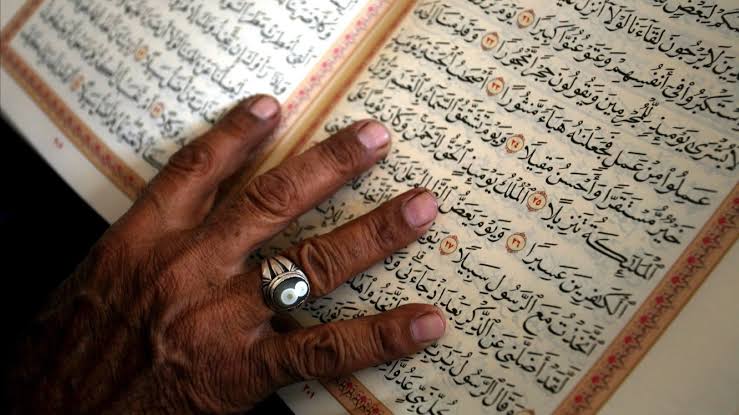
The Muslim lunar year turned to 1448 AH on Tuesday, June 16, 2026, after Saudi Arabia’s Supreme Court confirmed the sighting of the crescent moon, and with it Muslims across Nigeria and the wider world have entered Muharram, the first of the four sacred months in Islam.
By the Hijri reckoning, Friday, June 19, 2026, falls on Muharram 4, 1448 AH, placing believers in the early days of a month that carries unusual spiritual weight. The Supreme Court confirmed Tuesday, June 16, 2026, as the first day of Muharram 1448 AH, marking the start of the Islamic New Year.
Muharram is one of four months the Qur’an sets apart as sacred, alongside Dhul-Qa’dah, Dhul-Hijjah and Rajab. The Qur’an records the divine ordinance in Chapter 9, verse 36: “Verily, the number of months with Allah is twelve months… of them, four are sacred.” Within these months, scholars hold that wrongdoing carries heavier consequence and righteous acts greater reward, and Muslims are urged to withdraw from sin and multiply good deeds.
What sets Muharram apart from the other sacred months is Ashura, the tenth day, on which fasting is strongly encouraged. This year Ashura is expected to fall on Thursday, June 25, 2026. Because the Islamic lunar calendar depends on local moon sightings, the exact date may shift by a day in some regions.
The fast carries deep historical roots. The Prophet Muhammad and his companions observed it in Makkah before the hijrah, and on reaching Madinah he found the Jewish community fasting to mark the day Allah delivered Prophet Musa and the Children of Israel from Pharaoh. As recorded in Bukhari, the Prophet declared, “We have more of a right to Musa than you,” and directed the Muslims to fast. To distinguish their practice, believers are advised to fast both the ninth and tenth, with the Prophet noting in a report by Muslim that the Ashura fast expiates the sins of the preceding year.
The Ashura story remains a study in steadfastness. The Qur’an in Chapter 79 recounts how Pharaoh transgressed all bounds, declared himself a god, and met punishment, while Musa, cornered between Pharaoh’s army and the Red Sea, trusted that “Truly my Lord is with me, He will guide me through.” The sea parted, the Israelites crossed, and the pursuing army drowned. Musa’s staff, a humble shepherd’s tool, became throughout his mission an instrument of divine signs, from the serpent before Pharaoh to the twelve springs struck from rock.
This year’s observance arrives on the heels of an intense Hajj season that underscored the scale of Nigerian devotion. By the close of outbound operations on May 21, 2026, the National Hajj Commission of Nigeria reported that 98 flights had airlifted 38,888 pilgrims, with about 39,000 pilgrims under the government quota. NAHCON Chairman Ismail Abba Yusuf said the 2026 Hajj achieved notable successes despite the challenges of managing more than 1.7 million pilgrims in a limited area.
For many Muslims, the convergence of Ashura with a Thursday brings added meaning, since the Prophet preferred that his deeds be reported to Allah while fasting. As 1448 AH opens, the month’s enduring message holds firm: that patience through trial precedes deliverance.