
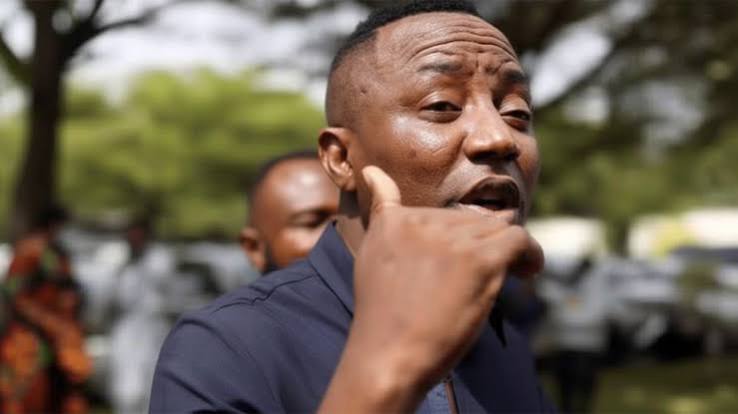
A fresh legal challenge has emerged over the bench warrant issued against activist and African Action Congress presidential candidate Omoyele Sowore, with human rights lawyer Aloy Ejimakor urging the Federal High Court in Abuja to set aside the order on grounds that it breached the constitutional guarantee of fair hearing.
Ejimakor, in a statement issued Wednesday titled “Why the Bench Warrant Against Omoyele Sowore Must Be Vacated,” argued that the circumstances surrounding the revocation of Sowore’s bail “exemplifies how judicial discretion, when exercised without due regard for constitutional safeguards and equity, can undermine the rule of law.”
The dispute stems from proceedings before Justice Mohammed Umar. Justice Umar revoked Sowore’s bail and ordered a bench warrant following the defendant’s failure to appear for a scheduled proceeding on June 16, 2026. The judge ordered that Sowore be remanded at the Kuje Correctional Centre and brought before the court on the next adjourned date of June 22, 2026, for ruling on his recusal application.
Ejimakor contended that the chain of events began with the judge’s own absence. He recalled that Sowore appeared on June 15 for a ruling on his recusal application, but the judge did not sit. The matter could not proceed as scheduled due to the absence of the judge, who later directed the court registrar to inform parties to return on June 16.
According to the lawyer, Sowore informed the court registrar of his travel to Lagos and submitted a formal letter requesting dates in July. “Despite this, the court arbitrarily listed the matter for the very next day, June 16. Sowore, already in Lagos, could not attend, whereupon the Judge summarily revoked his bail and issued a bench warrant against him,” Ejimakor said. He maintained that bail revocation and bench warrants “are not automatic consequences of non-appearance,” requiring proof of deliberate default and proper notice.
The prosecution had framed the matter differently. The prosecution opposed the adjournment application, arguing that no sufficient reason was provided for the absence, and described Sowore’s absence as “delay tactics.” Justice Umar acknowledged that although Sowore had sent a letter seeking an adjournment, he did not state any reason in the letter.
The underlying trial centres on a two-count cybercrime charge. Sowore is facing two cybercrime charges over posts on Facebook and X in August 2025 calling President Bola Tinubu “a criminal,” with the prosecution alleging the posts were intended to cause a breakdown of law and order and damage the president’s reputation. In May, Justice Umar dismissed Sowore’s no-case submission, ruling that the prosecution had established a prima facie case and directing him to open his defence. Sowore thereafter accused the judge of bias and applied for his recusal.
The matter carries a political charge. The AAC has condemned the development as part of what it called “the broader campaign of political persecution being executed by the Bola Tinubu regime against dissenting voices.” Sowore, a serial detainee since his 2019 arrest over the “RevolutionNow” protests, has repeatedly framed his prosecutions as efforts to bar him from the 2027 presidential race. The June 22 ruling is now expected to test whether the court treats Ejimakor’s fair-hearing objections as grounds to reverse course.