
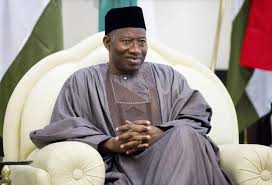
Former President Goodluck Jonathan has issued a stinging indictment of Nigeria’s political culture, declaring that the country stands alone in Africa as a nation where thuggery has evolved into a recognised and rewarding profession, warning that the trend poses a direct threat to democratic governance.
Jonathan made the remarks on Wednesday at the opening ceremony of the Nigerian Bar Association Law Week in Abuja, where he joined other senior legal and political voices in calling for sweeping reforms to Nigeria’s electoral and judicial systems ahead of the 2027 general elections.
“Nigeria is the only country where thuggery is a profession in Africa,” Jonathan said. “Some thugs, when they are travelling out of this country, fly first class, while university professors struggle to manage to buy economy tickets. So when we have a country where the thugs fly first class and the university professor flies economy, that country is like a cone turned upside down.”
The former president, who has been granted a waiver to contest the 2027 presidential election by the Tanimu Turaki-led Peoples Democratic Party, pressed for elections in which political violence plays no part, insisting that credible outcomes must reflect the genuine will of voters.
Jonathan also raised alarm over Nigeria’s persistently low voter turnout, describing it as the poorest on the African continent despite the country’s status as the continent’s most populous nation. He cited Senegal’s recent election as proof that credible polls require institutional commitment rather than sophisticated technology.
On electoral litigation, Jonathan challenged the culture of routine court challenges following every election cycle, drawing a sharp contrast with South Africa where, he recounted, a senior official was genuinely puzzled by the concept of post-election court action.
“In Nigeria, not going to court is strange,” he said, arguing that some litigants pursue cases not on merit but in the belief that judicial processes could be manipulated to reverse electoral outcomes. He proposed the establishment of a constitutional court or a single dedicated tribunal to streamline electoral dispute resolution.
Jonathan equally stressed the need for full independence of the Independent National Electoral Commission, warning that public confidence in democracy rests entirely on the credibility of electoral outcomes.
“Once citizens lose confidence in the electoral process, democracy itself becomes endangered. Electoral integrity is, therefore, not negotiable,” he stated.
Former Attorney General of the Federation Mohammed Adoke (SAN), also addressing the event, condemned the excessive monetisation of Nigeria’s political process, arguing that steep nomination fees were being deliberately deployed to exclude credible candidates. He also criticised the growing use of consensus arrangements within political parties, describing the practice as replacing genuine democratic participation with what he termed the coronation of candidates.
Nigerian Bar Association President Afam Osigwe (SAN) raised concern over the increasing judicialisation of democratic outcomes, warning that 27 years after Nigeria’s return to civil rule, the persistence of electoral violence and manipulation remained deeply troubling.
“Despite the provisions of Section 1 of the constitution that no person shall take power in Nigeria except through the democratic process, people through violence, thuggery and other forms of rigging and electoral manipulations come to power in Nigeria,” Osigwe stated.
Both Adoke and Osigwe commended Jonathan’s peaceful concession of the 2015 presidential election as a benchmark of democratic statesmanship.