
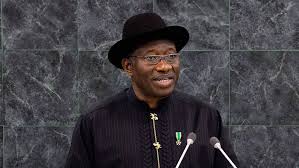
More than a decade after leaving office, former President Goodluck Jonathan is once again at the centre of Nigeria’s presidential conversation, with growing reports that he may seek a return to power under the Peoples Democratic Party platform ahead of the 2027 general elections.
The reports have triggered widespread debate across Nigeria’s political space, with party stakeholders, support groups, analysts, and ordinary citizens reacting to the possibility of a dramatic political comeback by one of Nigeria’s most internationally recognised former leaders.
According to reports circulating within political circles, consultations involving senior political figures, regional stakeholders, and influential supporters have intensified in recent weeks. Several political organisations are already said to be working behind the scenes to build support for Jonathan ahead of anticipated PDP primaries, including the Coalition for Jonathan, the Goodies Movement, and the Northern Coalition for Goodluck Jonathan. Some of these groups have reportedly begun fundraising efforts aimed at purchasing the PDP presidential nomination form on his behalf.
Jonathan served as Nigeria’s president from 2010 to 2015. He succeeded the late President Umaru Musa Yar’Adua following his death in office and later won the 2011 presidential election outright before losing to former President Muhammadu Buhari in the landmark 2015 contest. His peaceful acceptance of that electoral defeat earned widespread local and international praise and remains widely regarded as a defining moment for Nigerian democracy.
Although Jonathan has not made any official declaration, he stated during recent public engagements that presidential politics requires extensive consultation and careful consideration before any final decision. He reportedly noted that national leadership demands broad consultation with stakeholders across regions and sectors, suggesting that no hasty decision would be taken.
His possible entry into the race carries significant implications. Political observers believe a Jonathan candidacy could reshape the opposition landscape within a PDP that has struggled to regain political dominance since losing power in 2015. Some analysts argue his candidacy could help unite competing factions within the party, though others warn it could further divide an already crowded opposition field featuring former Vice President Atiku Abubakar and former Anambra Governor Peter Obi, both of whom remain active political forces.
Questions surrounding Jonathan’s constitutional eligibility have also resurfaced. Legal and constitutional analysts continue to debate whether his initial period completing Yar’Adua’s tenure bars him from a fresh presidential bid under Nigeria’s two term limit provisions. His supporters argue he only won one full presidential election in 2011 and therefore remains constitutionally eligible, while opponents warn the matter could generate serious legal and political controversy. Reports indicate Jonathan may seek formal legal clarification on the eligibility question should pressure around the issue intensify.
Public reaction across Nigeria has remained deeply divided. While some Nigerians believe the country needs experienced leadership to navigate worsening economic conditions, others argue that the 2027 election should prioritise younger candidates with fresh governance ideas.
For the PDP, Jonathan’s potential return presents both opportunity and risk. His candidacy could revive the party’s national appeal or deepen existing internal rivalries at a critical time when opposition unity is already under significant pressure.
As speculation continues to dominate political conversations nationwide, all eyes remain fixed on whether the former president will formally step forward and reshape Nigeria’s most anticipated presidential race in years.