
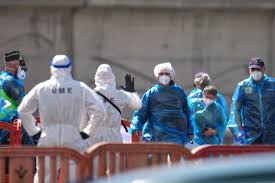
An American citizen evacuated from a hantavirus-affected cruise ship in the Canary Islands has tested mildly positive for the virus, United States health authorities announced on Sunday.
The US Department of Health and Human Services confirmed that “one passenger currently has mild symptoms and another passenger tested mildly PCR positive for the Andes virus.”
According to the department, both passengers are traveling in the plane’s biocontainment units “out of an abundance of caution” as part of the repatriation operation involving 17 American citizens.
The evacuees were aboard the MV Hondius, a cruise ship that had made a stop in the Spanish Canary Islands before the outbreak was detected. The vessel became the center of international health concern after passengers began showing symptoms of the rare disease.
The US passengers are being taken to a specialized medical facility in the rural state of Nebraska, while the person showing mild symptoms will be transferred to a second specialized center for observation and care.
Upon arrival, health officials said “each person will undergo clinical assessment and receive appropriate care and support based on their condition.”
The outbreak has already claimed three lives among passengers aboard the MV Hondius, while several others have fallen sick with the disease. Hantavirus is a rare illness that typically spreads among rodents and can occasionally be transmitted to humans through contact with infected rodent urine, droppings, or saliva, according to global health data.
The virus is not commonly transmitted between humans, though certain strains, including the Andes virus identified in this outbreak, have been known to spread through close human contact in rare cases. Symptoms can range from mild fever and muscle aches to severe respiratory complications depending on the strain and individual health factors.
The repatriation operation reflects heightened international health vigilance following lessons learned from previous disease outbreaks aboard cruise ships. Health officials across multiple countries have been coordinating responses since the MV Hondius outbreak was first detected.
US health authorities have not disclosed further details about the identities or conditions of the affected passengers, citing patient privacy regulations. However, officials emphasized that all evacuees would receive comprehensive monitoring and treatment at specialized facilities equipped to handle infectious disease cases.
The incident has raised fresh questions about disease surveillance and response protocols aboard international cruise vessels, particularly regarding rare zoonotic diseases that can cross from animals to humans.
Global health agencies continue to monitor the situation as authorities work to trace potential exposure points and assess broader public health implications from the outbreak.
AFP