
Obi Pledges Education, Health, Industrial Reforms In Fresh 2027 Agenda
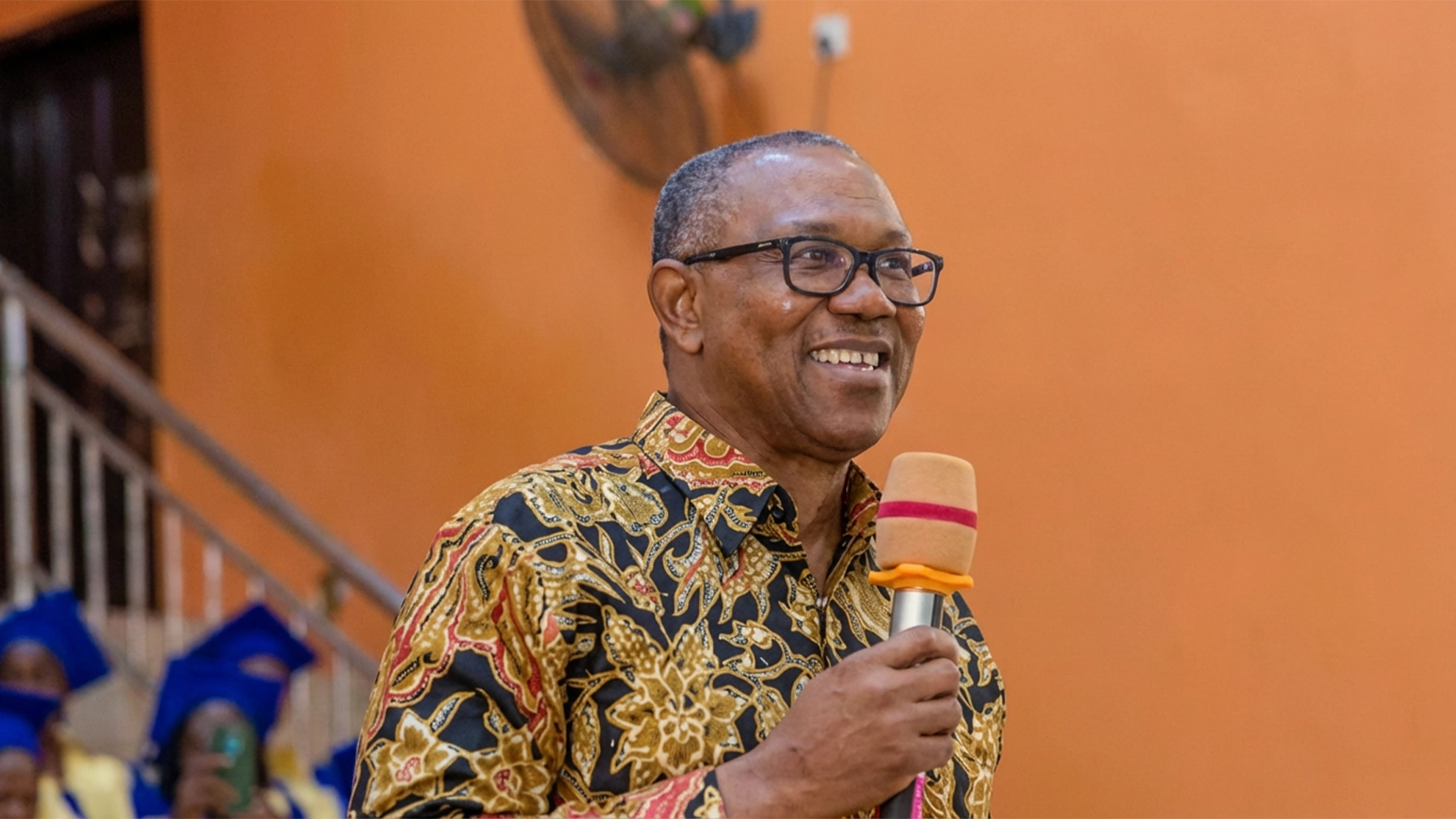
Peter Obi, presidential candidate of the Nigeria Democratic Congress for the 2027 election, has laid out a governance blueprint built around education, healthcare, and mass industrialisation, promising to place human capital development at the centre of any administration he leads.
In a statement issued on Wednesday to mark the new month, Obi framed his ambition as a mission to steer Nigeria “on the path of unity and national transformation,” anchored on “unity, inclusion, social justice, equity, and the freedom of every citizen to pursue lawful dreams.”
The former Anambra State governor said education and healthcare would take priority because of their role in building human capital. “Robust human capital is indispensable infrastructure for national progress,” he stated, adding that it underpins “daily life, economic expansion, and the delivery of essential public services.”
Obi pledged that one of his first actions would be setting up a task force to cut the number of out-of-school children “drastically.” The pledge speaks to a well documented crisis. UNICEF estimates that about 10.2 million Nigerian children of primary school age are out of school, rising to roughly 18.3 million when junior secondary pupils are counted, one of the highest figures globally. Save the Children put the broader tally of children and adolescents without access to formal or digital learning at more than 28 million in January 2026.
He also promised to expand Technical and Vocational Education and Training to drive industrialisation “anchored on our agricultural endowments and value addition across value chains organised around industrial parks” spread across the geopolitical zones. Obi said partnerships among government, the private sector, and “faith based educators” would fund and equip TVET institutions, creating apprenticeship pathways “similar to the German dual education system.”
He argued that the country could no longer tolerate a situation where “unemployment remains high while Nigerian entrepreneurs establish businesses elsewhere because skilled labour is scarce.” Character and civic education, he said, would also feature to promote “trust, responsible leadership and shared national values.” He closed with his familiar refrain, “A New Nigeria is Possible.”
The agenda revives themes that powered Obi’s 2023 campaign, when he finished third with 6.1 million votes behind President Bola Tinubu of the All Progressives Congress and Atiku Abubakar, then of the Peoples Democratic Party. His “Obidient” movement drew heavily on younger, urban voters, and he won in Lagos and the Federal Capital Territory.
The 2027 race is shaping into a rematch. Tinubu is expected to seek re election on the APC platform, while Atiku is now the candidate of the African Democratic Congress. Obi emerged as the NDC’s sole presidential aspirant in May 2026 after leaving the ADC, and named former Kano State governor Rabiu Kwankwaso as his running mate, a pairing that unites his southern base with Kwankwaso’s northern network.
The blueprint arrives against legal uncertainty for his platform. A Federal High Court on June 26, 2026, ordered the Independent National Electoral Commission to cancel the NDC’s registration, with Justice Mohammed Umar holding that the party had not met constitutional and statutory registration requirements. Neither INEC nor the NDC had formally reacted at the time of the ruling, and it remains unclear whether the party will appeal.