
$1.25bn: World Bank Anchors Six Year Reform Deal With Nigeria
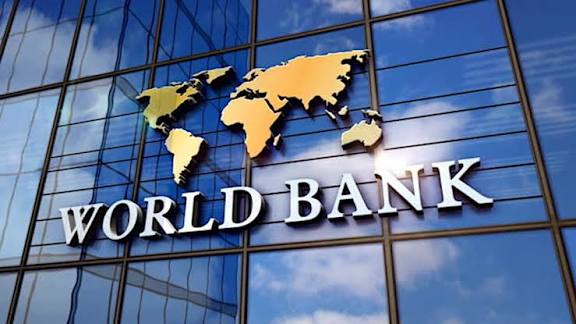
Nigeria has secured a fresh $1.25 billion financing package from the World Bank, aimed at deepening ongoing economic reforms, drawing private investment and accelerating job creation across Africa’s largest economy.
The World Bank announced the approval on Wednesday, July 1, 2026, describing the facility as the anchor of its new Country Partnership Framework for Nigeria covering 2026 to 2032. The money is being channelled through the Nigeria Actions for Investment and Jobs Acceleration programme, a Development Policy Financing operation designed to reward reforms rather than fund recurrent spending.
At the Central Bank’s prevailing rate of about N1,400 to the dollar, the loan translates to roughly N2.1 trillion. It ranks as the second largest single World Bank facility secured under President Bola Tinubu, coming after the $1.5 billion Reforms for Economic Stabilisation to Enable Transformation financing approved in June 2024.
According to the Bank, the programme will support reforms in capital markets, digital economy regulation, power sector expansion, trade liberalisation under the ECOWAS and AfCFTA frameworks, agricultural input systems and domestic revenue mobilisation. It said the six year strategy is expected to expand electricity access to 32 million Nigerians, provide broadband connectivity for 58 million people, improve health and nutrition services for 40 million citizens and support about 9.5 million farmers.
The World Bank Country Director for Nigeria, Mr. Mathew Verghis, said the framework builds on recent macroeconomic gains, including stronger growth, improved public revenues, higher foreign reserves and renewed investor confidence. He, however, cautioned that sustaining momentum would be critical. “The recent macroeconomic gains have been critical to help stabilise the economy. Translating improved macroeconomic conditions into better living standards will require addressing the structural constraints to spur private sector investment and job creation,” he said.
Verghis added that the framework “supports Nigeria’s ambition to create more and better jobs by unlocking private investment and expanding opportunities for millions of Nigerians.” The Bank confirmed that its private sector arms, the International Finance Corporation and the Multilateral Investment Guarantee Agency, would play central roles in mobilising private capital, with MIGA expanding guarantees and political risk insurance to ease investor exposure.
The approval, however, lands against a backdrop of unease over Nigeria’s debt trajectory. Debt Management Office figures put the country’s total public debt at N159.28 trillion, or about $110.97 billion, as of December 2025, up from N144.67 trillion a year earlier. In the days before the announcement, many Nigerians questioned the country’s growing reliance on external borrowing and demanded transparency on how earlier World Bank loans were spent. The Bank maintained that the new facility finances reforms that strengthen the foundations of growth rather than routine expenditure.
The concerns echo a longer pattern. SERAP and other civil society groups have repeatedly challenged public spending decisions, while debt servicing continues to consume a heavy share of federal revenue. Still, the International Monetary Fund has projected that Nigeria’s debt to GDP ratio could ease to 32.3 percent in 2026, down from 35.5 percent in 2025, a level that remains below the widely cited 60 percent threshold.
Whether the reforms tied to the loan translate into the promised jobs and services will likely shape public debate through the life of the framework, particularly as households continue to grapple with elevated living costs.