
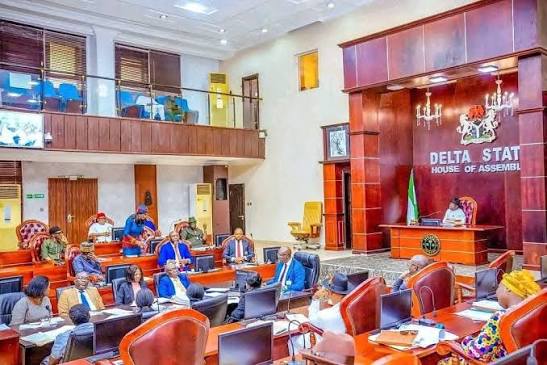
The Delta State House of Assembly has stood firm on its decision to declare the Udu State Constituency seat vacant, insisting the move followed the letter of the 1999 Constitution and rejecting claims that the lawmaker was removed without a fair hearing.
The Assembly declared the seat vacant on Tuesday, June 30, 2026, after the member representing Udu, Collins Egbetamah, resigned from the All Progressives Congress and defected to the Nigeria Democratic Congress. The motion was moved by the Leader of the House, Emeka Nwaobi, seconded by Deputy Speaker Arthur Akpowowo, and presided over by Speaker Emomotimi Dennis Guwor. The Speaker had earlier read Egbetamah’s resignation letter dated June 19, 2026, in which the lawmaker said he left the APC on April 30, 2026.
Reacting through the Chief Press Secretary to the Speaker, Nkem Nwaeke, in a statement issued on Wednesday, the Assembly said its resolution rested on documentary evidence and complied with Sections 109(1)(g) and 109(2) of the Constitution. Section 109(1)(g) provides that a lawmaker elected on a party platform must vacate the seat on joining another party before the end of the tenure, except where there is a division in the sponsoring party.
The Speaker’s office maintained that the Constitution empowers the Speaker to declare a seat vacant once the conditions are met, and that “the Constitution does not require a judicial determination or a legislative hearing before the Speaker gives effect to Section 109(2) once the factual condition is met and no constitutional exception is established.” It said the directive to notify the Independent National Electoral Commission was to enable a by-election under Section 116(2), stressing that any aggrieved party “remains free” to seek judicial redress.
The defence followed condemnation from the Delta NDC and former Deputy President of the Senate, Ovie Omo-Agege, who is the party’s 2027 candidate for Delta Central. Omo-Agege described the removal as “hasty, arbitrary, oppressive, and illegal,” arguing that Section 109(1)(g) “admits of no exception” in the Assembly’s reading, and that the question of whether the defection arose from a party division “was never examined in any legislative hearing.” He recalled that a similar attempt to unseat him as Delta Central senator was defeated in court, urging the judiciary to act swiftly if approached.
The standoff mirrors a wider national pattern. The “division” exception in Sections 68 and 109 has become one of the most litigated clauses in Nigeria’s Fourth Republic, most prominently in Rivers State, where the defection of 27 lawmakers from the Peoples Democratic Party to the APC triggered prolonged litigation over whether they had forfeited their seats. Legal scholars note that courts have often treated the exception cautiously, a stance critics say has emboldened cross-carpeting since 1999.
The timing is also significant. The Udu matter unfolds against a fresh wave of realignments ahead of the 2027 elections, including the reported movement of 17 House of Representatives members to the NDC and the entry of figures such as Peter Obi and Rabiu Kwankwaso into the opposition fold. Delta itself became an APC state after Governor Sheriff Oborevwori and much of the political establishment left the PDP.
With the Assembly refusing to reverse itself and the NDC vowing to fight on, the dispute now appears headed for the courts, where the meaning of a genuine party “division” is likely to be tested once more.