
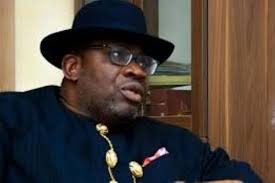
Confidence within Nigeria’s fractured opposition found a loud voice over the weekend as Senator Seriake Dickson, National Leader of the Nigeria Democratic Congress (NDC), declared that President Bola Tinubu and the ruling All Progressives Congress (APC) would suffer a heavy defeat in the 2027 general elections, provided the contest is conducted without interference.
Speaking on Channels Television’s Sunday Politics, Dickson said widespread dissatisfaction with the APC-led administration would translate into electoral defeat for the ruling party. “As leader of the NDC, and as a Nigerian who knows the feelings and yearnings of Nigerians, and who also knows that their aspirations have not been met, we believe that the APC government, the APC as a party, not just the President, will be defeated massively,” he said.
The former Bayelsa State governor anchored his prediction on one firm condition: an open democratic space. “Allow every party that wants to contest. You can only defeat them in an electoral contest. So, let us have a free and fair election,” he added.
His optimism comes at a turbulent moment for the NDC, the platform on which former Anambra State governor Peter Obi is pursuing his presidential ambition. On Friday, June 26, 2026, a Federal High Court in Lokoja, Kogi State, reversed its earlier judgment that had directed the Independent National Electoral Commission (INEC) to register the party, sparking uproar barely months to the polls. The party has since described the ruling by Justice Isah Dashen as legally untenable and announced that it had commenced an appeal at the Court of Appeal.
Dickson dismissed the suit seeking the party’s deregistration as “frivolous” and politically motivated, maintaining that the NDC complied with all legal requirements during registration and that its candidates would appear on the ballot. The party’s national chairman, Senator Moses Cleopas, has stated that the Lokoja ruling neither ordered deregistration nor invalidated the nominations of Obi and his running mate, former Kano governor Rabiu Kwankwaso.
The numbers from the last contest explain why the APC remains formidable. President Tinubu, Atiku Abubakar and Obi were the main contenders in the 2023 presidential election, which Tinubu won with more than eight million votes, while Obi and Atiku each received over six million votes.
The opposition’s central problem is fragmentation. Since 2025, the opposition has united under the African Democratic Congress (ADC), but internal disputes, legal challenges, and defections to the NDC have weakened efforts to present a united front against the ruling APC. Atiku emerged as the ADC’s presidential flag bearer, while Obi left the ADC following internal disputes to become the NDC’s candidate.
That split frames Dickson’s careful tone on alliances. “As an opposition leader, our party, the NDC, will be open to conversations within that space,” he said, while hoping any coalition would rally behind NDC candidates. He admitted the outcome of such talks was unpredictable. “Whether there will be an agreement, I don’t know. We will try. Where it will lead, I don’t know, but all those are options that remain open,” he stated.
With the registration appeal pending and coalition arithmetic unsettled, Dickson’s forecast rests on a democratic process whose fairness, by his own framing, is yet to be guaranteed.