


FG Establishes 112 As Unified National Emergency Lifeline
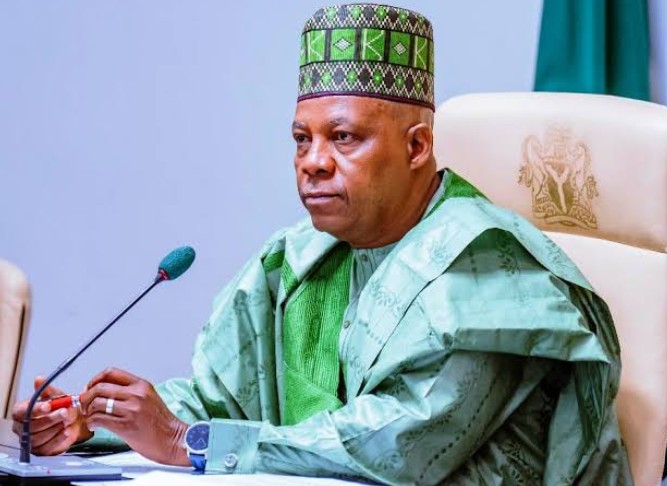
Nigeria is dismantling its fragmented emergency response systems in favour of a single communications framework. The federal government has resolved to roll out 112 as the sole national emergency telephone number across all tiers of government. Vice President Kashim Shettima finalized the operational roadmap during a high-level briefing with the Nigerian Communications Commission at the Presidential Villa. The institutional pivot aims to eliminate bureaucratic bottlenecks that routinely delay rescue operations during natural disasters, violent crimes, and medical crises.
The directive follows an explicit endorsement by the National Economic Council to unify emergency management. Under the new arrangement, the Office of the Vice President and the communications regulator will jointly lead a multi-agency implementation committee. This body will synchronise response protocols across federal agencies and the thirty-six states. Abuja insists that providing a singular, trusted number is a baseline requirement for a functioning state. Citizens confronting immediate trauma should not have to choose between a dozen competing institutional digits.
The immediate challenge shifts from digital infrastructure to subnational administrative compliance. The communications commission has already built thirty-five Emergency Communications Centres across the federation to anchor the network. However, these facilities cannot save lives without local operational funding and maintenance from state governors. Regional leaders must fully integrate their local ambulance networks and fire services into the central switchboard. If a governor fails to maintain local center hardware, the entire national loop breaks.
Institutional compliance among first responders remains equally critical to preventing systemic failure. The state requires total operational buy-in from the Nigeria Police Force and the National Emergency Management Agency. Historically, public distress calls frequently terminate in administrative voids due to poor inter-agency coordination. If a distress call regarding an active robbery reaches an emergency hub but fails to alert local patrol teams, the infrastructure becomes useless. First responders must adopt strict, uniform operating procedures to guarantee rapid field deployment.
Financing the nationwide expansion requires an unconventional mix of public and private capital. The Vice President confirmed that the state will mobilise the required funds through the National Economic Council alongside corporate contributions. This financial model seeks to ensure the long-term survival of the centers beyond short-term fiscal cycles. By outsourcing aspects of infrastructure maintenance to private partners, the government hopes to avoid the decay that typically ruins public utilities.
Nigeria is trying to close a dangerous gap in its domestic security architecture. While the 112 number existed previously in select urban centres, it lacked formal institutional backing and widespread public trust. The current administration wants to convert this technical asset into a reliable public utility. Success depends entirely on whether state governors match Abuja’s policy directives with real local funding. Until the entire chain of action moves fast enough to rescue an accident victim on a rural highway, 112 remains a half-measure.