

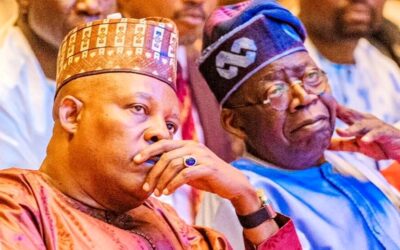
Audit Bill Delay: Atiku Hands Tinubu Seven-Day Deadline

Former Vice President Atiku Abubakar has drawn a sharp line under a legislative delay that has quietly stretched into its fifth month, giving President Bola Tinubu seven days to either sign the Federal Audit Service Bill into law, formally tell the National Assembly why he is withholding assent, or step down from office.
The demand, contained in a statement issued on Friday in Abuja by his Senior Special Assistant on Public Communication, Phrank Shaibu, casts the delay not as an administrative oversight but as a breach of constitutional duty. Atiku, now the presidential candidate of the African Democratic Congress, argued that the president had run well past the window the law allows him to act.
At the centre of his case is Section 58(4) of the 1999 Constitution (as amended), which provides that where a bill is presented to the president, he shall within thirty days signify assent or withhold it. “That provision is neither decorative nor discretionary. It is a constitutional command. The framers of our Constitution never envisaged a President who would simply sit on legislation indefinitely while governance drifts without certainty or accountability,” Atiku said. Where assent is withheld, Section 58(5) allows the National Assembly to override the president with a two-thirds majority in both chambers, though that route has rarely been travelled in Nigeria’s democratic history.
The bill itself is not a minor piece of housekeeping. It is designed to modernise Nigeria’s audit architecture, strengthen the independence of the Office of the Auditor-General for the Federation, set firmer timelines for the submission of government financial records, and give auditors the standing to sanction officials who ignore audit queries. Reports indicate the National Assembly transmitted the legislation to the presidency nearly five months ago, and civil society groups have since pressed lawmakers to consider overriding the hold.
Atiku tied the delay to a wider argument about institutional discipline. “Every major scandal begins with a smaller act of institutional neglect. It begins when constitutional provisions are treated as optional, when oversight institutions are weakened and when those entrusted with enforcing the law become comfortable operating outside its clear boundaries,” he said. He warned that treating one constitutional obligation as optional inevitably weakens respect for every other safeguard, describing the Constitution as “one indivisible covenant.”
The timing sharpens the political edge of his intervention. The call arrives amid the controversy over the Presidential Foreign Intervention Promotion Council, an entity the presidency has dismissed as non-existent even as questions persist over how it reportedly appeared in the 2026 Appropriation Act and secured recruitment approvals. It also follows reports linking the administration to N8.8tn in expenditure flagged as unaccounted, a figure that has intensified public focus on how federal spending is tracked and audited. Atiku argued that these episodes underline precisely why an empowered audit office matters, saying delay on such legislation “sends the wrong signal at a time when Nigerians are demanding stronger institutions and greater accountability in public finance.”
He framed the choice before the president in stark terms. “The same constitution that confers enormous powers on the president also places clear obligations upon him. Executive authority is not a licence for constitutional indifference. A president who expects citizens to obey the law must himself be the foremost example of obedience to the constitution,” he said.
As of the time of filing, the presidency had not responded to Atiku’s latest comments.