
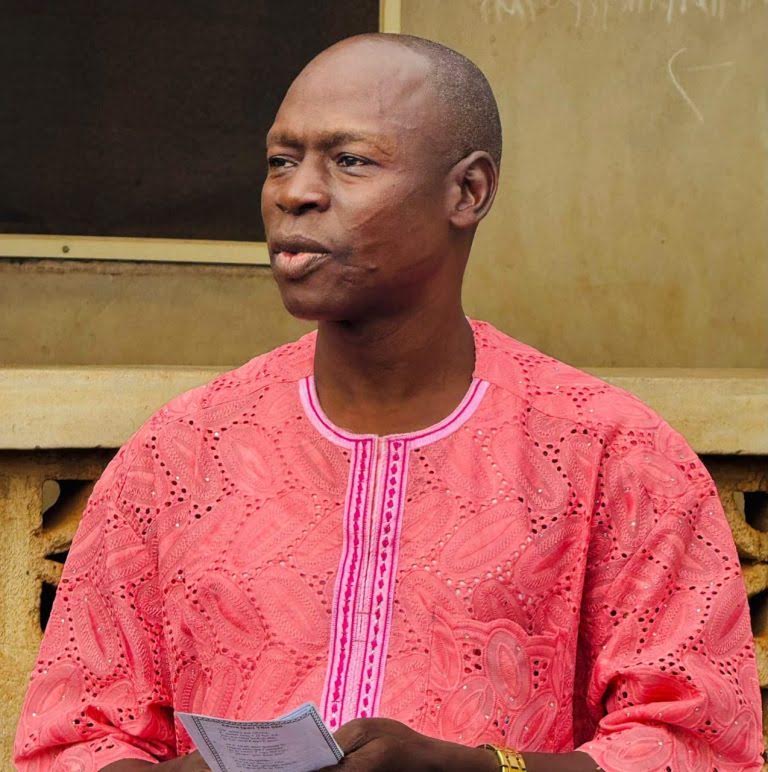
Barely 72 hours after Nigeria exhaled over the rescue of dozens of pupils and teachers held for almost two months in Oyo State, the same fear crept back into the state’s rural belt. This time the target was a lone schoolmaster returning from his farm.
Mathew Kolawole Owoade, the 60 year old headmaster of Nomadic Basic School, Igbojaye, in Itesiwaju Local Government Area, is now safe. Popularly called “Onaiye” in his community, the veteran educator and farmer regained his freedom on the evening of Monday, July 13, 2026, roughly two days after gunmen seized him along the Igbojaye to Budo Aare bush road. The Oyo State Police Command confirmed the release in a statement signed by its spokesperson, DSP Olayinka Ayanlade, saying the abductors abandoned their captive under the weight of sustained security pressure.
“Following the immediate deployment of a coordinated joint security operation and sustained investigative efforts by the command, the intense operational pressure mounted on the abductors forced the hoodlums to abandon the victim, who regained his freedom on the evening of July 13, 2026,” the statement read. The police said Owoade was taken to a medical facility for evaluation and would be debriefed as investigators work to identify and prosecute those responsible.
The account of how freedom came is not entirely settled. While the police attributed the release to operational pressure, separate reports quoting members of the family said a ransom changed hands. According to those accounts, the kidnappers first demanded N30 million, later agreed to N3 million after pleas from the family, then raised the figure to N5 million, which was said to have been paid before Owoade was let go near the Ajebamidele community. The police statement made no mention of any payment, and the divergence between the official and family narratives remains unresolved.
What is not in dispute is the timeline of alarm. The Nigeria Union of Teachers in Itesiwaju first raised the alert through its state leadership, in a notice jointly signed by the state NUT chairman, Comrade Hassan Ajibola Fatai, and secretary, Comrade Salami Olukayode. The victim’s son, Abiola Owoade, said the family was contacted through his father’s own phone line, and a search party recovered the headmaster’s abandoned motorcycle in nearby bush on Sunday morning, deepening fears before the release.
The Commissioner of Police in Oyo State, Olugbenga Abimbola, thanked sister security agencies, community members and residents for their cooperation, and restated the command’s pledge to deny criminals any safe haven in the state.
The Owoade abduction landed at a raw moment. On July 10, 2026, the presidency announced that all the pupils and teachers snatched from three schools in Oriire Local Government Area on May 15 had finally been rescued after 56 days in captivity. Gunmen, some in military fatigues and riding motorcycles, had stormed Baptist Nursery and Primary School in Yawota, Community Grammar School and L.A. Primary School in Ahoro-Esiele communities near Ogbomoso, seizing pupils as young as two alongside their teachers.
The figures released by officials varied between 44 and 49 victims, with 39 pupils and seven teachers among those confirmed. The episode turned tragic when one teacher was killed during the raid and another, Michael Oyedokun, was reportedly killed in captivity, a development that triggered nationwide outrage, protests by teachers in Ogbomoso and an indefinite NUT strike. The Nigerian Army said the rescue, executed with the Office of the National Security Adviser, the DSS, other services and local Amotekun operatives and hunters, freed the captives without ransom, arrested eight suspects and neutralised several attackers linked to a terror cell.
The two Oyo cases, days apart, feed into a national crisis that has hardened into an industry. Geopolitical research firm SBM Intelligence, in its 2025 study on the economics of Nigeria’s kidnap trade, documented 4,722 people abducted across 997 incidents between July 2024 and June 2025, with at least 762 killed. Kidnappers demanded roughly N48 billion in that window and collected about N2.57 billion, a sum the firm noted had climbed more than 750 per cent in two years even as the naira value of ransoms lagged behind currency devaluation.
The concentration remains northern. SBM placed the North West at the epicentre, accounting for more than 62 per cent of victims, with the South West recording the lowest share at around 3 per cent of victims. The National Bureau of Statistics, in its Crime Experience and Security Perception Survey, earlier estimated that households paid about N2.23 trillion in ransom between May 2023 and April 2024, a staggering measure of how deeply the fear has embedded itself in everyday Nigerian life.
For the people of Itesiwaju and Oriire, those national numbers are no longer abstractions. Within one week, their corner of the South West, long considered relatively safe, absorbed both a mass school abduction and a fresh solo kidnap. Owoade is home. The larger question of whether Oyo’s classrooms and farm roads are truly secure is the one that lingers.