

No Funds Left Treasury For Non Existent Council, Says Accountant General
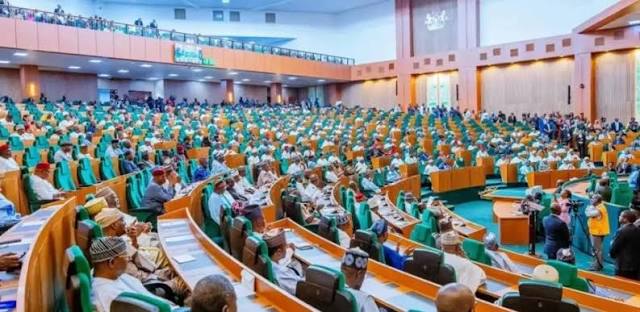
The House of Representatives probe into the disputed Presidential Foreign Investment Promotion Council took a decisive turn on Monday when the Accountant General of the Federation, Shamseldeen Ogunjimi, told lawmakers that a forged State House letter was used to secure official recognition for an agency the Federal Government insists never legally existed.
Appearing before the ad hoc committee chaired by Yusuf Gagdi, who represents the Kanke, Kanam and Pankshin Federal Constituency of Plateau State, Ogunjimi said his office acted on what looked like genuine presidential correspondence, only for investigators to later establish that the document did not come from the presidency. “The letter that was received by the Treasury was respectfully addressed as coming from the State House. That letter was never issued by the State House,” he said.
By his account, the office first dealt with the purported council in November 2024. He said a letter dated November 7, 2024, bearing a State House reference number, requested the creation of an administrative code for the Presidential Economic Advisory Council to ease budgeting, accounting and financial reporting. His office, he explained, processed the request in line with standard procedure, created the code, and copied its approval to the Office of the Auditor General for the Federation.
Fresh demands followed, he said, including applications for self accounting status, deployment of personnel, the opening of a Treasury Single Account and domiciliary accounts, and funding approvals. Ogunjimi stressed, however, that no money left government coffers. “It is important to note that no funds were released under salaries, overhead, capital, or any form of intervention or special allocation to the council,” he told the committee. He added that a request for an establishment grant of 27.4 billion naira was rejected because no budgetary provision existed for it.
The Central Bank of Nigeria opened two domiciliary accounts for the body, but Ogunjimi said they never became operational because the council failed to meet regulatory activation conditions. On staffing, he told lawmakers that two officers posted to the Office of the Chief Economic Adviser in 2010 and 2013 quietly remained after the office was allegedly taken over, without any formal notice to the treasury. A later request for five additional officers was only partly granted. “It was when all this matter came to light that I got to know that two of our staff were actually working or being absorbed by the agency. We never knew,” he said.
The testimony deepened an inquiry that has already laid bare the scale of the alleged fraud. The committee says it has traced about 29 suspected forged documents, among them counterfeit approvals attributed to the State House and the Office of the Head of the Civil Service of the Federation. Investigators allege the council secured accommodation inside the Federal Secretariat in Abuja, sought approval to recruit about 300 staff, planned a World Investment Summit, and had more than 1.32 billion naira captured for it in the 2026 Appropriation Act, with some accounts putting the attempted insertion at 1.3 billion dollars.
Suspicion hardened last week when a police witness, asked whether signatures on documents credited to the Office of the Chief of Staff matched authentic records, replied that “they are not the same.” The Nigeria Police Force has confirmed that conspiracy and fraud charges have been filed against the self acclaimed director general, Adeyemi Adeniyi, at the Federal High Court. Adeniyi is reported to have claimed he paid 400 million naira through an intermediary to secure the appointment, an allegation that remains unproven.
Earlier witnesses before the panel included the Head of the Civil Service, Didi Walson Jack, the CBN Director of Banking Services, Abdullahi Hamisu, and the Director General of the Budget Office, Tanimu Yakubu. On Monday, the committee ordered the Inspector General of Police, Olatunji Disu, to produce Adeniyi by noon on Wednesday. It is expected to close its work with recommendations on possible administrative, legislative and criminal action.