
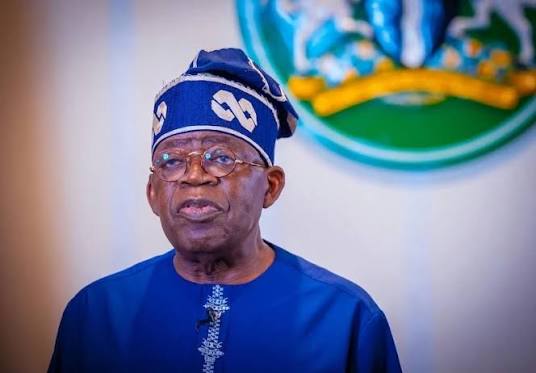
A sharp exchange over how public money should be spent has pitched President Bola Tinubu against a section of civil society, after the President faulted governors for building flyovers and a youth group swiftly turned the same charge back on him over the Lagos to Calabar Coastal Highway.
The row traces to Thursday, July 30, 2026, when Tinubu received traditional rulers from Oyo State, led by the Olubadan of Ibadanland, Oba Rashidi Ladoja, at the State House in Abuja. The monarchs had come to congratulate him on the rescue of schoolchildren and teachers abducted in Oriire Local Government Area, freed after 56 days in captivity. Using the visit, the President urged governors to stop erecting flyovers in areas with little traffic and to invest instead in road networks that ease movement and help security agencies reach remote communities.
“They are taking four to five times their money. Nobody is borrowing money to pay salaries now,” Tinubu said, pointing to the rise in state revenues since fuel subsidy removal in May 2023. Records from the Federation Account Allocation Committee show the three tiers of government shared at least N53.3 trillion between March 2023 and May 2026.
The Young Advocates for Good Governance, Ondo State chapter, read the remarks differently. In a statement, the group asked Tinubu to “look inward” before advising governors, and described the coastal highway as a misplaced priority given the condition of existing federal roads. It praised Ondo Governor Lucky Aiyedatiwa for the 2.38 kilometre Oba Adesida flyover approved in Akure to ease the congested Alagbaka to FUTA corridor.
At the centre of the dispute is a project five decades in the making. The Lagos to Calabar Coastal Highway is designed to run about 700 kilometres across nine states, from Lagos through Ogun, Ondo, Edo, Delta, Bayelsa, Rivers and Akwa Ibom to Cross River. Construction began in March 2024 under a build and finance arrangement that lets the contractor, Hitech Construction Company Limited, raise much of the funding while the Federal Government provides counterpart sums. The first 47.47 kilometre section in Lagos was opened to traffic in December 2025, and the Minister of Works, Dave Umahi, has said more than 70 percent of the wider project is done.
The cost figures are where scrutiny sharpens. Umahi has put contracts already procured at over N3 trillion, with Section One awarded at N1.068 trillion, Section Two at N1.6 trillion, and the Akwa Ibom and Cross River segments jointly at N1.33 trillion. The group cited a wider N15 trillion estimate for the full corridor, a figure long in circulation. Analysts, including at BusinessDay, have flagged that the contract went to Hitech without open competitive bidding. The group went further, alleging the firm is rumoured to belong to a presidential ally and accusing the government of channelling funds to a minister to undermine a serving governor, claims that remain unverified and which the government has not addressed.
The irony is that the flyover the group praised has itself drawn transparency questions. A separate body, the Association for Good Governance Advocacy, has queried the same Akure project, which it linked to a contract it valued at N134 billion, claims the Ondo government had not responded to as of filing.
What the standoff exposes is a familiar Nigerian tension between prestige infrastructure and the daily condition of the roads most citizens use. Tinubu frames his priority as connectivity and security. His critics frame the coastal highway as personal ambition dressed as national interest. With FAAC receipts still climbing and thousands of kilometres of federal highways still in disrepair, the argument over where scarce naira should go is unlikely to fade soon.