
Solve It, Don’t Explain It: Atiku Tells Tinubu To Drop The Blame Game
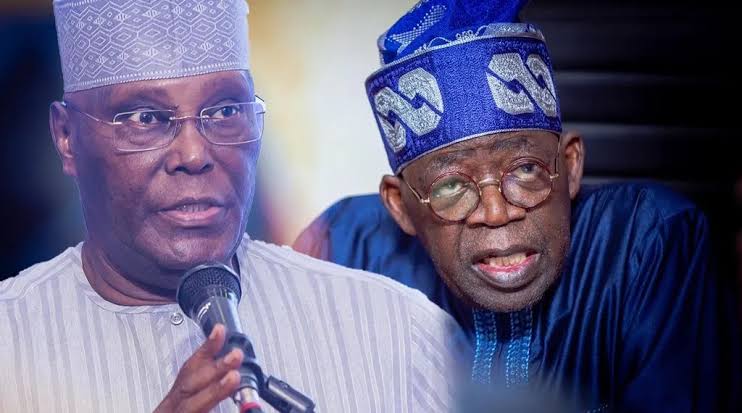
A fresh political storm has broken over who owns responsibility for Nigeria’s economic pain, after former Vice President Atiku Abubakar told President Bola Tinubu to stop blaming Muhammadu Buhari and earlier governments and to start showing results more than three years into his tenure.
Atiku, now the presidential candidate of the African Democratic Congress ADC, made the charge in a statement issued on Friday, July 31, 2026, by his Senior Special Assistant on Public Communication, Phrank Shaibu. The intervention followed Tinubu’s recent claim that “prosperity is on the horizon” and that the quality of life for citizens is improving.
“The constitution did not swear President Tinubu into office to explain history. It swore him into office to change it,” Atiku said. “Every administration inherits problems. Great leaders are remembered for solving them, not for endlessly rehearsing them.” He argued that Nigerians are no longer interested in who created the country’s problems, but in who will solve them.
Questioning the optimism, Atiku asked, “Mr President says prosperity is on the horizon. Nigerians are asking, whose horizon?” He pointed to the market woman whose capital has been eroded by inflation and the civil servant “whose salary now expires before the month begins.”
The dispute turns on figures that tell two stories at once. Inflation, which climbed to multi decade highs, has cooled sharply. The National Bureau of Statistics put headline inflation at 15.91 percent in June 2026, down from 25.29 percent a year earlier, aided by a steadier naira. Yet the relief is uneven. Food inflation rose for a fifth straight month to 17.52 percent year on year, squeezing households the World Bank says spend up to 70 percent of their income on food.
The naira, floated in 2023 as part of Tinubu’s reforms, has settled into a calmer band after steep devaluation, trading around ₦1,400 to ₦1,500 to the dollar in official windows through early 2026. External reserves recovered to about 45.5 billion dollars, and the World Bank reported a current account surplus near 4.8 percent of output, both signs of firmer external footing.
The social ledger is harsher. The World Bank estimates that over 60 percent of Nigerians lived below the national poverty line in 2025, up from 61 percent in 2024, with roughly 7 million more people pushed into poverty that year. The NBS has classified about 133 million citizens as multidimensionally poor. Real growth, put by the International Monetary Fund at around 3.2 percent, remains too slow to absorb a fast expanding young labour force.
These pressures sit atop a heavy debt load. Total public debt stood at N149.39 trillion as of the end of March 2025, according to the Debt Management Office, a burden Atiku has separately tied to what he called institutionalised fiscal recklessness and one of the greatest appropriation scandals in the country’s history.
Faulting Tinubu’s habit of citing China, Atiku said, “China did not become an economic superpower by complaining about the size of its population,” insisting Nigeria’s youthful population is a strategic advantage rather than a burden. He also rejected comparisons with earlier eras of scarcity. “Nobody elected Tinubu to eliminate the hunger of 1940. Nigerians elected him to confront the hunger of today,” he said.
The exchange forms part of a sharpening contest ahead of the 2027 general elections. It followed Tinubu’s earlier vow to “wrestle” his opponents “to the finish,” a remark Atiku dismissed as the language of “a drowning man.” The presidency has defended its record, crediting subsidy removal and market reforms with restoring stability, while accusing the opposition of politicising hardship.
With campaigning intensifying, the argument over Nigeria’s direction is likely to be settled less by rhetoric than by whether the reforms now begin to translate into relief that ordinary citizens can feel.