
Nigeria In Trouble When President Defends INEC, Okonkwo Warns
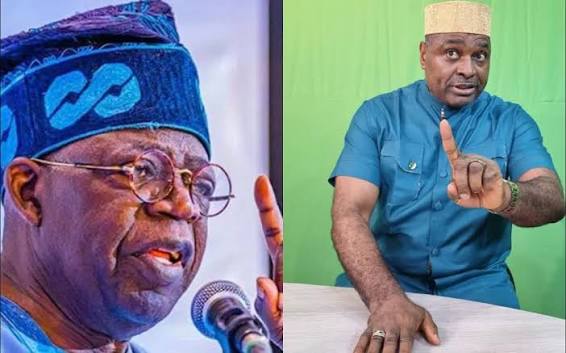
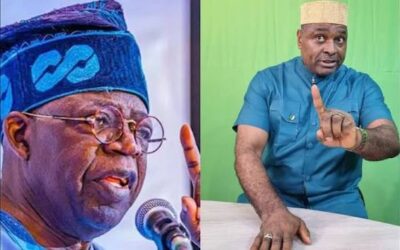
President Bola Tinubu’s insistence that the Independent National Electoral Commission (INEC) remains impartial has run into sharp opposition pushback, with African Democratic Congress (ADC) chieftain Kenneth Okonkwo warning that a country is in danger when its president becomes the electoral umpire’s public defender.
Okonkwo, speaking on Channels Television’s Sunrise Daily on Friday, was reacting to remarks Tinubu made on Tuesday, July 28, while receiving the Catholic Bishops’ Conference of Nigeria at the State House in Abuja. The President had dismissed opposition complaints about the commission as unfounded. “INEC is neutral. They have never intimidated anyone. If political opponents are crying wolf, maybe they are afraid of their own shadows,” Tinubu said, vowing to resist any attempt to drag him into the row and to “wrestle each other to the finishing point.”
Okonkwo rejected that defence outright. “Any country that has a president who has morphed into the chief spokesperson of INEC is in trouble,” he said. He argued that the commission had not cleared lingering doubts from the 2023 general election, pointing in particular to the technical failure that delayed the upload of presidential results to INEC’s Results Viewing portal on February 25, 2023. That glitch anchored the legal challenges brought by Atiku Abubakar and Peter Obi, although the Presidential Election Petition Court and later the Supreme Court upheld Tinubu’s victory.
Drawing a historical parallel, Okonkwo recalled that some figures now praising the commission were once its harshest critics. He claimed Tinubu had, during the 2015 campaign, warned that the opposition would form a parallel government if the poll was manipulated. “We are urging INEC to be neutral; as of today, it is not,” he said, before urging the President to drop any second term ambition. “Tinubu should not even allow the election to hold; he should resign and go in peace.”
The exchange plays out against a wider battle over the survival of opposition platforms. On the same Tuesday that Tinubu spoke, the Court of Appeal in Abuja voided a Federal High Court judgment that had ordered INEC to deregister the ADC and four others, the Action Peoples Party, Action Alliance, Accord Party and Zenith Labour Party. A three member panel led by Justice Abba Mohammed held that the June 15 ruling by Justice Peter Lifu was a nullity, delivered without jurisdiction on an incompetent suit filed by a non juristic body, the National Forum of Former Legislators.
That suit, marked FHC/ABJ/CS/2637/2026, had asked whether INEC was bound under Section 225A of the 1999 Constitution to remove parties that failed to secure at least 25 percent of votes in any state during a presidential election, or win a single elective seat nationally. The appellate court reinstated all five parties, awarded costs against the plaintiff, and faulted the trial judge for proceeding despite an order to halt, terming the conduct “judicial impertinence.”
For Okonkwo, the outcome confirmed his standing claim that the ruling All Progressives Congress was using the courts to litigate the opposition out of existence. “We resisted them, and they are failing and falling like a pack of cards,” he said.
The stakes are heavy. Since mid 2025, the ADC has served as the adopted vehicle for a broad opposition coalition that includes Atiku, Obi, former Senate President David Mark, who chairs the party on an interim basis, and former Kaduna governor Nasir El-Rufai. The alliance has set itself one target, unseating Tinubu in 2027.
Ahead of that election, now drawing closer, the neutrality of INEC, the resilience of opposition structures and the tone set by the presidency are shaping up as early flashpoints. Okonkwo, who also speaks for Atiku’s campaign, has made clear the fight over the commission’s credibility will stay central long before the first ballot is cast.