
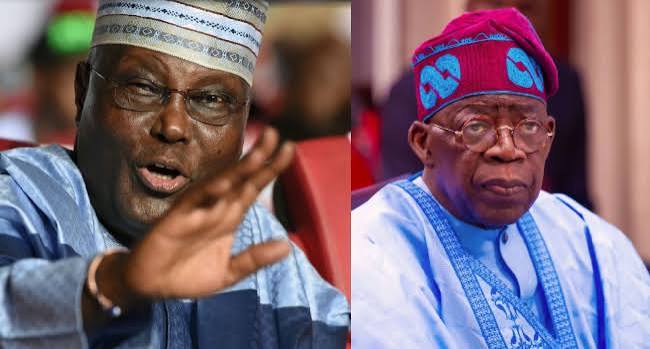
Nigeria’s economic scoreboard has become the latest battleground between the presidency and the opposition, with Atiku Abubakar accusing the Tinubu administration of dressing up hard numbers to look better than the hardship Nigerians are living through.
The African Democratic Congress presidential candidate, in a statement issued through his Senior Special Assistant on Public Communication, Phrank Shaibu, rejected recent defences of government reform by Finance Minister Taiwo Oyedele, arguing that official explanations on subsidy savings, debt management and wage implementation do not match publicly available records. Atiku specifically disputed the claim that subsidy savings are being used to pay down government debt, citing figures showing the Federal Government’s exposure to the Central Bank of Nigeria has grown from roughly ₦26.9 trillion in May 2023 to over ₦40 trillion currently, a rise he attributed to converting Ways and Means advances into bonds while still borrowing afresh.
Independent central bank data lends some context to that debate. At its 306th Monetary Policy Committee meeting on July 20 and 21, 2026, the CBN, under Governor Olayemi Cardoso, held its benchmark Monetary Policy Rate at 26.5 percent for a second straight sitting, alongside a Cash Reserve Ratio of 45 percent for commercial banks. The committee noted that headline inflation had eased only marginally to 15.91 percent in June 2026 from 15.93 percent in May, according to the National Bureau of Statistics, even as food inflation climbed to 17.52 percent from 16.96 percent the previous month. That pattern, cooling headline numbers alongside persistent food price pressure, is central to the dispute Atiku has raised: whether official statistics reflect what households are actually experiencing at the market.
On wages, Atiku argued that key components of the 2024 minimum wage package remain unpaid, including a 40 percent peculiar allowance meant to take effect from May 1, 2026. Nigeria’s statutory minimum wage has stood at ₦70,000 monthly since the National Minimum Wage Act was signed into law in July 2024, a figure labour unions, including the Nigeria Labour Congress, have publicly described as no longer sustainable against current living costs. Implementation has also varied by state, with Lagos paying ₦85,000 and Imo State reaching ₦104,000, while several states have struggled to meet even the federal floor.
Atiku further questioned the source of a ₦50 billion injection into the Nigerian Education Loan Fund, noting that the agency’s own leadership had linked the funds to recoveries by the Economic and Financial Crimes Commission rather than subsidy savings, and he blamed high borrowing costs on the elevated interest rate environment that has persisted since the CBN began its tightening cycle in 2023.
This is not the first economic clash between Atiku and the government. Since the removal of petrol subsidy and the liberalisation of the foreign exchange market in mid 2023, successive rounds of naira depreciation, inflation that peaked above 30 percent in 2024, and a prolonged high interest rate regime have repeatedly drawn opposition criticism, even as the administration and figures such as Cardoso point to a disinflation trend that has now stretched for six consecutive months on a 12 month average basis.
Whether that trend translates into relief for ordinary households remains contested. With the naira trading above ₦1,370 to the dollar in recent weeks and petrol pump prices still consuming a large share of minimum wage earnings, the argument over which set of figures tells the true story of Nigeria’s economy looks set to remain a defining feature of the countdown to the 2027 general election, as both camps prepare to press their competing narratives before voters.