
Guinea Opts Out Of Ecowas Single Currency Ahead Of 2027 Launch
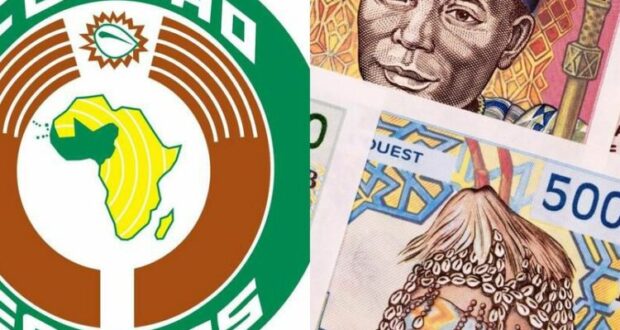
Guinea has formally opted out of the planned West African single currency, the eco, becoming the first member of the Economic Community of West African States to reject participation in the monetary union scheduled to begin in July 2027. The country has chosen instead to retain its national currency, the Guinean franc.
The decision comes as ECOWAS prepares a phased rollout of the eco. Last month, leaders of the regional bloc agreed that only countries meeting strict convergence criteria on inflation, public debt and monetary stability would join the first phase, while others could enter later. Guinean authorities, however, concluded that adopting the single currency at this stage would harm the country’s economy.
Officials pointed to Guinea’s weak domestic production base and the structure of its external trade as central reasons for the decision. About 80 per cent of the country’s exports go to Asian markets rather than to other West African states. Economist Mohamed Camara told RFI that by tying its currency to neighbouring countries, Conakry risked losing important policy levers. “The country’s major trading partners lie outside West Africa, with about 80 per cent of its exports going to Asia,” he said. “By tying its currency to neighbouring states, Conakry risks losing certain levers of influence.”
Although Guinea is richly endowed with natural resources, including bauxite, gold and iron ore, it remains heavily dependent on imports for food and manufactured goods. Analysts note that joining a monetary union without stronger productive capacity could limit the country’s ability to adjust its exchange rate and monetary policy in response to external shocks.
ECOWAS has spent more than two decades working towards a single currency aimed at boosting intra regional trade, lowering transaction costs and deepening economic integration across West Africa. The current plan includes the creation of a West African Central Bank and a new framework for regional monetary policy. The bloc is targeting July 2027 for the start of the phased implementation.
The community now comprises 12 member states following the withdrawal of Burkina Faso, Mali and Niger in 2024. Those three countries left to form the Alliance of Sahel States. Guinea’s decision is expected to feature prominently when the ECOWAS Authority of Heads of State and Government meets again in December. That summit is expected to address outstanding issues, including the list of countries eligible for the first phase of the eco and the governance structure of the proposed central bank.
Regional leaders continue to present the single currency as a long term tool for economic transformation. Yet Guinea’s choice highlights the practical difficulties of aligning diverse national economies under one monetary framework. Countries with export patterns that differ sharply from the regional average, or with limited industrial capacity, face different risks and incentives from those more deeply integrated into West African trade.
As the December summit approaches, the debate over who will participate in the first wave of the eco is likely to intensify. Guinea’s formal opt out has made clear that not every member state views the 2027 launch as beneficial under current economic conditions. The outcome of the coming discussions will help determine how many countries move forward together and how flexible the path to eventual membership will remain for those that stay outside the initial group.