
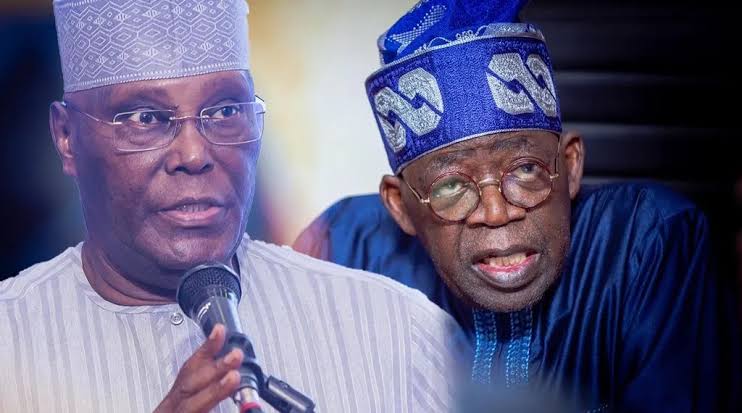
Presidential candidate of the African Democratic Congress, Atiku Abubakar, has dismissed claims of economic prosperity under President Bola Tinubu, pointing to the collapse of 767 manufacturing companies and the distress facing 335 others as evidence that official narratives do not match realities on the ground.
In a statement issued on Monday by his Senior Special Assistant on Public Communication, Phrank Shaibu, Atiku argued that no government could credibly celebrate macroeconomic recovery while the productive base of the economy was grinding to a halt.
“A government cannot claim its economic policies are working when the country’s industrial sector is actively shutting down. Nations do not build prosperity by celebrating macroeconomic statistics while their factories close their gates,” the statement said.
The former Vice President referenced figures from the Manufacturers Association of Nigeria showing that manufacturers were sitting on approximately ₦2.14 trillion worth of unsold finished goods. He attributed the accumulation not to lack of demand but to the sharp decline in the purchasing power of millions of Nigerians who can no longer afford basic necessities.
Atiku listed several multinational companies that have either shut down or exited local manufacturing operations. These include Procter & Gamble, GlaxoSmithKline, Sanofi and Kimberly Clark. He also cited indigenous firms such as Jubilee Syringe Manufacturing, which he said had been forced to suspend production.
He further noted that local manufacturers spent about ₦1.11 trillion on diesel alone to keep factories running after electricity tariffs for Band A customers rose sharply. The high cost of alternative power, he argued, has deepened the cost of doing business and made local production increasingly unviable.
The statement rejected the Presidency’s earlier defence of the administration’s Gross Domestic Product growth figures. Atiku maintained that growth recorded on paper meant little if it failed to translate into affordable prices, stable jobs and a functioning industrial sector.
“Factories do not shut down because the opposition writes press statements. Manufacturers do not accumulate trillions of naira in unsold goods because critics hold press conferences. Multinational companies do not abandon billion naira investments because of political rhetoric. They leave because the economic environment has become increasingly hostile to production, investment and enterprise,” he said.
Atiku insisted that the real verdict on the administration’s economic record would not come from government spokespersons but from the condition of the factories themselves. “No amount of propaganda can erase that reality,” the statement declared.
The exchange forms part of a wider contest over the interpretation of Nigeria’s economic performance ahead of the 2027 general elections. The Presidency has consistently maintained that its reforms are yielding positive results and has rejected allegations of fiscal recklessness, excessive borrowing and mismanagement of public finances.
For its part, the Manufacturers Association of Nigeria has repeatedly raised concerns about the high cost of energy, limited access to foreign exchange, multiple taxation and weak consumer demand as major constraints on the sector. The accumulation of unsold inventory and the exit of both foreign and local manufacturers remain central talking points in debates about the effectiveness of current economic policies.
As political actors continue to trade claims and counter claims, the state of Nigeria’s manufacturing base is likely to remain a key measure by which citizens and investors assess the health of the broader economy.