
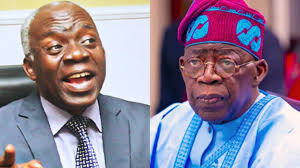
Senior Advocate of Nigeria, Femi Falana, has pushed back against the Federal Government’s contemplated electricity tariff increase, arguing that Nigerians should not be made to pay more for a power supply that has barely improved despite trillions of naira in interventions since the sector was privatised thirteen years ago.
Speaking to journalists in Ilawe Ekiti at the weekend, Falana insisted that President Bola Tinubu must first deliver on his campaign promise of stable power supply before any fresh tariff review is considered. He argued that the government appeared set on withdrawing from its responsibilities in the sector after handing distribution assets to private investors, and said officials should not shield electricity companies from accountability simply because their owners maintain close ties with government. According to him, “the government cannot be allowed to leave Nigerians in the lurch.”
Falana’s intervention comes amid conflicting signals from Abuja over tariffs. Special Adviser to the President on Power Infrastructure, Sadiq Wanka, said in late July that no nationwide increase was planned and that subsidies for vulnerable households under the Power Consumer Assistance Fund would remain, after earlier remarks at a Lagos policy event were reported as suggesting otherwise. That denial followed weeks of industry pressure. In May, the Nigerian Electricity Regulatory Commission (NERC) publicly acknowledged reviewing tariffs across all customer bands, citing rising generation, transmission and gas costs, while the Association of Power Generation Companies had separately lobbied NERC to adjust tariffs after the government raised the domestic gas base price, warning that delay would deepen liquidity problems across the sector.
The numbers behind the standoff are stark. Nigeria’s electricity market has operated a band system since April 2024, under which Band A customers guaranteed at least 20 hours of daily supply pay upward of N209 to N225 per kilowatt hour, compared with roughly N66 before the policy took effect, a jump of more than 200 percent for the roughly 15 percent of connected consumers placed in that category. NERC figures cited in industry reporting suggest Nigerians have collectively paid over a trillion naira more annually in tariffs since cost reflective pricing was introduced, yet supply has not kept pace. First quarter 2026 data from the commission put average available generation capacity from the country’s 28 grid connected power plants at roughly 4,458 megawatts, with actual hourly generation nearer 4,113 megawatts, both well short of the government’s own 6,000 megawatt target and a small fraction of estimated national demand exceeding 30,000 megawatts.
Government spending has not been modest either. An analysis of interventions since the 2013 privatisation, which handed generation and distribution assets to private operators while transmission stayed under federal control, indicates that successive administrations have committed close to N10 trillion through subsidies, payment guarantees, debt settlement schemes and multilateral loans, including a N4 trillion Presidential Power Sector Debt Reduction Programme and over $2 billion in World Bank and African Development Bank backed projects. Minister of Power, Joseph Tegbe, has attributed the sector’s troubles to structural deficiencies stretching back roughly four decades and has outlined a stabilisation plan built around a transmission network audit, harmonised federal and state electricity regulations, and a proposed super grid, promising visible improvement within two to three years. Consumer advocates, including the Nigeria Consumer Protection Network, have countered that repeated bailouts have entrenched inefficiency rather than resolved it, pointing to an unresolved liquidity crisis estimated at several trillion naira between distribution companies and power generators.
Falana’s remarks add legal and civil society weight to a debate that has increasingly pitted consumer groups and opposition figures against the administration’s economic reform agenda, coming shortly after the presidency separately rejected criticism from former Vice President Atiku Abubakar over the government’s broader debt and fiscal record. With NERC yet to formally announce a new tariff order and the government publicly denying imminent increases, the coming weeks are likely to determine whether Nigerians face another round of higher electricity costs, or whether the pressure from lawyers, generation companies and regulators forces a different outcome.