
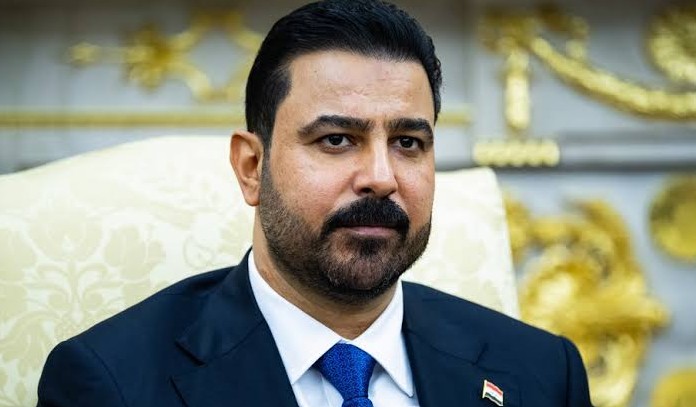
Iraq shut three major border crossings with Iran on Saturday after a drone strike struck a vital Saudi Arabian oil pipeline. Iraqi Prime Minister Ali al-Zaidi took the emergency step following joint intelligence findings from Baghdad and Riyadh confirming that the drones took off from Iraqi territory. The targeted pipeline transports crude across Saudi Arabia to bypass vulnerable Gulf shipping lanes. The closure affects the busy Shalamsheh terminal in southern Basra, al-Shib in Missan, and al-Mandali in Diyala province. Iraqi security personnel discovered abandoned launch rails in the remote al-Tib desert near the Iranian border hours after the explosion. Prime Minister al-Zaidi immediately dismissed the provincial military commander in Missan for gross security failure along the frontier. Baghdad fears that regional combatants are turning Iraqi soil into an unpoliced staging ground for attacks on Gulf energy installations. The Iraqi government wants to avoid direct confrontation with Western powers and wealthy Arab neighbours. Fragile states cannot easily survive cross-border military strikes launched from their own territory.
The shuttered border gates represent the primary economic and human conduits linking southern Iraq to western Iran. Tens of thousands of commercial lorries, religious pilgrims, and petty traders cross through Shalamsheh and al-Shib each week to conduct bilateral business. An Iraqi security official confirmed that the closures aim to track down the launch crew and block the smuggling of additional unmanned aircraft parts. Iraqi border guards took up heavy defensive positions around the customs compounds to enforce the indefinite shutdown. The official admitted that investigators possess no firm timetable for reopening the frontier gates. Other secondary crossings in the mountainous north remain open under tight surveillance. Baghdad treats this sudden closure as an essential operational cordon rather than a mere political protest. Closing trade routes hurts the local economy, but foreign air raids would destroy it entirely.
The discovery of the launch hardware in the desert plains of Missan confirms Riyadh’s worst fears about regional military coordination. Armed squads hauled mobile launch rails, guidance units, and fuel drums into the desert without alerting local military outposts. That logistical feat suggests either deep incompetence among regional garrisons or direct complicity from local commanders. The dismissed Missan operations chief failed to monitor vast rural tracts where heavily armed factions operate without state oversight. No regional group has claimed responsibility for the pipeline explosion, though suspicion immediately fell on Tehran-aligned militias. A coalition of powerful Iraqi paramilitaries issued a public denial, insisting its fighters played no part in damaging Saudi oil facilities. Riyadh has repeatedly accused these groups of launching aerial strikes on Saudi pumping stations during previous regional escalations. Denials carry little weight when launch rails turn up in border ditches.
The attack strikes at the core of Saudi Arabia’s emergency energy strategy. Riyadh relies on its East-West pipeline system to move petroleum away from the embattled Strait of Hormuz to Red Sea loading jetties. With maritime transit through Hormuz already paralysed by ongoing hostilities, the overland pipe serves as the Kingdom’s primary commercial lifeline. Hitting that infrastructure threatens to strand millions of barrels of crude inside desert storage tanks. Global oil markets reacted nervously to the news, keeping international benchmarks firmly above triple-digit thresholds. Gulf oil monarchies view any strike on their export plumbing as an existential economic threat. Saudi officials made clear to Baghdad that Iraq must police its southern desert or face diplomatic isolation. A damaged pipeline in the desert sends shockwaves through stock exchanges worldwide.
Baghdad walks an exceptionally precarious diplomatic wire between an assertive Iran and anxious Gulf neighbours. Iraqi prime ministers govern through fragile parliamentary coalitions that depend on the political goodwill of pro-Iranian parties. Yet Baghdad also courts Saudi investment capital and American military supplies to rebuild broken public utilities and stabilise the national currency. Allowing armed proxies to launch cross-border strikes against Saudi infrastructure destroys years of patient Iraqi regional diplomacy. Prime Minister al-Zaidi acted swiftly by sacking his provincial commander to show genuine administrative resolve to both Washington and Riyadh. The prime minister must convince foreign capitals that his government retains actual control over its own armed forces. Visible administrative discipline remains his only shield against foreign punitive strikes. Small states caught between regional giants have little room for hesitation.
The illicit trade in drone components exposes the deep institutional rot along Iraq’s eastern border. Smuggling syndicates move miniature turbine engines, composite carbon frames, and satellite transceivers through official checkpoints disguised as ordinary automotive cargo. Corrupt border officials and intimidated customs agents routinely clear sealed containers without conducting thorough physical inspections. Security sources in Baghdad privately admit that foreign drone components enter Iraq in pieces before technicians assemble them in hidden desert workshops. Sacking a single provincial general does not dismantle the lucrative smuggling networks that feed armed groups along the frontier. Security forces must overhaul customs intelligence and deploy modern scanners across all international entry points. Until authorities close these smuggling ratlines, rogue operators will continue to buy weapons parts in plain sight. Paper declarations cannot stop advanced aerial weaponry.
The border shutdown threatens to strangle merchant trade across several southern Iraqi governorates. Wholesale markets in Basra and Amarah depend heavily on daily shipments of Iranian construction cement, fresh fruit, dairy products, and cheap plastic goods. Local haulage firms warned on Saturday that hundreds of loaded lorries sit stranded along border access roads, facing cargo spoilage and heavy demurrage fees. Cross-border currency flows will dry up quickly if customs officials keep the gates padlocked for more than a few days. The economic pain will fall hardest on low-income border communities that survive almost entirely on informal customs clearing. Iraqi consumers already battle high domestic food prices driven by transport costs and currency shifts. A prolonged border closure will empty market stalls and drive up local living expenses. Security measures always exact a heavy economic price from the poor.
The regional war continues to chew through the sovereignty of Middle Eastern buffer states with terrifying speed. Iraq spent two decades trying to emerge from the wreckage of foreign invasion and sectarian civil war. Its cities have finally seen modest commercial reconstruction, new transport flyovers, and steady oil revenues. That fragile progress will vanish overnight if foreign air forces begin hunting drone launchers across Iraqi farming towns. Prime Minister al-Zaidi knows that failure to contain local militias invites outside armies to do the job with heavy bombs. The closure of Shalamsheh, al-Shib, and al-Mandali signals an embattled state trying to lock its doors before the war crashes through the living room. Strong words from Baghdad will not deter ideologically driven fighters who answer to foreign commands. Iraq must reassert its monopoly on violence or watch its sovereignty dissolve into border sand.