

SANs Clash In Court As Sowore’s Trial Slips To September
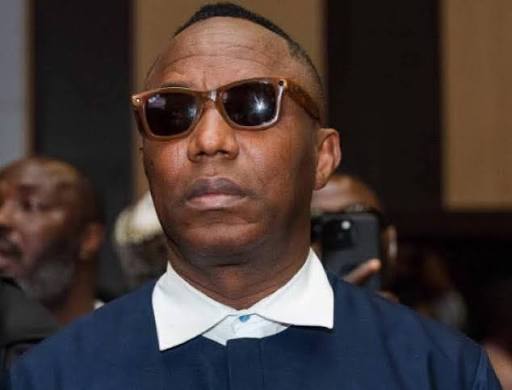
Nearly a year after he was first arraigned, Omoyele Sowore’s cyberbullying trial over remarks about President Bola Tinubu is still without an end in sight, the latest sign of how slowly Nigeria’s cybercrime-related prosecutions of government critics tend to move through the courts.
The Sahara Reporters publisher and African Action Congress presidential candidate returned to the Federal High Court in Abuja on Monday for a hearing that collapsed into a shouting match between two Senior Advocates of Nigeria. Defence counsel Adeyinka Olumide-Fusika accused prosecuting counsel Akinlolu Kehinde of behaving like a “persecutor,” drawing an immediate rebuke from Justice Muhammed Umar, who warned that any repeat could attract disciplinary referral. The matter has now been pushed to September 20, 2026, meaning the case will run for close to ten months beyond its most recent arraignment without a verdict.
The charges trace back to posts Sowore made on X and Facebook on or around August 25, 2025, in which he allegedly called Tinubu a “criminal” and disputed the president’s claims about corruption under his administration. The Department of State Services framed the posts as capable of triggering a breakdown of law and order, filing a two-count charge under the Cybercrimes (Prohibition, Prevention, etc.) Act. Sowore was re-arraigned on the amended charge on December 5, 2025, and pleaded not guilty. He was granted bail of 200 million naira, with conditions requiring a traditional ruler as one surety and a landed property owner in Abuja as the second, along with the surrender of his international passport.
The case has since passed through several procedural milestones. On May 8, 2026, Justice Umar dismissed Sowore’s no case submission, ruling that the prosecution had established a prima facie case requiring him to enter a defence. He opened that defence in June, calling activist and lawyer Deji Adeyanju, who testified that social media accounts function as a “personal virtual home” where users primarily interact with people who already follow them. Since the prosecution formally closed its case, the defence has called only one witness across roughly four adjournments, most recently stalling this week over a delayed Certified True Copy of court records that defence lawyers say only became available after a registry mix up.
The case fits a broader pattern documented by press freedom monitors. The Committee to Protect Journalists has recorded that at least 25 journalists faced Cybercrimes Act prosecutions before the law’s 2024 amendment, with five more prosecuted and four jailed for nearly six months since the reform took effect. Reporters Without Borders separately counted at least eight journalists wrongfully prosecuted, arrested or detained under the legislation since the amendment, even as Nigeria’s position on the organisation’s global press freedom index improved from 122nd to 112th. The Centre for Journalism Innovation and Development’s Press Attack Tracker recorded 110 verified attacks on journalists in 2024 alone. CPJ’s Africa director, Angela Quintal, has flagged the timing as significant, noting that Nigerian authorities continue treating the law as a convenient tool against the press ahead of the 2027 general election.
Sowore’s case predates that immediate electoral countdown but has become entangled with it, given his standing as a past presidential candidate and persistent government critic. With the next hearing date set for late September, and defence lawyers signalling they intend to call the subpoenaed Department of State Services witness they earlier withdrew a request for, the trial appears likely to stretch well into the 2027 election season, keeping Sowore’s case, and the wider debate over how far Nigeria’s cybercrime law should reach into political speech, firmly in public view.