


Europe Flies on Nigerian Jet Fuel While Local Aviation Struggles
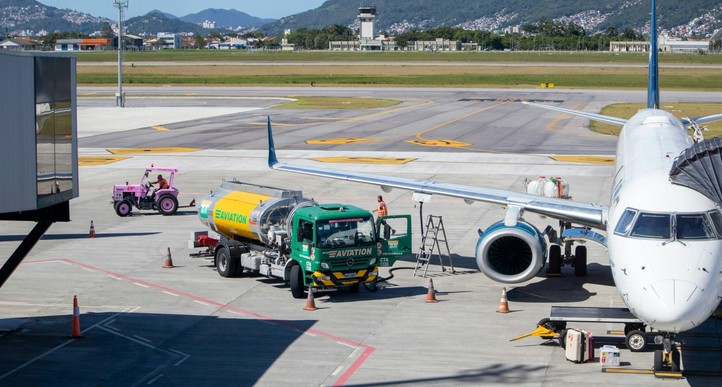
For two consecutive months, the Dangote Petroleum Refinery in Lagos has outpaced exporters from the United States to become the largest single foreign supplier of jet fuel to the European market. Data from commodity-tracking services indicates a steady stream of Aframax tankers departing the Lekki Free Zone, laden with Jet A-1 fuel bound for storage hubs in Rotterdam, Antwerp, and London. Yet, three hundred kilometres inland, domestic air travel across Nigeria remains crippled by exorbitant operational costs. Domestic airlines regularly ground fleets, cancel flights, or pass steep ticket pricing to passengers who are already squeezed by currency devaluation and inflation. Simultaneously, the Nigerian Civil Aviation Authority (NCAA) and the Nigerian Airspace Management Agency (NAMA) remain locked in public friction over unpaid navigation charges and regulatory cost-recovery mechanisms. The contrast is stark: the refining monster built on Nigerian soil powers flights across European skies while local aviation operates on the brink of financial insolvency.
This asymmetry exposes the structural fault lines within Nigeria’s energy transition and transport policy. The long-held public assumption was straightforward: once domestic refining capacity materialized, the cost of aviation fuel, which accounts for roughly forty to forty-five percent of an airline’s operating expenses, would plummet. Instead, the domestic market finds itself trapped in an institutional paralysis. Local midstream infrastructure gaps, credit rigidities, and regulatory misalignments prevent domestic consumers and commercial air carriers from absorbing the output of a world-scale refinery located in their own backyard. The immediate imperative for energy independence has met the reality of a fractured supply chain, revealing that refining capacity alone does not guarantee domestic energy security or affordable transportation economics.
The Economics of Exclusion: Financial and Structural Barriers to Local Direct Off-Take
At the heart of this paradox lies a fundamental mismatch between the financial mechanics of international oil trading and the balance sheets of Nigerian domestic airlines. The Dangote Refinery operates as a commercial, dollar-denominated entity required to service massive foreign debt, acquire crude feedstock at prevailing international pricing, and maintain international profitability standards. Consequently, the refiner prioritises buyers who can settle contracts in hard currency, execute large-volume off-take agreements, and provide bank-backed letters of credit without sovereign default risk. European commodity traders fit this profile effortlessly. They present clean credit lines, handle their own maritime transport logistics, and purchase jet fuel in cargoes of hundreds of thousands of barrels.
Nigerian domestic carriers, by contrast, operate in an environment defined by severe liquidity constraints and foreign exchange volatility. Individual airlines manage modest fleets, requiring fragmented fuel volumes delivered in batches across multiple regional airports. Very few domestic operators possess the working capital or balance sheet strength required to sign direct, long-term off-take agreements with a 650,000-barrel-per-day facility. The structural absence of a consolidated local buying cartel or a well-capitalized domestic aggregator forces domestic airlines to purchase Jet A-1 through third-party oil marketing companies. These intermediaries add profit margins, bridging finance costs, and trucking fees to every litre, effectively stripping away the cost advantages of proximity.
Transport infrastructure deepens this economic division. While the refinery is situated along the coast with direct maritime loading gantries for ocean-going vessels, Nigeria’s internal fuel distribution infrastructure remains largely dependent on road haulage. Pipelines that once connected refining facilities to regional inland storage depots have fallen into disrepair through decades of neglect, vandalism, and structural underinvestment. To move aviation fuel from Lekki to airports in Abuja, Kano, or Enugu, distributors rely on fleets of heavy diesel tankers. Road haulage introduces severe transit risks, insurance surcharges, fuel theft, and exposure to fluctuating diesel prices for transport trucks. European buyers receive their fuel via efficient maritime tankers that unload directly into integrated pipeline grids across Western Europe. Nigerian airlines receive their fuel via thousands of road journeys over inadequate highway networks. The proximity advantage is erased by logistics.
Credit terms further compound the division. European buyers operate on standard thirty-to-sixty-day trade credit lines backed by top-tier financial institutions. Local Nigerian fuel marketers, facing double-digit domestic interest rates and constrained bank lending limits, operate largely on a cash-and-carry basis or short-term, high-interest local currency loans. When local distributors purchase fuel, they absorb the borrowing costs imposed by domestic commercial banks. These capital costs are systematically shifted to domestic airlines, which must then raise passenger fares to survive. The failure to build local financial instruments, such as joint-purchasing vehicles or credit-guarantee facilities for domestic airlines, ensures that local operators remain shut out from direct factory-gate pricing.
The Regulatory Dilemma: Balancing Foreign Revenues and Domestic Security
The Nigerian Midstream and Downstream Petroleum Regulatory Authority (NMDPRA) sits at the centre of this structural conflict. The agency faces a dual task: it must encourage an environment in which private refinery investments remain financially viable and capable of earning essential foreign currency, while fulfilling its statutory mandate to guarantee domestic energy supply security under the Petroleum Industry Act (PIA). Balancing these two obligations has proven extraordinarily difficult in practice.
If the regulator uses price controls or mandatory domestic supply obligations on jet fuel, it risks undermining the economic viability of private refining investments. Jet A-1 is a deregulated product globally; imposing artificial price ceilings or forcing a private refiner to sell locally at a discount in non-convertible currency would discourage capital investment in midstream operations. Private investors built the refinery using international loans that must be serviced in United States dollars. Forcing domestic sales at sub-optimal commercial terms would threaten the facility’s debt servicing capability and damage investor confidence across the broader energy sector.
However, a purely market-driven export strategy that completely neglects domestic availability creates severe national economic vulnerabilities. When domestic transportation networks face constant fuel supply disruptions or price spikes driven by external market forces, the broader economy suffers. High airfares directly inflate the cost of doing business, disrupt supply chains, slow commerce, and worsen general economic inflation.
To create a functional middle ground, the regulator must pivot from heavy-handed intervention toward structured domestic market integration. The current policy framework treats fuel exports and domestic supply as mutually exclusive destinations. Instead, the NMDPRA can establish transparent framework agreements that offer targeted administrative and operational incentives to refiners who allocate a designated percentage of their output to domestic off-takers through structured, long-term naira-denominated frameworks.
Such incentives could include streamlined regulatory clearance fees, priority access to port infrastructure, or concessional terms on crude feedstock arrangements managed through state energy frameworks. Rather than enforcing rigid quotas, the regulatory framework must lower the transaction costs of selling locally, making the domestic market commercially competitive with foreign export destinations.
Policy Imperatives: Bridging the Gap Between Refining Dominance and Domestic Transport Costs
Translating local refining capacity into lower airfares and sustainable domestic logistics requires moving beyond rhetoric to systematically restructure the domestic midstream supply chain. The first policy imperative is the immediate creation of a consolidated domestic aviation fuel procurement framework. Individual Nigerian airlines lack the scale to negotiate directly with major refiners, but an industry-wide purchasing consortium, backed by the Infrastructure Concession Regulatory Commission (ICRC) and domestic financial institutions, can aggregate national demand. By pooling their buying power, domestic carriers can present a unified creditworthy counterparty capable of securing long-term off-take contracts at wholesale pricing, cutting out multiple layers of intermediary margins.
Second, the Federal Ministry of Aviation and Aerospace Development, along with the Ministry of Petroleum Resources, must prioritize the rehabilitation and development of dedicated fuel transport infrastructure. Reliance on road tankers for Jet A-1 distribution is economically inefficient and unsustainable. Priority investment must focus on establishing direct pipeline linkages or dedicated rail lines connecting coastal refinery storage facilities directly to major aviation hubs, starting with Murtala Muhammed International Airport in Lagos and Nnamdi Azikiwe International Airport in Abuja. Pipeline transport reduces freight expenses by a substantial margin compared to road haulage, while eliminating the supply disruptions caused by highway breakdowns and fuel contamination during transit.
Third, the governance and fiscal dispute between the NCAA, NAMA, and domestic airlines must be resolved through an integrated aviation cost-reduction policy. Regulatory agencies cannot view domestic airlines purely as revenue sources to fund their own operational budgets through escalating navigation and landing charges. The Ministry of Aviation should execute a comprehensive audit of regulatory fees, consolidating overlapping levies into a single transparent, cost-reflective framework. In exchange for fee rationalisation, domestic airlines must be contractually bound to pass verified fuel and operational savings down to consumers through transparent ticket pricing structures.
Finally, the Central Bank of Nigeria and the Ministry of Finance should establish targeted financial clearing mechanisms that allow local refiners and domestic energy distributors to settle transactions using local currency hedging instruments. By reducing exposure to sudden foreign exchange fluctuations for domestically produced and consumed refined products, the domestic market can achieve relative price stability, protecting local transport systems from global currency swings.
Without these structural interventions, Nigeria will remain caught in an untenable dynamic: functioning as an efficient fuel farm for foreign economies while its own domestic transport and aviation sectors grind under the weight of avoidable logistical costs. The path forward requires replacing structural bottlenecks with integrated logistics, robust local credit mechanisms, and practical regulatory frameworks. Only then can the national economy derive real domestic value from its refining capacity.