
The Invisible Roster: Why PTA-Funded Teachers Are Carrying the Federal Education System
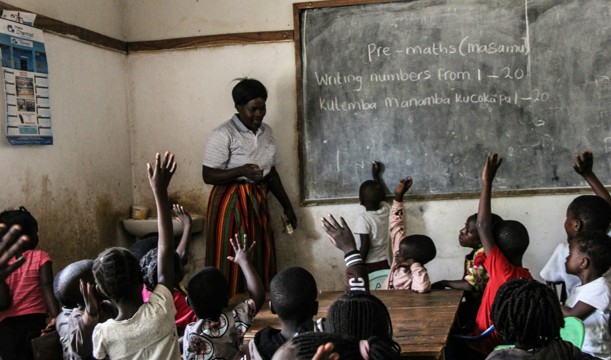
Investigations across public secondary schools and the network of Federal Government Colleges, historically celebrated as Unity Schools, have exposed a startling reality in basic and secondary education. The functional majority of classroom instructors delivering daily lessons in core subjects, ranging from foundational mathematics and physical sciences to language arts, are not civil servants on the payroll of the Federal Ministry of Education or State Universal Basic Education Boards. They are ad hoc contract staff recruited, managed, and paid directly through monthly levies contributed by parents under the banner of the Parent-Teacher Association (PTA).
In many schools, permanent pensionable teachers holding official postings make up less than a third of the active teaching roster. The rest are young graduates and auxiliary instructors hired on informal, month-to-month contracts by parent executives desperate to keep classrooms staffed. Official bulletins from education ministries continue to tout free basic education and showcase national allocations for school renovation, yet the day-to-day work of instructional delivery has been quietly passed onto the domestic budgets of households. This de facto privatisation of teaching staff masks a structural collapse in public sector teacher recruitment, pension budgeting, and institutional funding. What began decades ago as an occasional community intervention to fill temporary subject gaps has hardened into an unacknowledged funding mechanism that shields state neglect at the direct expense of household welfare and basic educational standards.
The Instructional Erosion of Underpaid Labour
The heavy reliance on informal PTA teaching contracts compromises instructional quality in public classrooms. A teacher employed through ad-hoc parent contributions occupies an unstable professional position. Across most public institutions, monthly stipends for PTA-funded teachers range between 20,000 and 40,000 Naira—an amount far below the national minimum wage and entirely inadequate for basic subsistence amid persistent double-digit inflation. These instructors receive no health insurance, no housing allowances, and zero pension accruals. They can be dismissed at the discretion of a local association executive without notice or administrative recourse.
This structural precarity leads directly to high turnover rates within academic terms. Qualified graduates view PTA teaching positions not as career pathways, but as stopgaps while seeking corporate employment, civil service openings, or commercial opportunities. A single classroom may see three different physics or English instructors in a single academic session as underpaid teachers depart as soon as marginally better alternatives appear.
Continuous staff turnover breaks the continuity necessary for effective pedagogy. Teachers working without job security or institutional support rarely invest time in long-term lesson planning, differentiated support for struggling pupils, or modern laboratory preparation. Few have completed formal pedagogical certification programmes or received training in modern curriculum delivery. The result is an instructional environment where students are pushed through syllabus outlines without developing deep comprehension. When public examinations expose mass failures in foundational numeracy and literacy, public commentary routinely faults the students or blames the examination bodies. The true root of the problem sits in the classroom: a demoralised, under-resourced, and temporary teaching workforce that the state expects to deliver quality education for poverty wages.

Deepening Divides Across Urban and Rural Geographies
The dependence on voluntary parent levies creates deep educational inequalities between affluent urban centres and impoverished rural communities. Because PTA funding relies entirely on the discretionary income of local parents, a school’s capacity to hire auxiliary teachers reflects the economic status of its host community rather than an objective assessment of educational need.
In wealthy urban districts and elite Unity Schools located near state capitals, middle-class parents can afford substantial termly levies. These associations generate millions of Naira each term, allowing them to recruit specialised subject tutors, maintain basic computer laboratories, and supplement school security. While this imposes an unfair private tax on parents who already pay statutory taxes, it ensures that urban classrooms have instructors present during school hours.
In rural agrarian districts and working-class urban fringes, this model collapses entirely. Subsistence farming households, petty traders, and artisanal workers struggling with elevated transport fares and food costs cannot afford additional monthly school fees. In these communities, PTA bank accounts remain empty. When civil service teachers retire, transfer to administrative offices in urban centres, or leave the service, there are no funds to hire replacements.
Consequently, rural schools across entire local government areas operate with only two or three government-employed teachers managing six grade levels. Secondary schools regularly lack a single qualified instructor for core science or technical subjects, forcing school heads to merge distinct classes or drop required subjects from the local curriculum. The children of the rural poor are left with empty classrooms, while their urban peers receive at least baseline instruction. The constitutional guarantee of equal educational access is thus replaced by a pay-to-learn system that reinforces intergenerational poverty.

Fiscal Distortions and the Reconstruction of the Teaching Cadre
Ending this informal system requires an honest reassessment of public expenditure in the education sector. The current shortage of permanent teachers is not the result of an absolute absence of public funds; it is the consequence of distorted spending priorities that favour physical construction and procurement over recurrent instructional investment.
At both federal and state levels, education budgets allocate substantial sums to capital projects: perimeter fences, solar streetlights, classroom blocks, and administrative office complexes. While infrastructure is necessary, these capital expenditures often receive political priority because they offer clear opportunities for commercial contracting and political patronage. Meanwhile, personnel budgets are systematically capped under the justification of trimming recurrent expenditure. The state builds concrete classrooms, yet refuses to fund the professional personnel required to teach inside them.
A complete fiscal realignment is needed. First, the Universal Basic Education Commission (UBEC) matching-grant framework and State Universal Basic Education Boards (SUBEBs), must alter the strict rules governing fund utilisation. A defined portion of these intervention funds, currently tied to civil works and hardware purchases, should be reallocated to support teacher recruitment, continuous professional development, and competitive entry salaries.
Second, state governments must initiate an immediate audit of their active teaching cadres to map the exact numbers of PTA-funded staff currently managing classrooms. Qualified, long-serving ad hoc teachers should be given priority absorption into the pensionable civil service through structured competency assessments, rather than opaque political recruitment drives.
Third, governments must introduce dedicated hardship and rural-posting allowances. To prevent all qualified personnel from clustering in urban centres, teachers deployed to rural and remote districts must receive structured compensation incentives, guaranteed housing support, and accelerated promotion tracks.
The Imperative of State Responsibility
Free, quality public education cannot survive on the charity of struggling parents and the underpaid labour of auxiliary teachers. Passing the core financial responsibility of instructional staffing onto household balance sheets is an abdication of fundamental governance. It distorts the purpose of public institutions, turns a basic social right into an informal commodity, and leaves the nation’s children unprepared for the demands of a modern economy.
Governments at all levels must recognise that human capital development begins with the person standing before the blackboard. No new curriculum, digital tablet initiative, or renovated building can replace a qualified, fairly compensated, and institutionally supported teacher. Until federal and state authorities eliminate the reliance on informal PTA staff and rebuild a professional, well-funded national teaching service, the public education system will remain a hollow shell carried on the backs of parents who have already paid for a service the state fails to deliver.