
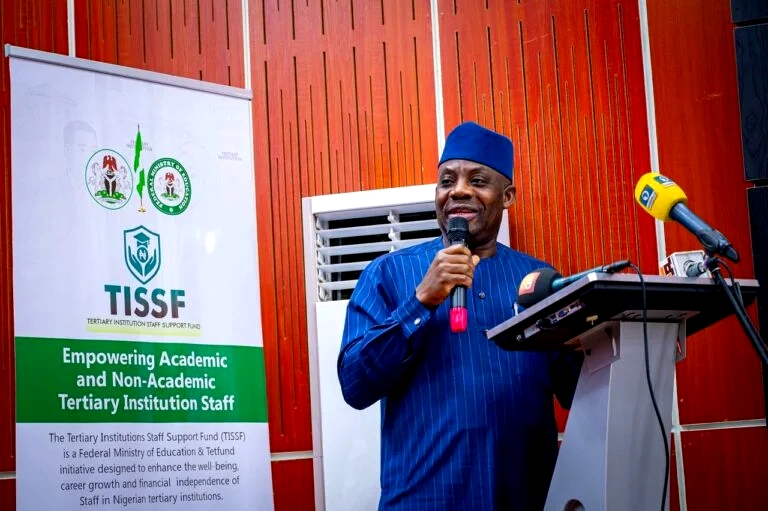
The Federal Government plans to end the separation of Junior Secondary Schools from Senior Secondary Schools to combat Nigeria’s primary education dropout rates. Minister of Education, Dr Tunji Alausa, announced the decision in Abuja while inaugurating a basic education monitoring committee. The current administrative split has failed to ensure a seamless transition for local learners. Official data indicate that more than 20 million children who enrol in primary school fail to progress further. The state intends to phase out the policy to halt ongoing systemic decay.
The current infrastructural mismatch severely cripples the educational advancement of young citizens. Official records show that while Nigeria boasts about 80,000 public primary schools, it possesses only 15,000 junior secondary institutions. This massive deficit leaves millions of primary school graduates without an immediate academic destination. The secondary schools that do exist are highly unequal in student distribution. The minister noted that junior classes remain completely overflowing while senior classrooms sit entirely vacant.
The administration views the existing split as an unnecessary bureaucratic hurdle that harms children. The policy has succeeded only in creating redundant administrative positions instead of fostering actual learning. The Ministry of Education will present the new restructuring proposal to the National Council on Education for final statutory adoption. Officials believe that merging the two secondary tiers will automatically streamline data tracking and school supervision. The Universal Basic Education Commission will oversee the eventual nationwide transition.
The drastic policy reversal comes alongside broader efforts to elevate national intellectual and scholarly standards. The education minister simultaneously inaugurated the Tertiary Institutions National Laureate Committee to reward domestic academic breakthroughs. This sister initiative aims to position scientific discovery and commercial innovation as core national priorities. Officials hope to build a knowledge economy capable of converting local research into tangible commercial value. The state wants to offer young people productive alternatives to the social media attention economy.
The success of these sweeping structural changes depends entirely on strict institutional compliance. Educational experts warn that mere policy pronouncements will not build the actual classrooms needed to bridge the transition gap. State governments must also cooperate fully to fund and implement the uniform secondary school design. Bureaucratic friction between federal supervisors and local education boards frequently derails past reform agendas. The government claims it will insulate the new selection processes from institutional favouritism.