
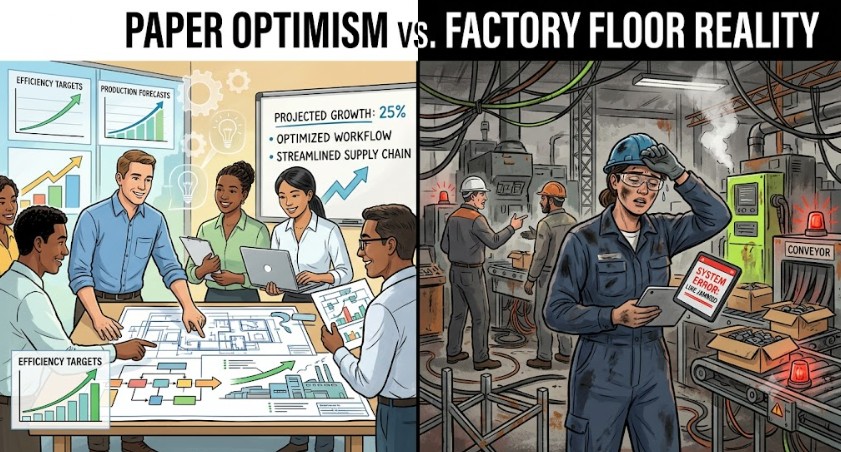
In the second quarter of 2026, the Manufacturers CEO Confidence Index, published by the Manufacturers Association of Nigeria, climbed 3.4 points to reach 52.1. This reading pushes the benchmark back above the 50-point threshold separating contraction from expansion, recording the highest sentiment level in over two years. The Director-General of the association, Segun Ajayi-Kadir, observed that this return to positive territory stems primarily from executive expectations surrounding broad policy initiatives, including the Nigeria Tax Act 2025, the Nigeria Industrial Policy, and the federal government’s “Nigeria First” procurement directive. Yet, behind this statistical uptick lies a glaring structural contradiction: the current business performance and employment sub-indices remain pinned below 50 points. Executives are expressing optimism about future regulatory frameworks, even as their immediate factory operations struggle under a 26.5 per cent Monetary Policy Rate, persistent electricity deficits, port congestion, and weak domestic consumer demand.
This divergence between sentiment and operational reality presents a dangerous macroeconomic trap. Speculative optimism based on promised tax simplifications and government patronage directives can briefly lift aggregate sentiment figures, but paper expectations cannot power industrial machinery or settle commercial loans. When executive confidence rests on policy announcements rather than factory throughput, order books, and real household purchasing power, the risk of a sharp industrial contraction increases. The true test of Nigeria’s economic direction lies not in tracking sentiment surveys, but in whether government agencies can rapidly resolve structural bottlenecks before high borrowing costs and depressed domestic demand erase executive patience.
The Shelf Life of Sentiment: Macroeconomic Strain Meets Industrial Output
Confidence indices are forward-looking indicators; they capture what corporate leaders expect to happen rather than what is currently happening on the floor. In the second quarter survey, two out of every three manufacturing chief executives cited access to finance and commercial bank lending rates as the primary constraint on their operations. With the Central Bank of Nigeria maintaining its benchmark policy rate at 26.5 per cent to combat persistent structural inflation, effective commercial lending rates to the real sector routinely exceed thirty-five per cent. At such prohibitive capital costs, industrial borrowing for operational expansion, machinery upgrades, or raw material stockpiling becomes economically irrational.
The ability of executive optimism to sustain industrial output in the face of thirty-five per cent borrowing rates has a short fuse. High interest rates directly inflate working capital requirements, forcing manufacturers to pass elevated production costs on to end consumers. However, domestic households, whose real wages have been eroded by years of currency devaluation and food inflation, possess limited capacity to absorb higher retail prices. As unsold inventory accumulates in factory warehouses, cash flow constraints tighten. When manufacturers cannot liquidate finished goods to service high-interest working capital loans, sentiment collapses into real-sector retrenchment, leading to shift reductions, factory halts, and industrial layoffs.
Furthermore, self-generated energy costs continue to drain manufacturing balance sheets. The persistent failure of national grid infrastructure obliges industrial plants to rely on expensive off-grid diesel and industrial gas generation. Gas suppliers in domestic industrial clusters charge rates as high as $8.70 per thousand standard cubic feet, tethered to foreign currency benchmarks. When high interest rates, elevated energy tariffs, and sluggish consumer demand hit factory balance sheets simultaneously, policy expectations lose their persuasive power. A corporate executive cannot service bank debt with optimism; sentiment without immediate operational relief merely postpones an inevitable industrial slowdown.
Operationalising “Nigeria First”: Moving from Policy Announcements to Hard Capital Expenditure
If the “Nigeria First” policy and the Nigeria Industrial Policy are to bridge the gap between executive expectation and factory expansion, the federal government must move from symbolic declarations to enforceable administrative benchmarks. The primary objective of the “Nigeria First” mandate is to direct state spending toward local producers by requiring ministries, departments, and agencies to source at least 80 percent of their procurement needs from domestic manufacturers. Currently, compliance with local patronage directives across public institutions remains weak, unmonitored, and rife with procedural exemptions.
To convert speculative optimism into actual corporate capital expenditure, the Ministry of Industry, Trade and Investment must establish three enforceable benchmarks:
- Audited Procurement Compliance: State agencies must publish quarterly procurement disclosures detailing the exact percentage of goods and services acquired from domestic suppliers. Executive Order 003 must carry statutory penalties for procurement officers who bypass local suppliers in favour of imported alternatives.
- Targeted Credit Concessions: The Central Bank of Nigeria and the Bank of Industry must deploy dedicated, single-digit interest rate intervention facilities tailored specifically for manufacturers fulfilling verified government contracts. This structure insulates key industrial producers from the thirty-five per cent commercial lending market.
- Port and Customs Clearance Uptime: The Nigeria Customs Service and port authorities must enforce a maximum forty-eight-hour clearance window for imported raw materials and capital machinery, ending discretionary delays and secondary manual inspections at Lagos ports.
When corporate boards see binding public procurement contracts backed by accessible, low-cost credit facilities, they alter their long-term investment strategies. Instead of keeping capital in short-term money market instruments or foreign currency reserves, firms commit balance-sheet capital to physical plant upgrades, automated assembly lines, and domestic supply-chain integration. Without these concrete administrative structures, the “Nigeria First” initiative risks becoming another public policy document that generates brief media commentary while imported goods continue to dominate public expenditure.
The Asymmetric Burden: MSMEs versus Conglomerates Under Cost Headwinds
The aggregate confidence index score of 52.1 hides deep regional and structural inequalities within Nigeria’s industrial landscape. Large corporate conglomerates and multinational producers possess distinct structural advantages that allow them to ride out macroeconomic shocks. These firms hold multi-bank credit facilities, access foreign currency through structured export earnings, and negotiate volume discounts on raw materials. Furthermore, conglomerates possess the market power required to pass a portion of their elevated input costs to consumers without immediately losing overall market share.
By contrast, small and medium manufacturers face severe operational hardship. These smaller units, which constitute the vast majority of manufacturing employers in industrial zones like Anambra, Bauchi, and Ikeja, where confidence readings remain below 48 points, operate with minimal cash cushions. Commercial banks routinely deny long-term credit to small producers, viewing them as high-risk borrowers. When forced to seek working capital, SMEs incur short-term loans at penalty rates, rendering their finished products uncompetitive against both imported goods and domestic conglomerate outputs.
Energy inflation worsens this structural inequality. While large industrial conglomerates can build independent, gas-fired captive power plants to achieve lower per-kilowatt production costs, small manufacturing units remain dependent on national grid electricity or basic diesel generators. When grid power drops, small producers pay exorbitant per-unit energy costs, driving up their cost per unit and erasing gross margins. As a result, input cost spikes lead to immediate margin compression and business closures for small operators, while conglomerates absorb losses by drawing down reserves.
This asymmetric pressure threatens the structural integrity of Nigeria’s broader industrial ecosystem. Large conglomerates depend on networks of domestic SME suppliers, fabricators, packagers, and distributors to sustain their regional supply chains. If high interest rates and unmitigated operating expenses force small producers out of business, the national industrial sector will become increasingly concentrated, fragile, and dependent on imported intermediate inputs. Policy interventions must target the specific credit and infrastructure needs of small and medium producers, ensuring that survival is not restricted to deep-pocketed corporate conglomerates.
From Paper Optimism to Industrial Productivity
The rise of the Manufacturers CEO Confidence Index to 52.1 points in the second quarter of 2026 demonstrates that executive leadership retains faith in the direction of national economic reforms. Corporate leaders are signalling their willingness to invest, expand production, and create industrial employment if the federal government delivers on its policy commitments. However, this paper optimism is fragile and temporary.
The federal government and the Central Bank of Nigeria cannot afford to mistake a sentiment rebound for real economic recovery. High commercial interest rates, expensive industrial energy, uncoordinated port logistics, and weak household purchasing power continue to erode the real economy. If policy promises are not rapidly backed by single-digit real-sector credit facilities, strict local procurement enforcement, and targeted energy relief, the expectations driving current confidence figures will evaporate.
Nigeria’s path to industrialisation requires replacing policy declarations with factory-floor execution. The state must align its monetary, fiscal, and trade mechanisms to lower the baseline cost of domestic production. Only when executive optimism translates into new factory construction, domestic supply-chain growth, and rising real employment will Nigeria build a resilient, self-sustaining industrial economy.