
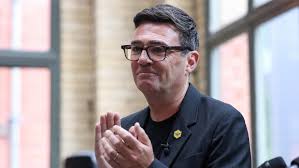
Andy Burnham stands at the threshold of Downing Street, yet the man widely expected to become Britain’s next prime minister is already confronting a sharp demand from within his own party: hand women half of the senior jobs, or risk carrying an old grievance into a new government.
The pressure has come from Labour’s female lawmakers, who contend that a stubborn “boys’ club” at the summit of the party has kept women away from real power for too long. Their intervention arrives at a defining moment for the governing party and for Burnham himself, who is on course to be confirmed as Labour leader and prime minister within days.
According to the Women’s Parliamentary Labour Party group, the incoming leader has been sent a list of demands that includes a 50:50 gender balance in both the cabinet and the prime minister’s Number 10 Downing Street operation. “We are asking you to demonstrate this change from day one and address the toxicity and misogyny within our own party and government,” the group wrote, in a draft reported by the BBC. Burnham has not publicly responded to the demands.
The complaint is not new, but the timing gives it fresh weight. The former mayor of Greater Manchester secured his return to the House of Commons on June 18, winning the Makerfield byelection with a majority of more than 9,000 votes after the seat’s previous occupant, Josh Simons, stepped aside specifically to let him stand. Four days later, on June 22, Keir Starmer announced his resignation as prime minister and Labour leader following heavy local election losses and a string of ministerial departures, triggering the leadership contest now underway. Burnham was sworn in as an MP the same day.
What began as a possible race quickly became what commentators have called a coronation. Nominations opened on July 9 and close on July 16, and Burnham is the only declared candidate, backed by more than 90 percent of Labour MPs, well beyond the roughly 80 signatures required. Potential rivals, including former health secretary Wes Streeting and former defence minister Al Carns, ruled themselves out and endorsed him. If unopposed, he is expected to be announced as Labour leader on July 17 and to take office after an audience with King Charles III around July 20, becoming the United Kingdom’s seventh prime minister in a decade.
The debate over women and power sits against a striking record. Labour, founded in 1900, has never elected a woman as its leader. The Conservatives, by contrast, have chosen four, with current leader Kemi Badenoch following former prime ministers Margaret Thatcher, Theresa May and Liz Truss. Every one of the three women who have led a British government came from the Conservative benches, a fact that continues to sting a party that presents itself as the natural home of equality campaigns and which has used all women shortlists to select parliamentary candidates since 1993.
The wider numbers show real progress. Until 1997, women of all parties never accounted for more than 10 percent of MPs. Today there are 266 women in the 650 seat Commons, close to 41 percent and a record high. Within Labour itself, 186 of its lawmakers are women, about 46 percent of the parliamentary party, and women currently occupy several of the great offices of state, among them Chancellor Rachel Reeves, Foreign Secretary Yvette Cooper and Home Secretary Shabana Mahmood.
Yet many in the party argue that presence has not translated into influence. Labour stalwart Harriet Harman earlier this year urged Starmer to appoint a woman as his de facto deputy in order to “transform the political culture in government.” The frustration has grown louder as attention turns to the personnel Burnham may bring back. “We need less lads, lads, lads, and more diversity,” Labour lawmaker Polly Billington told LBC radio, before dismissing speculation that Burnham could return former foreign minister David Miliband to frontline politics. “I don’t really need to be organising or advocating for a reunion of the Demon Eyes football club,” she said, a reference to a 1998 team of Tony Blair era advisers and future ministers that included Miliband, former pensions minister James Purnell, now reportedly in line to be Burnham’s chief of staff, and former minister Ed Balls.
Deputy party leader Lucy Powell told The Guardian she had experienced “unpleasant” briefings in Downing Street against senior female ministers, which she read as proof of a “boys’ club” at the top of government. Former minister Jess Phillips, speaking to LBC television, said the message delivered to Burnham was that it was not “just about having women in the room.” She added: “Giving someone a job and then just ignoring them when they speak will not work. They have to be imbued with power. Decisions have to be made with women in the room, and those women have to be able to feel that they can speak against the pervading power if that power is a man.”
Academics who study gender and politics have described the pattern as long standing. Joni Lovenduski of Birkbeck College, University of London, told AFP it was puzzling that Labour had still not elected a woman leader despite its affirmative action rules, suggesting the party had historically prioritised class over gender, and that Number 10 had long been “laddish and misogynistic” regardless of which party held it. Sarah Childs of the University of Edinburgh told the same agency she was hopeful Burnham’s government could prove a “watershed,” describing the incoming leader as someone “himself critical of some of the ways of working at Westminster.”
The internal reckoning cannot be separated from the crisis that produced it. Labour’s collapse in the May 2026 local elections, when it lost control of more than half of the councils being contested and shed over 1,400 councillors in what the BBC described as its worst single local election loss, shattered confidence in Starmer. The party also suffered historic reverses in Wales, losing to Plaid Cymru in the Senedd election, while Reform UK and the Greens recorded their strongest gains. Burnham, associated with Labour’s soft left and an economic approach he calls “Manchesterism,” has promised the “biggest rebalancing of power” the country has seen, including a plan to split prime ministerial operations between London and a new base in Manchester.
Whether that promise of change extends to the composition of his top team is now the immediate test. For a party that has governed the country before under male leaders while its rivals repeatedly reached for women at the top, the coming cabinet may be read as an early statement of intent. As of the time of filing, Burnham had yet to comment on the demands placed before him.