
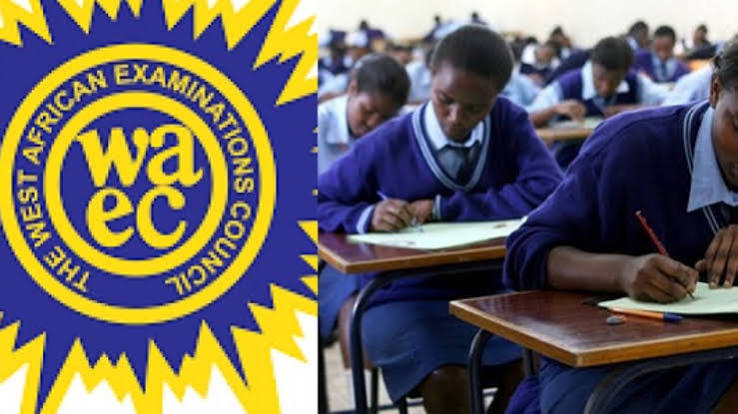
Nearly one in every twelve candidates who sat this year’s West African Senior School Certificate Examination for School Candidates has ended the season in a state of limbo, with the West African Examinations Council confirming that the results of 167,486 candidates, representing 8.59 per cent of those who sat the 2026 Computer-Based WASSCE, have been withheld over alleged examination malpractice.
The Head of the WAEC Nigeria National Office, Dr Amos Josiah Dangut, disclosed the figure while releasing the results at the council’s national office in Yaba, Lagos, on Wednesday, August 5, 2026, in what he described as his third and final briefing in that role.
A total of 1,959,668 candidates from 24,207 schools across Nigeria, Benin Republic, Côte d’Ivoire and Equatorial Guinea registered for the examination, while 1,950,726 eventually sat the papers, conducted between April 24 and June 19, 2026. Of that number, 1,200,514 candidates, or 61.54 per cent, obtained credit passes in at least five subjects including English Language and Mathematics, while 1,687,378 candidates, representing 86.50 per cent, secured five credits with or without the two compulsory subjects. The council put the gender split at 997,267 female candidates (51.12 per cent) and 953,459 males (48.88 per cent), with 641,631 female candidates (32.89 per cent) and 558,883 male candidates (28.65 per cent) meeting the five credit benchmark, meaning female candidates outperformed their male counterparts in the headline category. Processing is not yet complete: 1,834,695 results, or 94.05 per cent, have been fully released, while 116,031 results, representing 5.95 per cent, are still being processed. A total of 1,213 candidates with special needs sat the examination, comprising 137 visually challenged, 491 hearing impaired, 55 spastic and mentally challenged, and 41 physically challenged candidates.
Read against the council’s own recent records, the 8.59 per cent malpractice rate marks a third consecutive year of decline. WAEC withheld 192,089 results in 2025, put at 9.75 per cent, itself a reduction from the 11.92 per cent recorded in 2024. That 2025 figure was later adjusted to 191,053 candidates, or 9.7 per cent, when the council released reviewed results after admitting to grading discrepancies in serialised papers, an episode Dr Dangut publicly apologised for at the time. Measured against the revised benchmark, this year’s rate is 1.11 percentage points lower.
The direction of travel is downward, but the absolute burden remains heavy. Roughly 167,000 young Nigerians will now wait on the outcome of investigations rather than proceed cleanly into the admission cycle, and the cumulative total of withheld results across the last three examination diets runs well above half a million.
Performance, meanwhile, has moved in a different direction from integrity. The 61.54 per cent pass rate represents a 1.42 percentage point decline compared with 2025, though it sits far above the 38.32 per cent recorded when the 2025 results were first announced, which the council then attributed partly to poor preparation and reliance on malpractice, before the grading error was discovered and the figures revised upward.
Dr Dangut pointed to two persistent problems. “The increasing use of cell phones in the examination hall, in spite of the existing ban, and organised cheating in some schools, are other nagging issues,” he said. He added that supervisors and invigilators caught aiding malpractice had been apprehended and would face sanctions through their respective state ministries of education, and that “The Council will continue to sanction all cases of examination malpractice as schools, supervisors, teachers and candidates perpetrating this evil are not helping the educational system.” On the withheld results specifically, he said: “The council is investigating the allegations. Those exonerated will have their results released, while those found culpable will face the consequences.”
He also credited collaboration with security agencies for the conduct of the examination despite logistical challenges, inflation and the activities of rogue website operators.
This was the second edition of the Computer-Based WASSCE for school candidates, and WAEC deployed the Digital Examiner Mark System to speed up result processing, serialisation of question papers to curb malpractice, and a new portal allowing candidates to generate e-PINs directly. Marking involved 102,708 examiners across 88 venues. Results can be checked at waecdirect.org, digital certificates become available 48 hours after checking, hard copies within 90 days, and registration for the 2026 WASSCE for Private Candidates Second Series is ongoing at N37,500 with provision for walk in candidates.
The shift to computer based testing follows a Federal Government directive, and the council had signalled as far back as its 2025 briefing that it was concluding arrangements for full CBT conduct in 2026. The evidence so far suggests digitisation has trimmed rather than eliminated malpractice.
A withheld result means the case is under investigation. Final decisions rest with the Nigeria Examinations Committee after review. Based on guidance published on the council’s website, affected candidates are advised to avoid panic, contact their school principal or examination officer, and use the official WAEC Notice of Examinations Malpractice portal, where a candidate can enter an examination number, view the reason for the notice where available, and submit a representation for the council’s consideration. Candidates are further advised to check the portal periodically, including around four weeks after the release of results.
Outcomes vary. Results are released where a candidate is cleared, while specific subjects or an entire result may be cancelled where malpractice is confirmed. Investigations can run from weeks to several months. Candidates may in many cases still apply to tertiary institutions on an awaiting result basis, though the final result will be required for clearance and admission confirmation.
Two further complications sit outside the malpractice question. WAEC has restated that results of candidates sponsored by state governments indebted to the council will not be released until outstanding fees are cleared, a recurring dispute that has delayed results for thousands of students in previous years.
The second is misinformation. The council on Wednesday dismissed as fraudulent a viral document dated August 2, 2026, claiming that candidates from 50 secondary schools had their results withheld, stating on its official X account that the message did not originate from WAEC. A similar list, naming 120 schools, circulated in 2025 and was likewise debunked by the council.
Candidates and parents are advised to rely only on WAEC’s website, verified social media accounts and offices, and to avoid paying agents or online intermediaries claiming they can release, upgrade or fast track a withheld result. Such claims are typically scams.
For now, the 167,486 files sit with the Nigeria Examinations Committee, and the credibility of a certificate that governs entry into Nigerian universities rests on how transparently those cases are resolved.