
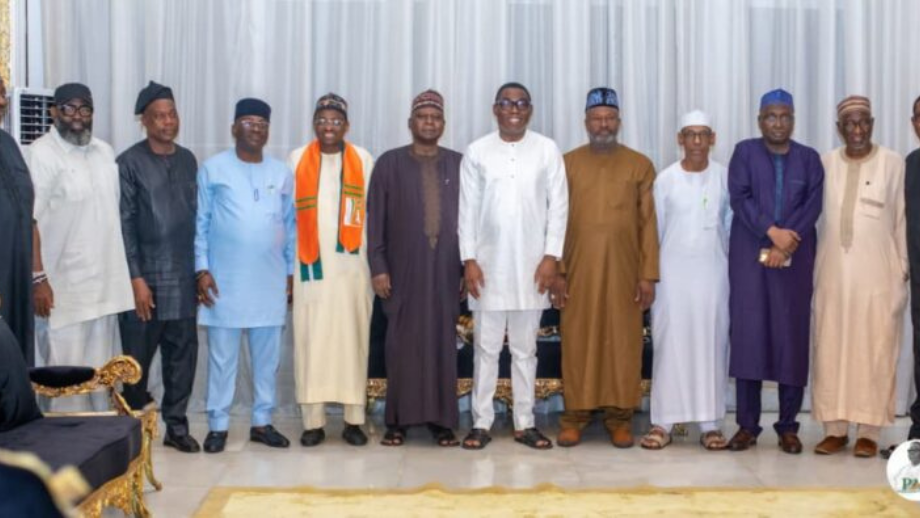
Nigeria’s leading opposition parties are to sign a written unity agreement in Abuja on 23 November, their most formal attempt yet to close ranks before the 2027 general election and to avoid the splintering that eased President Bola Tinubu’s path to power in 2023. The agreement is to be signed at the second Summit of Nigeria’s Opposition Political Parties at the NAF Conference Centre, where the parties also plan to adopt a National Covenant for Democratic Renewal and a Framework for Opposition Unity.
The plan was set out by the Coalition for Democracy in a statement signed by its convener, Salihu Lukman, a former national vice chairman of the All Progressives Congress. The coalition said working groups drawn from the participating parties produced the documents after the first opposition summit held at the Shehu Musa Yar’Adua Centre on 31 August. A third paper, a National Reform Programme, sets out the policy priorities of any government the alliance might form. The six parties that pioneered the platform are the African Democratic Congress, the Allied People’s Movement, the Nigeria Democratic Congress, the Peoples Democratic Party, the Peoples Redemption Party and the Social Democratic Party.
Central to the effort is a deliberate shift from the handshake deals of the past to commitments that are written down and, in the coalition’s own term, enforceable. Lukman has argued that any agreement reached must be written, witnessed, and carry consequences. The coalition, which grew out of a group Lukman leads that warned in an August open letter that the country risked sliding toward a one-party state, has named the protection of electoral integrity as the first shared undertaking, pledging to work so that votes are counted and respected. It recently briefed the Catholic cleric John Onaiyekan, who threw his weight behind the drive as vital to the health of the country’s democracy.
The urgency is rooted in simple arithmetic. Figures declared by the Independent National Electoral Commission gave Tinubu victory in 2023 with 8,794,726 votes, about 36.6 per cent, ahead of Atiku Abubakar, who polled 6,984,520, Peter Obi with 6,101,533 and Rabiu Kwankwaso with 1,496,687. Together the three main challengers drew close to 14.6 million votes, well above the winning tally, a division the opposition has long described as self-inflicted. Turnout stood at 26.71 per cent of more than 93 million registered voters, the lowest since the return to civilian rule in 1999.
Opposition leaders have reached for the memory of 2015, when rival parties merged into the APC and unseated a sitting president, the only time that has happened in Nigeria. The lesson they draw is that unity, rather than virtue, decides such contests.
Whether that unity can hold is the harder question. An earlier coalition built around the ADC, which drew in Atiku, Obi, Kwankwaso and former Kaduna governor Nasir El-Rufai in 2025, fractured this year over who should lead the ticket, with Obi and Kwankwaso moving to the Nigeria Democratic Congress and a faction of the ADC publicly distancing itself from Atiku. Several front-runners, among them Atiku, Obi and Oyo governor Seyi Makinde, stayed away from the August summit.
The coalition has said the November gathering will draw party chairmen and secretaries, presidential aspirants and their running mates, members of the National Assembly minority caucus, civil society groups and the diplomatic community, and it has stressed the importance of candidates attending in person to affirm the pact. It has not announced any agreement on a single candidate, and the questions of zoning and of which aspirant might step aside remain open.
For now the opposition is betting that a documented, rules-based alliance can hold where goodwill did not. The signatures expected in Abuja will test whether parties long divided by ambition can subordinate it to a common goal, and whether the leaders who hope to govern are willing to be bound by the same rules they are asking others to accept.