
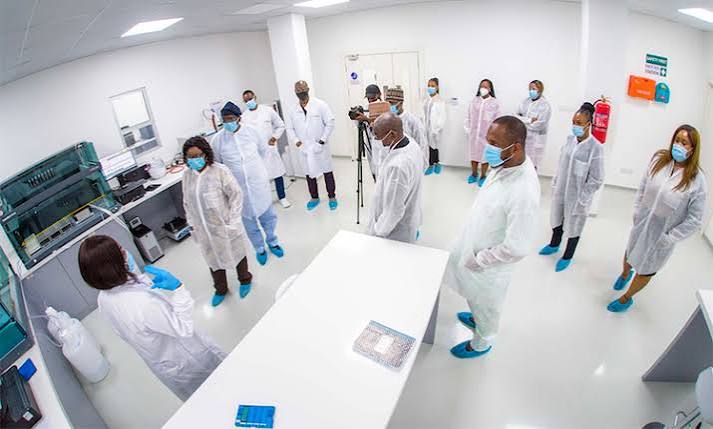
Nigeria is preparing to convert one of its least understood assets, the genetic code of more than 200 million citizens, into an engine for medicine, agriculture and national income, with the Federal Government unveiling plans for a dedicated Nigeria Genomic City. The announcement signals a deliberate attempt to move the country from a spectator in the global biotechnology economy to an owner of the scientific value locked inside its own population.
The Minister of Education, Dr. Tunji Alausa, disclosed the initiative at a high level stakeholders’ meeting in Abuja, framing it as a strategic national investment that would position Nigeria as a leading African hub for genomics, biotechnology and precision medicine. According to a statement from his office, the project is designed to harness the country’s genomic diversity to advance scientific research, strengthen healthcare, improve food security and accelerate economic growth.
Alausa tied the urgency to demography. “The biggest demographic dividend ever witnessed anywhere in the world could become a demographic calamity for us if we fail to act. We do not have a choice,” he said. He explained that the project had been in development for more than 20 months and was deliberately structured as a multi agency and multi ministerial effort. “This project is not about institutional ownership or individual interests. It belongs to Nigeria and must be driven through broad national collaboration,” he said.
The plan places the University of Abuja as host institution, with the National Information Technology Development Agency, the National Board for Technology Incubation and other partners providing technological support, while the Federal Ministry of Education coordinates implementation. The Minister of State for Education, Prof. Suwaiba Ahmad, described the initiative as a chance for Nigeria to become a global leader in scientific innovation, citing the country’s population, growing research capacity and technical expertise.
Presenting the technical framework, the Pioneer Director of the Centre for Genomic and Precision Medicine at the University of Ibadan, Prof. Mayowa Ojo Owolabi, said the project would build a sustainable national platform on genomic, biological and health data to drive discoveries, commercialise innovations and improve disease prevention, diagnosis and treatment. He said it would also strengthen crop and livestock production, attract investment and develop a world class scientific workforce. “Africa possesses the world’s richest genetic diversity, placing Nigeria in a unique position to become a global hub for genomics, precision medicine and biotechnology,” Owolabi said, adding that the initiative would safeguard the country’s resources through data sovereignty and intellectual property protection while integrating artificial intelligence and bioinformatics.
The scientific case rests on a striking imbalance. Because modern humans originated on the continent, Africa holds more genetic diversity than anywhere on earth, yet Africans remain heavily underrepresented in global research. Industry estimates have long put the share of genetic material from Africa used in global pharmaceutical research at under three percent. The National Biotechnology Research and Development Agency has stated that more than 80 percent of genomic data currently in global use is drawn from non African populations, a gap that limits the effectiveness of imported medicines for local patients.
That gap carries a heavy domestic cost. Nigeria bears the world’s highest burden of sickle cell disease, an inherited blood disorder. Figures from the Federal Ministry of Health and Social Welfare and the World Health Organisation put the number of babies born with the condition in Nigeria at between 150,000 and 200,000 every year, close to a third of the global total, while an estimated 40 to 50 million Nigerians carry the sickle cell trait. The commercial stakes are equally large. The global sickle cell treatment market was valued at about 3.69 billion dollars in 2025 and is projected to reach 7.41 billion dollars by 2030, powered in part by newly approved gene editing therapies. Much of the genetic insight underpinning such treatments has historically been generated outside the continent, with limited benefit returning to it.
Alausa argued that this pattern must change. “Advanced economies have built trillion dollar industries around biotechnology and genomics, while Africa’s genomic data continues to generate enormous value abroad with limited benefits returning to the continent. Nigeria must deliberately protect its scientific resources, strengthen data sovereignty and attract partnerships that deliver mutual benefits,” he said.
To finance the ambition, the minister said the Federal Government was finalising arrangements for a National Research and Innovation Development Fund expected to mobilise nearly 500 million dollars annually for research and innovation nationwide. He said he was optimistic that, following approval by the Federal Executive Council and the National Assembly, President Bola Ahmed Tinubu would assent to the enabling legislation. The initiative aligns with the administration’s stated Renewed Hope Agenda to diversify the economy through science, technology and innovation and to reduce dependence on imported medical technologies.
The Genomic City is not emerging in a vacuum. In May 2026, the National Biotechnology Research and Development Agency launched a National Genomics and Bioinformatics Data Generation, Repository and Management Infrastructure aimed at building a sovereign genomic database, and signed agreements with private biotechnology partners to deploy advanced genomic and artificial intelligence platforms. Its Director General, Prof. Abdullahi Mustapha, said at the time that the country needed to move from being a consumer of foreign genomic data to a producer of globally relevant knowledge, noting that imported drugs are designed around the genetics of other populations. These efforts build on earlier foundations such as the Human Hereditary and Health in Africa programme and the establishment of genomics centres in Abuja and Ibadan.
The country’s most ambitious previous attempt at commercial genomics offers a sobering lesson. 54Gene, founded in 2019 to build a biobank of African DNA, raised about 45 million dollars, reached a valuation of around 170 million dollars and sequenced the genomes of roughly 100,000 Nigerians across 300 ethnic groups before collapsing in 2023 amid failed fundraising and boardroom conflict. The fallout continues in court, where a petition filed in July 2025 by its founder, Dr. Abasi Ene Obong, is contesting the disposal of the company’s assets, including the sensitive genomic data of tens of thousands of Nigerians reportedly valued at about three million dollars. Industry observers warned at the time that the failure of such a flagship venture could dampen global investor appetite for the sector and underscored how capital intensive genomics remains, given the high cost of sequencing equipment and data storage.
That history frames the questions now surrounding the Genomic City. Success will depend not only on political will but on sustained funding, credible governance of citizens’ genetic data and the ability to translate laboratory discoveries into locally made diagnostics, medicines and jobs. Reaffirming the government’s commitment, Alausa assured stakeholders that the Federal Ministry of Education would provide the leadership and coordination required to deliver the project, expressing confidence that collaboration among government, academia, industry and the private sector would unlock the country’s scientific potential and secure long term benefits for future generations.