
A group of youths in Port Harcourt, Rivers State, has taken to the streets to campaign against the All Progressives Congress (APC) ahead of the 2027 general elections, directly contradicting recent statements by Federal Capital Territory Minister Nyesom Wike that the state would unite behind President Bola Tinubu’s re election.
In a 45 second video circulated on social media platform X, the youths accused the Tinubu administration of deepening economic hardship across the country. The protesters chanted in Pidgin English, saying, “You get food for house? No, you get light for house? No. Hunger de. Tinubu brought hunger through bad government.” The group vowed to mobilise voters against the APC in the upcoming election, citing persistent issues with food security and electricity supply as primary grievances.
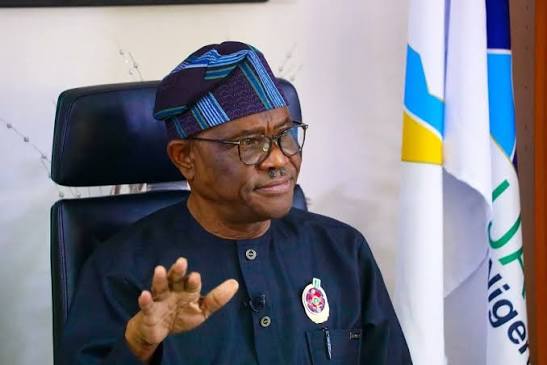
This grassroots opposition contrasts sharply with the position of Minister Wike, who has publicly asserted that Rivers State would not produce any meaningful opposition in 2027. Wike had declared that eligible voters in the state were united in a plan to re elect President Tinubu. He has built a political coalition, often referred to as a rainbow coalition, comprising members from various political parties who have aligned to support his preferred candidates.
The divergence between Wike’s political projections and the sentiments expressed by these youths highlights a significant disconnect between top level political endorsements and grassroots public opinion in the oil rich state. Historically, Rivers State has been a battleground in Nigerian politics, with voter turnout in the state averaging between 45 and 50 percent over the last three election cycles, according to data from the Independent National Electoral Commission (INEC). The state’s substantial voter population, estimated at over 3.4 million registered voters as of the 2023 voter register, makes it a critical prize for any presidential candidate.
The economic conditions cited by the youths reflect national statistics that have drawn concern. The National Bureau of Statistics (NBS) reported in mid 2026 that food inflation in Nigeria stood at over 35 percent, while unemployment rates among youths aged 15 to 35 remained above 40 percent. These figures provide a quantifiable backdrop to the frustrations expressed by the protesters.
The political landscape in Rivers State has become increasingly complex ahead of 2027. While Wike commands significant influence through his coalition, the spontaneous nature of the youth protests suggests that political allegiances remain fluid. The ability of the opposition to capitalise on these sentiments and translate them into electoral outcomes will depend largely on the state of the economy and the effectiveness of campaign mobilisation efforts in the coming months.
As the 2027 election season intensifies, the gap between political pronouncements and public sentiment in Rivers State will likely become a focal point for both the ruling APC and opposition parties. Whether Wike’s coalition can consolidate the state’s votes behind Tinubu or whether the emerging grassroots resistance will alter the political calculus remains a key question for the next electoral cycle.