
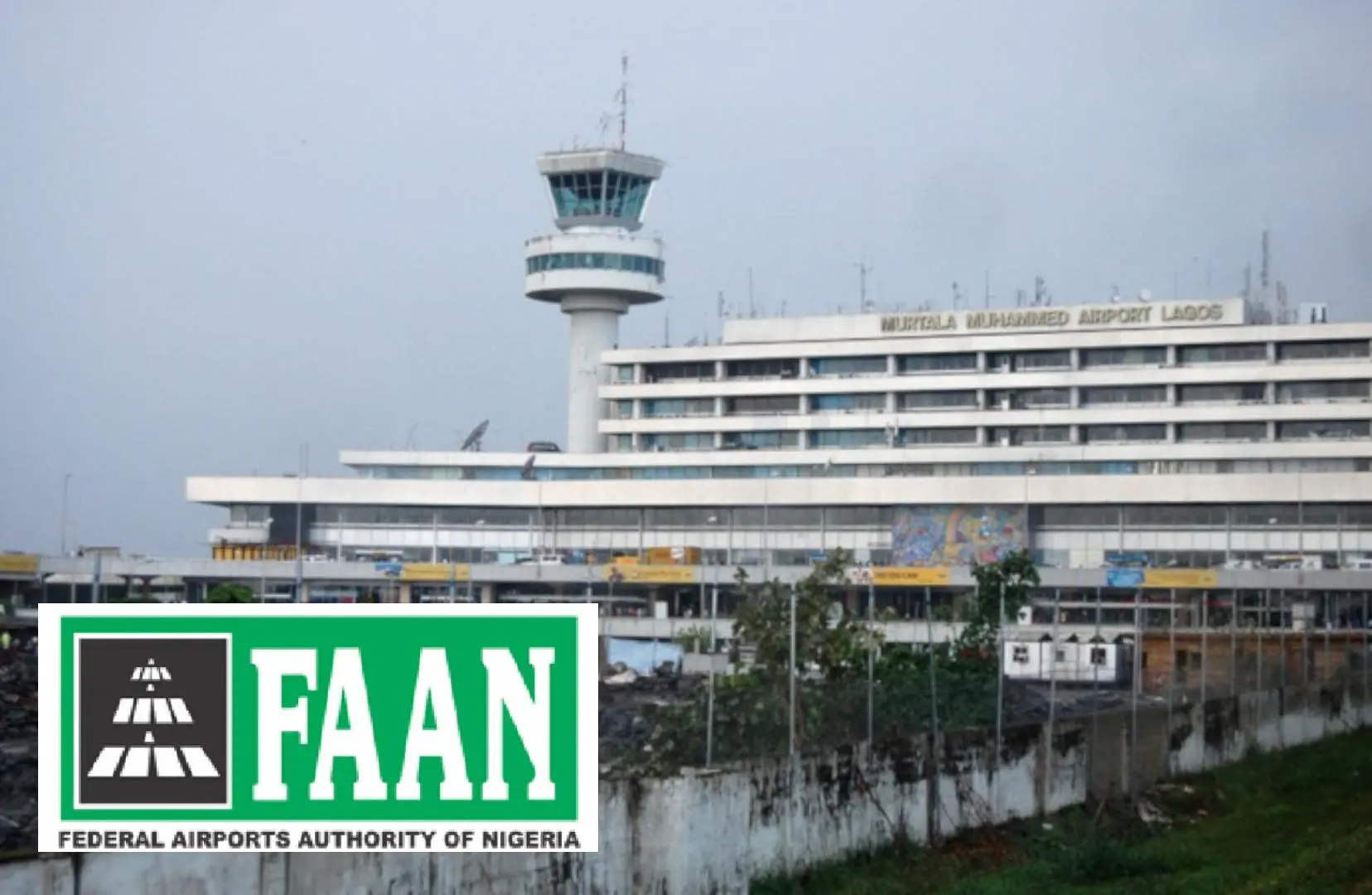
The Federal Airports Authority of Nigeria has stated that it has not imposed a blanket ban on Uber, Bolt or other e-hailing services at airports under its control. The authority said ongoing discussions with the operators are intended to create a framework that prioritises passenger safety, security and orderly operations within airport premises.
In a statement issued on Thursday and signed by its management, FAAN said its position had never been directed at limiting travellers’ transport choices or diminishing the role of e-hailing platforms. “FAAN wishes to clarify that its position is not, and has never been, directed at limiting passengers’ access to transportation options or undermining the important role that e-hailing services play in providing convenient mobility to air travellers,” the statement read.
The clarification follows reports of restrictions affecting e-hailing operations at some FAAN-managed airports, notably Murtala Muhammed International Airport in Lagos and Nnamdi Azikiwe International Airport in Abuja. Passengers and operators had complained of inconvenience, higher traditional cab fares and uncertainty over pick-up arrangements. Earlier internal directives and operational adjustments had linked the temporary limitations to the finalisation of licence agreements and the introduction of new management systems for ground transport.
Central to the developments is the Airport Car Hire Rank Management System, known as ACHRAMS. FAAN introduced the digital platform to modernise airport car-hire operations, improve visibility and tracking of vehicles and drivers, support cashless transactions and manage concession charges. The authority emphasised that ACHRAMS is not an e-hailing application and was not designed to compete with or replace Uber, Bolt or similar platforms. “ACHRAMS is not an e-hailing application and is not intended to compete with or replicate the services provided by Uber, Bolt or any other e-hailing platform,” FAAN stated. The system focuses on designated ranks, operational oversight and security within the controlled airport environment.
FAAN explained that airports are highly regulated spaces requiring commercial transport providers to be identifiable, accountable and properly integrated into existing security and operational protocols. It cited complaints and observed challenges, including passenger solicitation and touting around airport premises, as reasons for seeking a clearer framework. The authority said it had been engaging relevant e-hailing operators to reach a mutually workable arrangement that preserves the convenience of their services while meeting safety, security and accountability standards.
Discussions currently centre on passenger safety and security, operational visibility, accountability of vehicles and drivers, and the orderly management of pick-up activities within airport grounds. FAAN acknowledged that some passengers may have experienced inconvenience while the issues are being resolved and expressed a desire to conclude the talks promptly. “The Authority and the affected operators are currently engaged in constructive discussions towards resolving the outstanding issues,” the statement said. It expressed confidence that a mutually acceptable understanding would be reached shortly.
The episode reflects longer-standing tensions in airport ground transportation in Nigeria. Traditional car-hire operators have for years competed with the rise of app-based services, while airport authorities have sought greater control over security, traffic flow and revenue from concessions. ACHRAMS forms part of FAAN’s broader digital and operational reforms aimed at standardising services and reducing informal practices. Vehicle standards linked to the system, including requirements for models from 2012 or newer, had earlier generated friction with some operators.
FAAN reaffirmed its commitment to collaborating with Uber, Bolt and other mobility providers so that passengers continue to have safe and convenient options. The authority stressed that the current situation should not be interpreted as a prohibition on e-hailing services but as an effort at operational alignment within the specific requirements of airport environments.
As talks continue, the outcome will determine how e-hailing platforms are formally integrated into Nigeria’s major airports and whether the balance between regulation, passenger convenience and the interests of different transport providers can be sustained.