


53 Lives Lost in Latest Sokoto Waterway Tragedy
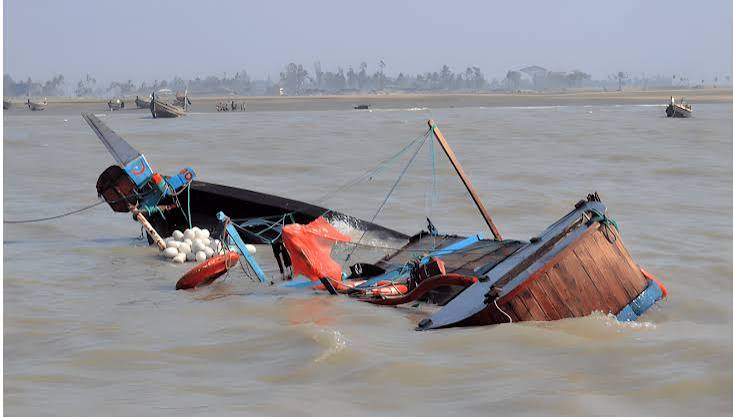
At least 53 people, most of them women and children on their way to rice farms, have died in the latest boat disaster on Nigeria’s inland waterways, a tragedy in Sokoto State that has again exposed the wide gap between the country’s water safety rules and their enforcement.
The boat capsized on Thursday morning shortly after leaving the Gorau crossing point in Goronyo Local Government Area, along the Rima River. According to the Sokoto State Police Command spokesman, DSP Ahmed Rufai, the vessel was carrying 77 passengers, including farmers, women and children, when it overturned. He said 15 people were rescued alive, and confirmed that search teams were still combing the river for those unaccounted for. The recovered bodies were buried in accordance with Islamic rites.
Casualty figures rose through the day as recovery continued, moving from 40 to 46, then 47, before reaching 53 by Friday. The Head of Operations at the National Emergency Management Agency, NEMA, Sokoto office, Alhaji Tukur Abubakar, confirmed the recovery of bodies but declined to give a fixed figure while the operation was still active. The Special Adviser on the State Emergency Management Agency, SEMA, Alhaji Aminu Liman Bodinga, said personnel from NEMA, SEMA, the National Inland Waterways Authority, NIWA, security agencies, the Nigerian Red Cross Society and local divers were involved in the search. Residents said the boat was carrying between 75 and 80 people, including the village head of Nabatsami Gorau, and that overloading was suspected. The boat operator and the village head were among the survivors.
What makes the Gorau disaster more troubling is its familiarity. Local reports noted that it occurred almost exactly a year after a similar accident in the Kijio community, also in Goronyo, where a boat conveying passengers to Goronyo market capsized in August 2025, leaving more than 40 missing. According to one civil society assessment, Sokoto State alone recorded eight boat accidents between 2020 and 2025, claiming at least 78 lives before this week’s deaths.
The wider national record is grimmer still. Industry data from the Marine Crafts Builders Association of Nigeria put the average death toll on the country’s waterways at about 330 a year in 2021 and 2022. A separate compilation by the maritime platform Ships and Ports recorded at least 231 deaths in 2024. By August 2025, roughly 90 people had already died in accidents across Rivers, Niger, Kwara and Sokoto states. In September 2025, about 60 passengers were killed when an overloaded boat struck a tree stump on the River Niger in Borgu Local Government Area of Niger State.
Analysis by the Nigeria Safety Investigation Bureau, NSIB, points to a consistent cause. More than two thirds of all boat fatalities are drownings, and about 90 per cent of those who drown were not wearing life jackets. The recurring factors identified by safety agencies are the same in almost every case: overloading, ageing wooden boats, absence of life jackets, illegal night travel and weak enforcement of existing rules.
Nigeria does not lack regulations. The Inland Waterways Transportation Regulations, commonly called the Water Transport Code, were passed in January 2023 and formally launched in April 2024. NIWA, under its Managing Director Bola Oyebamiji, made life jackets compulsory nationwide and restricted commercial boats to registered loading points. The agency has reported measurable gains, claiming a 30 per cent reduction in fatalities in 2024 and a 72 per cent drop in 2025 compared with 2022, with deaths falling to about 92 in the first eight months of 2025.
Yet those gains are unevenly spread. The Lagos State Waterways Authority, which enforces safety more tightly in a wealthier, more regulated environment, recorded only one death in 2024 and six in 2025. The contrast with rural riverine communities, where residents depend daily on fragile wooden canoes with no alternative, is stark.
The Federal Government has responded to the Gorau deaths with a now familiar appeal. The Ministry of Marine and Blue Economy, led by Dr Adegboyega Oyetola, has again urged state governments to ban wooden boats for commercial use, invest in modern fibre and aluminium vessels and enforce a ban on night travel. The ministry says it distributed 35,000 life jackets to riverine states in 2025.
Such measures have been announced repeatedly after previous disasters. The persistent question, raised once more by the mourning families of Gorau, is not what the rules say, but who ensures that a village boat crossing a swollen river at harvest time actually obeys them. Until enforcement reaches the crossing points where poor Nigerians board overloaded canoes each morning, the waterways will remain among the deadliest routes in the country.