

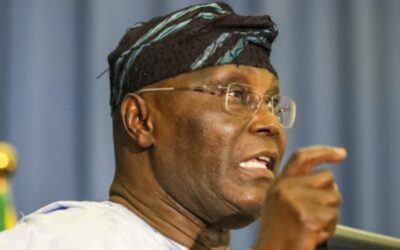
Osun Defeat: APC Stakeholders Petition Tinubu Against Oyetola
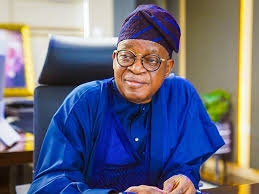
Barely a week after the All Progressives Congress lost the Osun State governorship election, a group of party stakeholders has petitioned President Bola Tinubu, placing the blame for the defeat squarely on the immediate past governor and Minister of Marine and Blue Economy, Gboyega Oyetola.
In an open letter dated 18 August 2026 and titled “Why We Lost the Osun State August 15, 2026 Gubernatorial Election,” the Osun APC Stakeholders Forum accused Oyetola of concentrating political appointments and party tickets within a single camp, a practice it said hollowed out the party’s grassroots and drove critical members away.
The letter, signed by the forum’s Coordinator, Professor Akin Adeyanju, and its Secretary, Honourable Sola Ajayi, described the group as a pressure bloc within the APC. According to the stakeholders, Oyetola determined the party’s governorship and deputy governorship candidates, three senatorial candidates, nine House of Representatives candidates and 26 State House of Assembly candidates without wide consultation. They also alleged that federal appointments from the state, including 31 local government and 332 ward Renewed Hope Ambassadors, were drawn largely from his political tendency.
“We respectfully submit that the principal reason for our defeat was the conduct of the immediate past governor of the state and Honourable Minister of Marine and Blue Economy, Gboyega Oyetola,” the group wrote. It added that the “pattern of exclusion left the party’s base disengaged and cost us the support of critical stakeholders and communities across the state’s three senatorial districts.”
The forum asked the President to order an independent review of the Osun APC’s leadership and candidate-selection process, set up a fact-finding committee to examine the primaries, and convene a reconciliation meeting supervised by the party’s National Working Committee. It also called for a state congress to produce a representative executive and a fairer spread of federal appointments across the three senatorial districts.
Oyetola, who is widely described as a relative of President Tinubu, had withdrawn from the 2026 race and pledged to work for the party’s return to power. He had not responded publicly to the allegations as of the time of filing, and the letter reflects the account of one faction rather than an agreed party position.
The petition lands against a clear electoral verdict. The Independent National Electoral Commission declared the incumbent, Ademola Adeleke, winner of the 15 August poll with 511,067 votes, or 50.8 per cent of the 1,005,800 ballots cast. The APC candidate, Bola Oyebamiji, polled 444,815 votes, representing 44.2 per cent, losing by a margin of 66,252 votes. Najeem Salaam of the African Democratic Congress came third with 17,180 votes.
Contested across the state’s 30 local government areas and 332 wards, the election drew 2,339,233 registered voters, the highest in Osun’s history, with about 81.5 per cent collecting their permanent voter cards. Adeleke, who secured a second term after moving from the Peoples Democratic Party to the Accord Party, reportedly carried 19 of the 30 councils. His victory delivered the Accord Party its first governorship in the state.
For the APC, the complaint carries a familiar ring. The party’s 2022 defeat in Osun, when Adeleke beat Oyetola by 28,344 votes, was widely attributed to a bitter feud between Oyetola and his predecessor, Rauf Aregbesola, then Minister of Interior. Aregbesola’s faction, The Osun Progressives, had backed Moshood Adeoti against Oyetola in the primary and largely stood aside during the campaign. Analysts at the time argued that the split cost the APC councils it had previously controlled.
That history frames the current grievance. Two successive Osun governorship elections have now been lost by the APC amid accusations that internal exclusion, and not the opposition’s strength alone, drained the party’s base. The stakeholders’ appeal to Tinubu, whose political roots lie in the South West, points to a recurring pattern in which control of the state chapter, appointments and tickets sits at the centre of the party’s fortunes.
Whether the President intervenes as requested remains to be seen. The forum expressed confidence that his involvement could “reunite its ranks in Osun State” and reposition the party for future contests. Aggrieved members may also test the outcome at the Election Petition Tribunal, though no formal challenge to the result had been confirmed at the time of writing.
What is settled is the result itself. What remains open is whether the APC can heal the internal divisions that its own members now say have cost it two governorship elections in a row.