
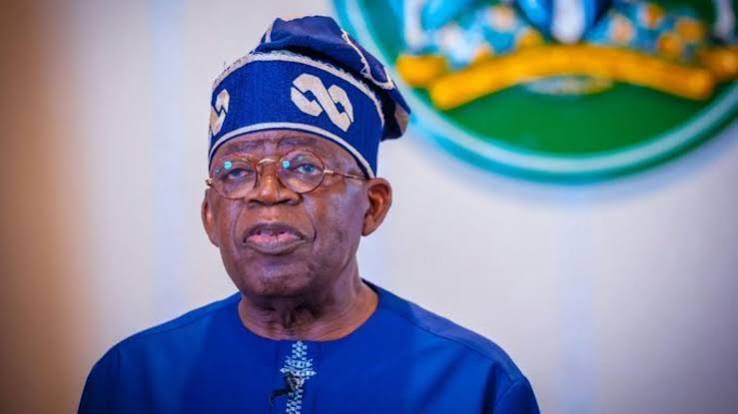
Kaduna has emerged as one of the clearest tests of whether President Bola Tinubu can significantly improve his standing in Northern Nigeria before the 2027 presidential election, after Governor Uba Sani predicted that the President could raise his 2023 vote share in the state from 29 per cent to between 70 and 80 per cent.
Sani made the projection during a Channels Television interview as political parties intensify preparations for the February 20, 2027 presidential election. The Independent National Electoral Commission has already fixed the date and formally commenced the electoral timetable.
The prediction is politically significant, but Kaduna’s election database shows just how large a change it would represent.
In 2023, former Vice President Atiku Abubakar of the Peoples Democratic Party won Kaduna with 554,360 votes, ahead of Tinubu’s 399,293. Peter Obi of the Labour Party polled 294,494, while Rabiu Kwankwaso of the New Nigeria Peoples Party secured 92,969 votes.
Tinubu’s 399,293 votes represented 29.36 per cent of Kaduna’s 1,360,153 valid votes.
For the President to secure 70 per cent of the same number of valid votes, he would need about 952,107 votes, an increase of roughly 553,000 votes over his 2023 tally.
At 80 per cent, the equivalent would be about 1.09 million votes, almost 689,000 more than he received in 2023.
That makes Sani’s forecast not merely a prediction of an electoral victory. It represents a proposed transformation of Kaduna’s voting pattern.
Kaduna’s 2023 Result Tells A More Complicated Story
Kaduna was not simply an Atiku versus Tinubu contest in 2023.
The combined votes of Atiku and Obi were 848,854, more than twice Tinubu’s total. Atiku alone defeated Tinubu by 155,067 votes.
The state had 4,335,208 registered voters, but only 1,418,046 were accredited for the presidential election. Total votes cast were 1,401,376, including 1,360,153 valid votes and 41,223 rejected votes.
This means that only about 32.3 per cent of registered voters cast ballots in the presidential election.
That low participation is important when assessing any 2027 projection. A candidate’s vote share can change because voters switch allegiance, but it can also change because different groups turn out, stay home or become newly registered and participate.
There is therefore no statistical basis at present for treating the governor’s 70 to 80 per cent projection as an established electoral outcome.
It remains a political forecast.
Sani Has One Important Piece Of Evidence
The governor’s argument is not entirely without measurable political evidence.
Kaduna’s political structure has changed since the 2023 election, particularly through defections to the APC.
In February 2025, three PDP members of the Kaduna State House of Assembly defected to the APC, while Amos Magaji, a member of the House of Representatives, also moved from the PDP to the ruling party.
Later that year, Senator Sunday Katung, who represents Kaduna South, and other opposition politicians formally joined the APC. Premium Times reported that at least 10 opposition politicians, including Katung and House of Representatives member Daniel Amos, joined the ruling party at a November 2025 rally in Kafanchan.
The Kaduna State Government subsequently said that 10 of the state’s 16 House of Representatives members had moved from opposition parties to APC, while seven of the 12 PDP members in the state House of Assembly had also defected. Those figures are government claims about party strength and should not be interpreted as equivalent to voter support.
A defection by an elected politician can alter party organisation, campaign structures and access to local political networks, but it does not automatically mean that the politician’s previous voters will follow.
Southern Kaduna Could Be Particularly Important
The governor has specifically pointed to political changes in Southern Kaduna, historically one of the areas where opposition parties have performed strongly.
The 2023 presidential results illustrate this.
Atiku won Kaduna overall and secured victories across 14 local government areas, while the Labour Party won seven. The APC was victorious in only two local government areas in the presidential contest, according to the reported collation figures.
The APC’s subsequent expansion into parts of Southern Kaduna therefore represents a genuine change in the political landscape, although its eventual effect on presidential voting cannot yet be quantified.
The Federal Government has also announced developments that the governor believes could strengthen Tinubu’s appeal.
The National Universities Commission reported in January 2025 that President Tinubu had consented to the establishment of a federal university in Southern Kaduna, while discussions were also underway over a Federal Medical Centre in Kafanchan.
By July 2026, the Kaduna governor was also crediting the Tinubu administration for federal infrastructure commitments, including a proposed 50 kilometre Kaduna metropolitan light rail network estimated at ₦1 trillion and the ₦178 billion reconstruction of the Mando, Kaduna, Birnin Gwari road.
These projects could become campaign issues, but their political value will ultimately depend on implementation and what voters believe they have gained from them.
The Governor’s Own Election Is A Warning Against Easy Predictions
There is another reason to be cautious about reading too much into political alignments.
Uba Sani himself won the 2023 Kaduna governorship election by a remarkably narrow margin.
INEC declared him winner with 730,002 votes against PDP candidate Isa Ashiru’s 719,196, a difference of only 10,806 votes. Labour Party’s Jonathan Asake received 58,283 votes.
The result was subsequently challenged by the PDP candidate, but the Supreme Court affirmed Sani’s election in January 2024.
The governorship result therefore demonstrates that Kaduna’s electorate cannot easily be reduced to a single permanent party bloc.
The same state that gave Atiku a 155,067 vote presidential advantage over Tinubu also returned an APC governor by just 10,806 votes weeks later.
That difference shows how candidate, election type, turnout, local political structures and voter choices can produce substantially different outcomes.
Sani has argued that the North is not experiencing a broad backlash against Tinubu and that political campaigns must extend beyond Abuja, television appearances and social media to the wards and communities where elections are actually won.
That argument is consistent with an important feature of Nigeria’s electoral system: registered voters, rather than online political conversations, determine the result.
The National Bureau of Statistics’ Multidimensional Poverty Index provides evidence of significant deprivation across Kaduna’s senatorial districts, measuring conditions including education, health, living standards, employment and security. The national survey covered more than 56,000 households and was designed to measure poverty beyond income alone.
Consequently, the 2027 contest is likely to involve more than party structures. The electorate will also have a record against which to assess the federal government’s performance.
That is why Sani’s own warning to politicians about funding campaign promises is relevant to the broader debate. Campaign declarations can attract attention, but voters still have to decide whether the promises are credible and whether existing governments have delivered measurable improvements.
For Tinubu, Kaduna presents both an opportunity and a difficult benchmark.
Moving from 29.36 per cent in 2023 to 70 per cent would require an unprecedented redistribution of votes in his favour based on the last presidential result. Reaching 80 per cent would require an even more dramatic shift.
The political landscape has undoubtedly changed. Opposition defections, new federal projects and stronger APC structures provide the ruling party with factors that did not exist in the same form in 2023.
But whether those changes translate into votes remains unresolved.
With the 2027 presidential election scheduled for February 20, the decisive evidence will not come from predictions made in 2026. It will come from voter registration, candidate choices, campaign organisation, turnout and, ultimately, the ballots cast across Kaduna’s 23 local government areas.