
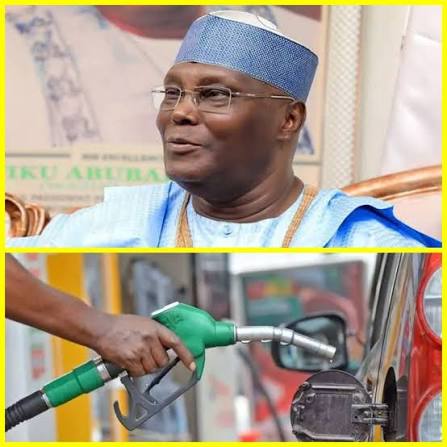
Former Ekiti State Governor Kayode Fayemi has described the debate over fuel subsidy ahead of the 2027 general elections as both an economic and political issue, arguing that opposition candidate Atiku Abubakar’s position on subsidy restoration could appeal strongly to Nigerians affected by rising living costs.
Fayemi, a former Minister of Solid Minerals Development, said Atiku’s proposal to revisit the fuel subsidy policy was comparable to the political strategy adopted by the All Progressives Congress (APC) during the 2023 presidential election with its Muslim-Muslim ticket.
His comments have added a fresh dimension to the ongoing national conversation over petrol subsidy, a policy issue that has remained central to economic debates in Nigeria since its removal and the subsequent increase in fuel prices.
Speaking during an interview on Arise Television’s Prime Time, Fayemi said he viewed Atiku’s subsidy proposal primarily as a political calculation rather than an economic framework.
“My take on that is that Atiku’s proposal of subsidy is politically equivalent to our own Muslim-Muslim ticket in 2023. It’s a political strategy. It’s not an economic construct,” Fayemi said.
However, he acknowledged that the proposal could gain public support because many Nigerians have experienced financial pressure following the removal of petrol subsidy.
According to him, citizens facing economic difficulties are often more focused on the immediate impact of government policies on their daily lives than on technical arguments surrounding economic reforms.
“But understandably, it’s a political strategy that will sell with those who are hard done by the impact of fuel subsidy removal,” he said.
Fuel subsidy has remained one of Nigeria’s most debated economic policies, with successive administrations struggling to balance government spending, market reforms and the impact of petrol prices on households and businesses.
Fayemi said he had supported subsidy removal for years, including during his tenure as chairman of the Nigerian Governors’ Forum. He argued that the policy was necessary but criticised the way the current administration implemented the reform.
“I was and I remain an advocate of fuel subsidy removal. As chairman of the governors’ forum, I spent four years in this battle,” he said.
The former governor said President Bola Tinubu inherited significant groundwork on subsidy removal from the previous administration, although he believed the implementation process created challenges.
“What President Tinubu inherited, in fairness to him, was the work that had already been completed by that administration. The only challenge I had with it was the way it was done,” Fayemi said.
His comments reflect a broader disagreement among political actors over whether subsidy removal was primarily a necessary economic reform or whether its implementation placed excessive pressure on ordinary Nigerians.
Fayemi also highlighted efforts previously made by state governors, the Federal Government and the World Bank to develop measures aimed at protecting vulnerable Nigerians from the effects of subsidy reforms.
He said a committee involving these stakeholders had worked on a safety-net strategy designed to support Nigerians most affected by the policy change.
“However, as I have also consistently said, because at the Nigerian Governors Forum, we actually had a committee work with the federal government and the World Bank, by the way, to develop a safety net strategy that would address what would happen to the most vulnerable segment of our population,” he said.
According to Fayemi, the economic difficulties experienced by vulnerable Nigerians were the reason Atiku’s position could resonate with some voters.
“I believe that’s what Vice President Atiku is taking advantage of. The vulnerable segment of the population is still hard done by,” he said.
He added that many citizens were primarily concerned about meeting basic needs, including food, education expenses and healthcare costs.
“They just want to live reasonably well, eke out a living, have one or two meals a day, be able to send their kids to school, not be taken in by sickness or anything that might create further problems for them,” Fayemi said.
As political activities gradually build towards the 2027 elections, economic issues, particularly inflation, energy costs and household welfare, are expected to remain important themes in public discussions.
Fayemi argued that poverty and inequality were connected to broader security challenges, including insurgency and banditry, saying economic hardship could contribute to social instability.
The former governor’s remarks also highlight how economic policies often become major electoral issues in Nigeria. Political parties frequently use public reactions to government decisions as part of their campaigns, while opponents challenge whether proposed solutions are economically sustainable.
While Fayemi defended subsidy removal as a reform he has long supported, Atiku’s reported position reflects a different argument centred on reducing the burden experienced by Nigerians after the policy change.
The disagreement illustrates a wider challenge facing policymakers: managing long-term economic reforms while addressing immediate concerns among citizens.
Ahead of 2027, the debate over petrol subsidy is likely to remain a key issue as political parties seek to convince voters on how best to improve living conditions and manage Nigeria’s economy.