
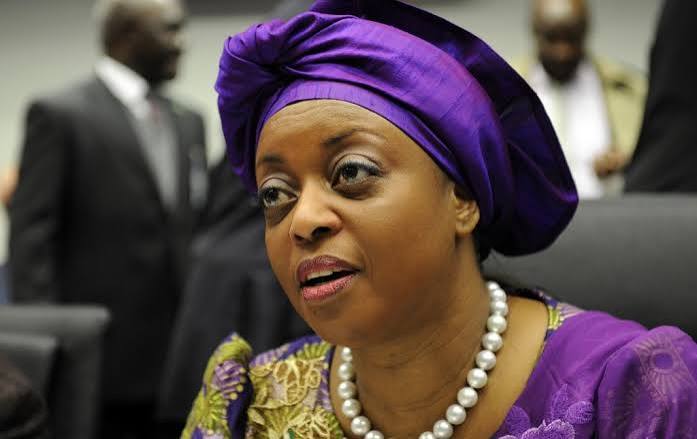
The acquittal of former Petroleum Resources Minister Diezani Alison-Madueke by a London court has not closed the corruption and asset recovery proceedings pending against her in Nigeria, the Human and Environmental Development Agenda has said, drawing fresh attention to the gap between a criminal verdict abroad and the unresolved fate of billions of naira in seized assets at home.
In a statement issued on Sunday by its chairman, Olanrewaju Suraju, HEDA said the verdict of the Southwark Crown Court jury should be respected but confined to the specific bribery charges tried under United Kingdom law. The group argued that the judgment neither proved guilt nor settled any separate allegation, investigation or forfeiture proceeding governed by Nigerian law. It urged the Federal Government to pursue viable cases on the strength of credible evidence and due process, while respecting constitutional safeguards including fair hearing and the protection against double jeopardy.
The distinction the group is drawing rests on a settled point of law. A criminal prosecution and an asset forfeiture action are separate legal processes that turn on different questions and different standards of proof. The collapse of one does not automatically determine the other. That principle is now central to what happens next in Nigeria, where a substantial body of assets linked to the former minister remains tied up in court.
The London outcome itself is not in dispute. On 17 June 2026, after a trial that opened in January and more than 46 hours of jury deliberation, Alison-Madueke was found not guilty on all six counts she faced, five of accepting bribes and one of conspiracy to commit bribery. She had pleaded not guilty and maintained throughout that she neither sought nor accepted bribes and had no direct control over the award of oil and gas contracts. Her co-defendants, oil executive Olatimbo Ayinde and her brother Doye Agama, were also acquitted. The prosecution had been brought by Britain’s National Crime Agency after an investigation spanning more than a decade. The agency said it respected the jury’s decision. Alison-Madueke, who served as minister from 2010 to 2015 under former President Goodluck Jonathan and became the first female president of OPEC, said afterwards that the long investigation had damaged her reputation and restricted her ability to travel and work.
What remains open sits largely in Nigeria and the United States. In 2022 the Economic and Financial Crimes Commission stated that it had recovered about 153 million dollars and secured the forfeiture of more than 80 properties linked to the former minister. Court records over the years show a series of interim and final forfeiture orders covering mansions, cash held in various bank accounts and a Banana Island property in Lagos. In January 2025 the Nigerian government and the United States signed an agreement to repatriate about 52.88 million dollars arising from the forfeiture of the Galactica assets, which the US Justice Department connected to contracts allegedly steered to businessmen Kolawole Aluko and Olajide Omokore. Under the terms disclosed by the Attorney General, Lateef Fagbemi, 50 million dollars was earmarked for rural electrification through the World Bank and 2.88 million dollars as a grant to support counter terrorism capacity in Africa. That US action, like the earlier EFCC forfeitures, was pursued separately from the criminal case decided in London.
Those forfeitures are themselves being contested. In a suit marked FHC/ABJ/CS/21/2023, Alison-Madueke has challenged the EFCC’s move to auction and dispose of properties linked to her, arguing that she was not served with the relevant charges and that final forfeiture orders were obtained without adequate notice, in breach of her right to fair hearing. On 25 June 2026 the Federal High Court in Abuja granted her leave to place evidence of the UK acquittal before it. Justice Inyang Ekwo adjourned the matter to 6 October 2026, when the commission’s preliminary objection and the substantive suit are to be heard together. The EFCC’s position is that the final forfeiture orders remain valid and that notices were published before the orders were made. Those competing claims are now for the court to weigh.
HEDA said it had tracked the case for years and documented it in its Compendium of 100 High-Profile Corruption Cases, noting that its 2020 edition recorded efforts to bring the former minister before a Nigerian court, including an order directing the EFCC to produce her for trial. The group also pressed a wider concern about transparency, calling for a clear public account of what has been recovered, where the assets are held, how they are managed and how proceeds are deployed.
That demand is not HEDA’s alone. A coalition including the Africa Network for Environment and Economic Justice made the same argument in September, with its executive director, David Ugolor, saying it remains difficult for citizens to trace the present status, custody, valuation and disposal of particular assets. Helen Taylor of Spotlight on Corruption noted that funds allocated for rural electrification were still held by the World Bank and had not been returned to Nigeria.
The debate arrives as the EFCC seeks to demonstrate results. At a briefing marking his three years in office on 31 August 2026, the commission’s chairman, Ola Olukoyede, put recoveries at about 1.23 trillion naira over 34 months, alongside 10,872 convictions and the forfeiture of 10,053 tangible assets, including 1,177 real estate properties. He said proceeds from disposals under final forfeiture orders came to about 12.07 billion naira, remitted to the Federal Government. Days later he rejected calls for a separate agency to manage forfeited assets, saying the commission would not mismanage what it recovered.
For now, a UK jury has cleared the former minister of the charges it tried. Substantial assets linked to her have been forfeited in Nigeria and abroad through separate proceedings, some of which she is challenging. What the October hearing decides, and whether authorities publish the asset-by-asset record that civil society groups are demanding, will determine how much of that recovery holds.