
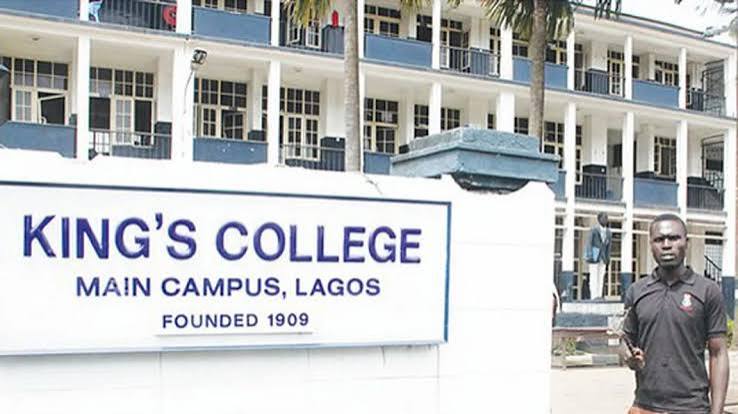
Organised labour has called off its nationwide industrial action over the planned concession of King’s College, Lagos, after the Federal Government agreed to a two-week review of the arrangement, according to a statement issued by the Association of Senior Civil Servants of Nigeria.
The union said the decision followed an emergency high-level meeting with the Federal Ministry of Education in Abuja on Wednesday. The meeting was chaired by the Minister of Education, Dr Tunji Alausa, with the Minister of State for Education, Prof Suwaiba Said Ahmad, and the Acting Permanent Secretary, Dr Folake Olatunji David, in attendance.
ASCSN, whose parent body is the Trade Union Congress of Nigeria, directed workers in Federal Unity Colleges across the country to return to their normal duties. The statement was signed by the union’s National President, Shehu Mohammed, and its Secretary-General, Joshua Apebo.
At the centre of the truce is a seven-member Joint Review Committee, which includes labour representatives. According to ASCSN, the committee has been given a maximum of two weeks to examine the concession document presented by the ministry and recommend amendments to address the concerns raised by stakeholders.
The union said the government also gave assurances on the protection of workers. It quoted the Minister as giving an “ironclad assurance” that no member of staff at King’s College would be victimised through retrenchment, posting or demotion during the exercise. Staff, it added, would be allowed to decide whether they wished to remain at the college.
The ministry further clarified that the Federal Government would retain full legal ownership and oversight of King’s College, and that public access to the school would continue in line with existing policy on Federal Unity Colleges. On fees, ASCSN said it was assured there would be no increase outside the government’s policy on affordable education for the unity schools.
The suspension, however, is conditional. The union warned it would consider reactivating the industrial action without further notice if the Joint Review Committee failed to accommodate the concerns of labour, and urged its chapter and unit executives to monitor developments closely.
The agreement marks a shift from the government’s earlier tone. Days before the meeting, Alausa had told journalists in Abuja that there was “no going back” on the concession, insisting the arrangement was meant to address longstanding infrastructure and management problems at the 117-year-old institution. He maintained then, as the ministry did after Wednesday’s meeting, that the government was not selling the school and would keep full ownership.
The concession is to King’s College Old Boys Association, known as KCOBA, under a public-private partnership. Prof Ahmad had earlier said the proposed arrangement would run for 25 years, a period she said was needed to allow the concessionaire to build sustainable management structures and for the government to assess whether the model works. KCOBA has also said the agreement is open to public scrutiny and that it is neither buying nor being sold the school.
The dispute had disrupted the start of the 2026/2027 academic session. Tension rose sharply on Monday when unity colleges were due to resume and ASCSN declared industrial action, halting resumption across the system nationwide. Parents and teachers at King’s College had earlier staged protests against attempts by KCOBA to take over management of the school.
The confrontation also drew in security agencies. Police from various formations in Lagos took over the premises of the college at Onikan following days of protests, and an altercation on Tuesday involving parents, policemen and members of KCOBA. As part of Wednesday’s resolutions, the parties agreed to redeploy the policemen from the college premises.
King’s College, founded in 1909, is one of the oldest and best known government secondary schools in the country, and its alumni network is among the most prominent in Nigeria. That history helps explain why a management change at a single school escalated into a national labour dispute touching every unity college.
The episode also sits within a wider pattern. The Federal Government has pursued concession and public-private partnership models for several public assets in recent years, including national stadiums, on the argument that private management can deliver upgrades the state has struggled to fund. Critics of such arrangements have consistently raised concerns about job security, cost to users and long-term public control, the same issues at the heart of the King’s College standoff.
For now, the two-week window pauses the confrontation rather than settling it. The substantive questions, including the detail of the concession terms and how far the committee’s recommendations will be reflected in the final document, remain open. What happens when the committee reports will determine whether the truce holds or the dispute returns.