
When a New York museum paid a fortune for an ancient vase, it exposed a global underground network of night thieves, elite smugglers, and prestige institutions profiting from stolen history.
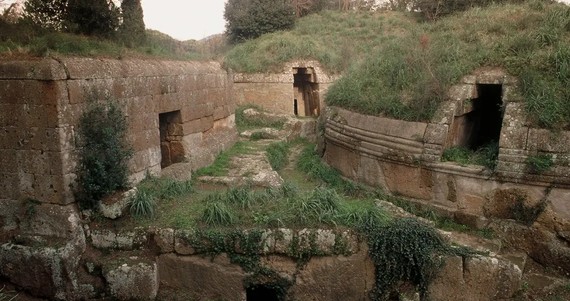
Late one morning in the mid-1970s, near the ancient Italian town of Cerveteri, a television crew stepped over freshly churned earth to inspect a hole gaping open in the soil. It was not a construction site. It was an early Etruscan burial site, breached under cover of darkness by tomb raiders who had extracted what they wanted and abandoned what they deemed worthless. Scattered around the pit were fractured ceramic shards – ruined fragments of history left to rot once the high-value payload was secured.
Standing beside the crater, a British journalist named John Percival captured the grim reality of the global trade in stolen antiquities. He was tracking the murky supply chain of an artefact that had sent shockwaves through the art world just a few years earlier: an ancient Greek vessel known as the Euphronios Krater.
In late 1972, New York’s prestigious Metropolitan Museum of Art had acquired the 2,500-year-old vase for a staggering $1.2 million, equivalent to nearly $10 million today. Painted around 515 BC, the masterpiece was hailed as one of the finest surviving specimens of classical antiquity. Thomas Hoving, the museum’s director at the time, proudly boasted that art history would have to be rewritten to accommodate the acquisition.
Behind the museum’s polished glass display cases, however, a sinister reality began to emerge. Rumours swelled that the vase was stolen property, unearthed illegally from an Italian necropolis and smuggled across international borders. Across newsrooms and police precincts, the priceless relic earned a far less regal moniker: “the hot pot.”
Probes in the Dark and ‘Million-Dollar Pots’
The staggering price the Met paid did more than fill the pockets of illicit dealers; it lit a bonfire under the underground antiquities market. Around Cerveteri, an ancient Etruscan necropolis riddled with subterranean chambers, local grave robbers – known locally as tombaroli – frenziedly hunted for their own jackpot.
The battle line was drawn in the Italian dirt. As Percival observed during his investigation, “The Italian robbers are chasing million-dollar pots. The Italian cops are chasing the robbers.”
For generations, these clandestine diggers relied on surprisingly rudimentary tools. In museum courtyards across the region, impounded contraband often sat beside stacks of kiavi – long, sharp metal rods driven deep into soft bedrock to detect hollow underground chambers. The digging began once a void was struck.
Yet, as global demand surged, so too did the methods of the illicit trade. Treasure hunters operating across continents began abandoning hand tools for high-tech gear. American explorer Howard Jennings noted that tomb raiders in South America had adopted sophisticated electronic equipment to streamline their operations. Metal detectors allowed raiders to pinpoint precious metals beneath the surface, bypassing cumbersome manual excavation. Gold, Jennings pointed out, was far easier to conceal and transport than fragile, bulky ceramics.
The Anatomy of Destruction
The hunt for buried treasure left a trail of historical devastation. To feed a voracious international market, looters frequently destroyed the very context that gave these items historical meaning.
Dr Nusin Askari, an expert at the Istanbul Museum, explained the ruthless logic behind the destruction to broadcast reporters: “The destruction starts at the place where the object is found. It’s broken so that it can be sold for a higher price in the end and so that it can be transported and smuggled out of the country more easily.”
By smashing larger artefacts into manageable pieces, smugglers could slip them past border controls undetected. Once safely inside destination countries, master restorers would painstakingly reassemble the fragments into “pristine” showpieces ready for public display.
To counter the tide of cultural theft, Italian authorities launched specialised police units trained specifically in ancient art. These officers attended lectures at Rome’s Villa Giulia Museum to understand the historical value of what they were trying to protect. Yet policing miles of open countryside proved almost impossible. Illicit digs kept appearing across Italian farmland like unhealable wounds.
‘No Questions Asked’
Once an artefact was extracted and smuggled past border checkpoints, finding a buyer was surprisingly simple. The high-stakes market for unprovenanced artefacts was driven by a culture of deliberate blindness among the world’s most elite institutions.
“They’re in great demand,” Jennings remarked regarding the illicit inventory. “The only thing the museums, the auction houses, the dealers, private collectors want to know is, is this artefact authentic? Once that’s been determined, that it’s an authentic antiquity, there are no other questions asked.”
For decades, this “no questions asked” policy allowed prestigious institutions and private billionaires to act as the ultimate financial engine for tomb raiding. High-end auction houses and wealthy patrons effectively functioned as receivers of looted heritage, hiding behind thin veneers of plausible deniability.
Summing up the illicit trade chain, Percival noted: “This is a story about buried treasure, about gold, silver and precious things hidden in the Earth long ago. It’s about the thieves who dig for it by night, about the dealers who smuggle it across frontiers, about the collectors and the great museums that act as receivers of stolen goods.”
The Long Road Home
The era of unchecked plunder, however, eventually hit a wall of legal reckoning. As source nations passed stricter heritage protection laws and aggressively pursued international legal remedies, the web of illicit trafficking began to unravel.
Interceptions at international borders became more frequent, and law enforcement agencies built ironclad cases against high-profile trafficking rings. The infamous “hot pot” was eventually traced back to Giacomo Medici, a notorious antiquities dealer who was convicted in 2005 for his central role in a multi-million-dollar international trafficking network.
Faced with undeniable proof that the Euphronios Krater had been illegally excavated and trafficked, the Metropolitan Museum of Art formally returned the vase to Italy in 2008—ending a thirty-six-year saga of international intrigue and institutional shame.
Yet, despite landmark restitutions and high-profile criminal convictions, the fundamental driver of the illicit trade remains intact. Where wealth meets rare history, the temptation to dig into the past persists. As Percival bleakly concluded: “As long as there’s a market, the pillage of the past goes on.”