
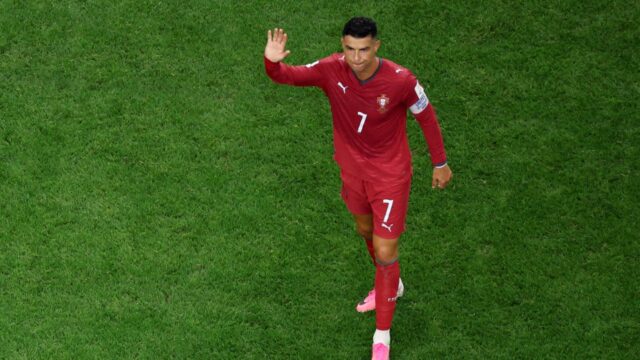
Portugal’s national team has lost a large number of Instagram followers in the hours after captain Cristiano Ronaldo walked out of the squad’s training camp, with trackers putting the drop anywhere between several hundred thousand and more than a million within a single day.
The fall followed Ronaldo’s abrupt departure from the camp in Copenhagen on Wednesday, 30 September 2026, ahead of Portugal’s Nations League tie with Denmark. The 41 year old left after head coach Jorge Jesus indicated he would not start the match, and confirmed the exit himself in an Instagram post, saying he would explain his reasons to the Portuguese people “in due time.”
Exactly how many followers the team’s account shed depends on who is counting and when. World Soccer Talk put the loss at more than 500,000 in under 24 hours. The Sun reported a drop of over a million in the same window. One widely shared snapshot on Friday morning showed the account sliding from about 24.9 million to roughly 23.5 million, a fall of around 1.4 million. Portuguese outlet A Bola logged a decline of more than 300,000, while Renascença, citing the analytics service HypeAuditor, recorded a drop of over 370,000 to 24,631,902.
Those figures do not sit neatly together, and that is worth stating plainly. Social media follower counts move constantly, trackers sample at different moments, and platforms routinely purge inactive or bot accounts, so a single clean number is not available. What the various readings agree on is direction and scale: the account lost a substantial bloc of followers quickly, and the timing lined up with Ronaldo’s exit rather than with any result on the pitch.
The link to Ronaldo himself is hard to miss. He remains one of the most followed people on the planet, with a personal Instagram following of about 679 million, dwarfing the national team’s account many times over. For years the Portugal brand has travelled on his name, and comments collected by A Bola and Goal pointed to the obvious explanation, with users saying outright that they had only followed the team because of him. When the draw of an account is a single person, that account is exposed the moment the person leaves.
The sequence that triggered it played out fast. Jesus, who took charge of Portugal in July 2026, left Ronaldo on the bench for the earlier 2-1 win in Norway and then signalled he would not start him against Denmark. Ronaldo reacted by leaving the camp after speaking with Portuguese Football Federation president Pedro Proença. Jesus initially played the matter down, telling reporters there had been “no incident whatsoever” and that it was nothing to make a fuss about, before the federation and Ronaldo both confirmed the departure. The federation said preparations would continue with the remaining 24 players.
On the field, Portugal answered the noise in the most direct way possible. Playing without their record scorer, they beat Denmark 4-2 in Copenhagen on Thursday through goals from João Cancelo, Gonçalo Ramos, Vitinha and substitute João Félix, twice pegged back by the hosts before pulling clear. The win gave Jesus three victories from his first three games in charge and kept Portugal top of their Nations League group with a maximum nine points. More than one player and pundit suggested the attack looked freer without Ronaldo anchoring it, a reading the performance data appeared to support.
The episode sits inside a longer, unresolved question about Ronaldo’s international future. At 41, and now based in Saudi Arabia with Al Nassr, he holds Portugal’s records for appearances and goals, but a coach willing to drop him marks a shift in a relationship that has defined the team for close to two decades. His own statement promised a fuller account later, and until that comes, his standing in the squad is a matter of speculation rather than settled fact.
For the federation, the follower slide is a reminder of how much of its digital reach has been borrowed rather than built. A number in the hundreds of thousands or low millions is noticeable, though against a base above 24 million it is a dent, not a collapse, and such counts often recover or restabilise once attention moves on. The sharper point is structural. An audience assembled around one athlete tends to behave like that athlete’s audience, not the institution’s, and it responds to his decisions accordingly.
What happens next is still open. Whether Ronaldo returns to the national setup, how he frames his exit when he does speak, and whether the lost followers drift back are all unanswered. What is confirmed is narrower but clear enough: the walkout happened, the account lost a significant following in short order, and Portugal won anyway.