
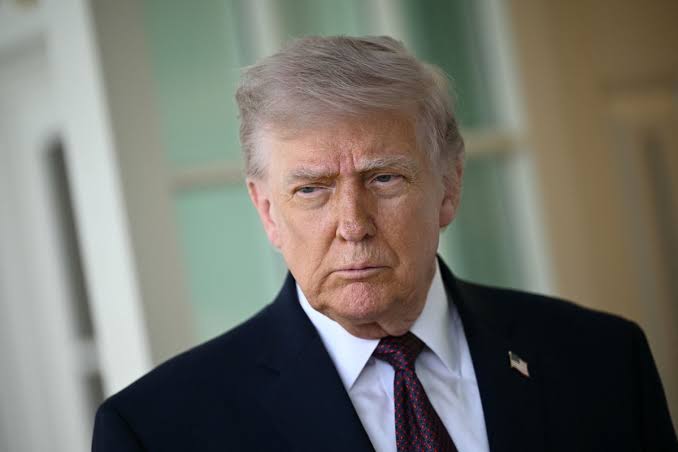
President Donald Trump has ruled out attacking Iran before the United States midterm elections on November 3, stating that Washington is holding productive discussions with Tehran, even as oil prices surged on reports that military options were being prepared.
Writing on his Truth Social platform on Thursday, Trump said: “I want to make it clear to everybody that, while Iran is in very bad condition, both Economically and Militarily, and while the Blockade will remain in full force and effect, we will not be attacking Iran at any time prior to the Midterm Elections. We are having productive discussions with the Islamic Republic of Iran.” He did not provide further details on the nature or progress of those discussions. The announcement followed a sharp increase in crude oil prices on Thursday, driven by reports that the White House had directed the Pentagon to develop strike options that could be executed before the November 3 vote.
The reports indicated that no final decision had been made, but that Trump was weighing limited strikes that could demonstrate strength ahead of the elections, while advisers believed the right moment for major military action would come after the vote. The scope and targets of potential strikes were still under discussion, including whether to carry them out at all. The Pentagon’s Central Command had reportedly been instructed to conclude preparations for resuming major combat operations in Iran. The reports also noted that an attack would put nearly 50,000 US servicemen in the region at risk and further deplete American arsenals. Supporters of limited strikes reportedly argued that an attack would make Trump appear decisive and could help Republicans at the polls, though they acknowledged such strikes alone would not force Iran to negotiate, restore shipping traffic in the Strait of Hormuz, or lower gas prices before Election Day.
The conflict, launched by the United States and Israel against Iran on February 28, 2026, is now in its eighth month. Oil markets responded sharply to the reports of potential new strikes. International benchmark Brent North Sea crude rallied more than five per cent on Thursday, reaching as high as $105.88 per barrel before retreating to $104.28. The main US contract, West Texas Intermediate, rose to $92.82 per barrel. The increase was also driven by persistent tensions in the Strait of Hormuz and hostilities between Yemen’s Iran-backed Houthis and Saudi Arabia. The war has already pushed Brent from approximately $64 per barrel in early June 2025 to a high of $105.88, a rise of over 65 per cent.
Polls suggest that US voters are strongly dissatisfied over rising fuel prices linked to the conflict. Trump’s approval ratings have reportedly hit a record low, with negative ratings in 39 states, and even firmly Republican seats such as Texas, Kansas and Iowa are now being targeted by Democrats. A Reuters poll cited by international media showed that 42 per cent of registered voters would back a Democrat and 37 per cent a Republican if the congressional elections were held at the time of the survey. The midterm elections will shape the final two years of Trump’s presidential term as his Republican Party risks losing its grip on Congress. Trump is not on the ballot but is heavily involved in the campaign, holding numerous rallies in an attempt to limit the damage. He has warned of a possible third impeachment if Democrats retake the House of Representatives.
Trump also sought to calm a furore over comments he made at a rally earlier in the week that Iran could “take out” the cities of Los Angeles and San Diego. He blamed what he called “fake and artificial news” for misinterpreting the remarks, which Democrats seized upon. “In actuality, what I was talking about was that a temporary increase in the price of Gasoline is a small price to pay for Iran not having a Nuclear Weapon, and, if you want to see a big price, can you imagine what it would be like if they bombed San Diego and/or Los Angeles?” he wrote on Truth Social. The White House communications director defended the remarks, stating the media reaction was not rooted in reality and that Trump was clearly indicating US cities would have been threatened if a nuclear Iran had not been stopped. California’s Governor Gavin Newsom described Trump as “mentally ill” and called for the 25th Amendment to be invoked, while the mayors of Los Angeles and San Diego issued statements condemning the comments.
The Strait of Hormuz, through which approximately one-fifth of the world’s oil and liquefied natural gas transited before the war, remains a central point of contention in negotiations between Iran and the United States. Iran has sought to assert control over the vital shipping route since the conflict began, repeatedly targeting vessels it accuses of transiting without authorisation, while the US maintains a counter-blockade of Iranian ports. On Monday, a tanker in the strait experienced an engine room fire after being hit by an unknown projectile. Earlier, the UK Maritime Trade Operations agency reported that a tanker transiting the strait inbound was hailed by Iran’s Revolutionary Guards and instructed to turn back or be targeted. The master confirmed compliance. Another Panama-flagged tanker was attacked while crossing the strait on Tuesday, with 12 crew members injured and receiving treatment in Oman. India’s foreign ministry condemned the attack on the vessel, which was struck by a projectile while transiting the strait. Though attacks in the strait have continued, the US has not launched strikes on Iran since September 1.
The economic stakes for Nigeria, Africa’s largest oil producer, are significant. Crude oil sales account for the bulk of Nigeria’s foreign exchange earnings and government revenue. A sustained rise in Brent prices above $100 per barrel typically improves Nigeria’s fiscal position, but the benefit is often offset by the country’s reliance on imported refined petroleum products. With the Dangote refinery ramping up domestic refining capacity, Nigeria’s exposure to international price fluctuations is gradually shifting, though the full impact on pump prices and government finances remains uncertain. Any disruption to global oil supply through the Strait of Hormuz would tighten the market further and could push prices even higher, with knock-on effects for Nigeria’s import bill and foreign reserves.
Russia’s President Vladimir Putin promised on Thursday to “do everything” to help end the Middle East war when he met Iranian counterpart Masoud Pezeshkian for talks ahead of a regional summit. Putin said Russia was ready to do everything in its power to contribute to the settlement of the situation, adding that Iran had made real efforts to end the war. Russia and Iran have reinforced diplomatic and military links since Russia launched its offensive in Ukraine in February 2022.
Trump has repeatedly insisted in recent weeks that the United States has effectively won the Iran war, despite ongoing unrest and a recent security threat that forced the withdrawal of American bombers from a base in England. His claims that prices will fall as soon as the war is over have so far fallen on deaf ears with voters. The question for the administration is whether holding fire before the midterms will be enough to shift public sentiment, or whether the cost of the war, measured in fuel prices and household budgets, has already left its mark.