
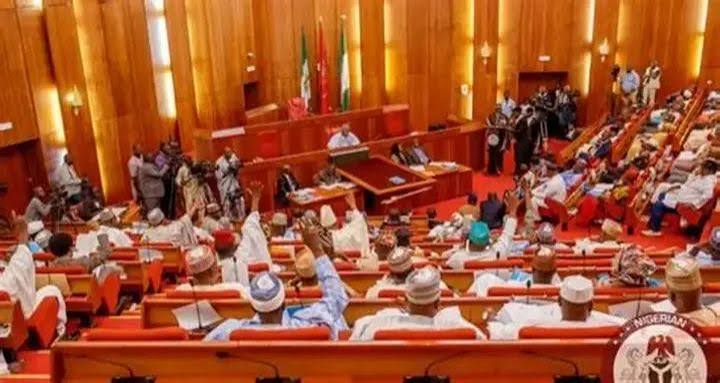
Nigeria moved closer than at any point in its democratic history to dismantling its single, centrally controlled police structure on Wednesday, after the Senate passed a constitutional amendment bill authorising state-controlled police services across the federation.
The passage shifts the decades-long debate to the 36 state Houses of Assembly, where at least 24 must endorse the proposal before it can reach President Bola Tinubu for assent. The bill would end 66 years of the country’s single, federal policing system and establish a dual structure of Federal Police Service and State Police Services operating side by side.
The vote was unusual in form. After the chamber’s electronic voting system crashed for over 30 minutes, lawmakers adopted a manual count, with all 88 senators present voting by show of hands to surpass the constitutional two-thirds threshold. Senate President Godswill Akpabio backed the open method, saying it would let “the constituents know where you stand on every issue.”
Under Clause 17, “while the Federal Police Service will continue to be headed by the Inspector-General of Police, each State Police Service shall be headed by a Commissioner of Police appointed by the governor and confirmed by the legislature of the state.” Senate Leader Opeyemi Bamidele described the framework as one designed “to balance local policing autonomy with national cohesion.”
The reform arrives against a worsening security backdrop. Nigeria Watch recorded 12,954 deaths from violent incidents in 2025, up from the previous year, with more than 222,000 people killed in 46,182 violent incidents nationwide between 2006 and 2025. Deaths from rural banditry alone rose to 3,974 in 2025 from 1,452 in 2024, while the number of states affected climbed from nine to 16. Mass abductions have repeatedly shaken the country, from the 2014 Chibok girls’ kidnapping to the November 2025 seizure of hundreds of pupils in Niger and Kebbi states.
To calm long-standing fears of abuse, senators inserted safeguards. One provision states that “a state Commissioner of Police shall not arrest, detain, investigate or deploy force against any person, political party or group merely for criticising the government except in accordance with the law.” The National Assembly would also set minimum standards on recruitment, training, vetting, discipline and use of force, and no state force may operate until certified.
Federal intervention remains possible. Bamidele said it would apply only where there “is outright breakdown of public order,” subject to written presidential authorisation, Senate oversight and judicial review.
Support has drawn heavily on the South West’s Amotekun model. Critics, however, warn of cost, with one estimate putting nationwide rollout at between N589 billion and N813 billion over five years, and of the risk that governors could weaponise the forces, echoing the abuses that pushed earlier constitutions toward centralised policing.
The Senate also raised the Police Trust Fund allocation from 0.5 per cent to one per cent of the Consolidated Revenue Fund to support the transition.
Whether Nigeria finally abandons its exclusive federal policing model now rests with the state capitals.