
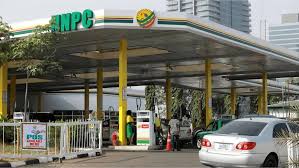
The Nigerian National Petroleum Company Limited has extended its N66 per litre discount on Premium Motor Spirit until October 31, 2026, a decision that offers motorists a third consecutive week of relief but has reignited a fierce debate over whether the government is quietly returning to the fuel subsidy regime it abolished in May 2023.
The extension was announced in a statement issued by NNPC’s Chief Corporate Communications Officer, Andy Odeh, on Friday, October 9, following a directive by the Minister of Finance and Coordinating Minister of the Economy, Taiwo Oyedele, that NNPC Retail should forgo its profit margin and sell petrol at cost for 30 days. The discount, which began on October 1 to mark Nigeria’s 66th Independence Anniversary, was initially scheduled to end on October 7, then extended to October 14 before the latest extension to October 31.
Under the arrangement, petrol sells for N1,355 per litre at NNPC retail outlets in Lagos and Rivers, the lowest listed prices in the country, while motorists in Abuja pay N1,370 per litre. The NNPC said the initiative is a customer relief measure and does not represent the reintroduction of petroleum subsidy. “We recognise that higher petrol prices affect everyday life, from the cost of commuting to the expenses of running a business,” the company said. “We understand the strain on families and livelihoods, and this discount is intended to provide direct relief to customers during this difficult period.”
The government has been at pains to distinguish the discount from a subsidy. Oyedele, in a statement on Friday, clarified that the reduction is funded entirely from NNPC Retail’s profit margin and does not involve public funds or reduce remittances to the Federation Account. He said the government had granted a full waiver of taxes and duties on petrol, valued at more than N3.3 trillion for the year up to September 30, 2026, as part of measures to cushion the impact of global oil price shocks. Presidential spokesman Bayo Onanuga also insisted that the arrangement is not a subsidy but a temporary margin waiver, with priority given to public transport operators.
The debate matters because petrol prices remain the single most potent driver of public discontent in Nigeria. The removal of the subsidy by President Bola Tinubu on May 29, 2023, triggered a price surge from about N175 per litre to over N500 within weeks, and by May 2026 the pump price had reached an average of N1,300, representing a 643 per cent increase in three years. The National Bureau of Statistics reported that the average retail price of petrol stood at N1,532.93 per litre in April 2026, up 23.69 per cent from N1,239.33 in April 2025. Diesel prices rose even more sharply, from N1,722.45 in April 2025 to N2,474.69 in April 2026, a 43.67 per cent increase.
Those price increases have fed directly into transport costs. NBS data shows that the average intra-city bus fare rose to N1,373.49 in March 2026, up 14.86 per cent from N1,195.75 in February, while intercity bus fares jumped 17.95 per cent to N9,564.12. Air travel costs climbed to N157,224.05 for a single journey on specified routes, and motorcycle fares rose 9.05 per cent to N1,004.34. The knock-on effect on food prices and household budgets has been severe, even as headline inflation has moderated to 15.39 per cent in August 2026 from 23.14 per cent a year earlier. Food inflation stood at 19.57 per cent, and the World Bank estimated that just over half of Nigeria’s population was living in poverty in 2025.
The discount comes amid a broader easing of pump prices triggered by competition from the Dangote Petroleum Refinery. Dangote reduced its gantry petrol price by N25 per litre in late September, from N1,350 to N1,325, prompting retail stations across the country to lower their prices. MRS and Ardova filling stations in Lagos cut their prices to N1,355 per litre, while other marketers followed. The NNPC’s own price reduction to N1,355 in Lagos and N1,370 in Abuja reflects that competitive pressure as much as it reflects government policy.
Opposition parties have dismissed the discount as a political gimmick ahead of the 2027 elections. The African Democratic Congress and the National Democratic Congress accused the government of reintroducing subsidy through the backdoor while denying it publicly. Atiku Abubakar, the ADC presidential candidate, has argued that the government should adopt a transparent, targeted production subsidy that lowers pump prices without the opacity of the old regime. The Presidency has rejected those criticisms, insisting that the discount is a temporary, margin-funded relief measure that does not alter the market-based pricing framework.
What the discount does not do is resolve the underlying question of affordability. A discount of N66 per litre reduces the cost of a full tank for a typical 60-litre vehicle by N3,960, a meaningful sum for a commercial driver but a marginal one for a household already spending more than half its income on food and transport. The discount applies only to NNPC retail outlets, which account for a fraction of the downstream market, and does not establish a uniform national pump price. Whether the relief will be extended beyond October 31 remains unclear. The government has framed the measure as a temporary response to a spike in global crude oil prices linked to tensions in the Middle East and the closure of the Strait of Hormuz, which pushed Brent crude above $100 per barrel. If those pressures ease, the discount may be allowed to lapse. If they persist, the government will face renewed pressure to make the relief permanent, and with it, renewed accusations that it is slowly returning to the subsidy regime it vowed to bury.