
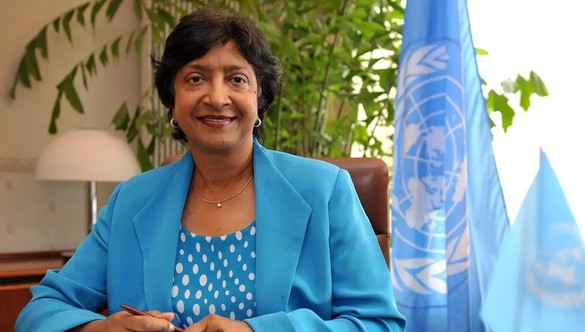
The Norwegian Nobel Committee awarded the 2026 Nobel Peace Prize to 85-year-old South African jurist Navanethem “Navi” Pillay on Friday, 9 October, issuing a deliberate defence of global courts against the resurgence of raw power politics. Ms Pillay spent six decades holding heads of state and armed groups accountable across benches at the International Criminal Tribunal for Rwanda, the International Criminal Court, and currently the International Court of Justice. The Oslo committee pointedly warned that might is overtaking right across an unstable world.
The choice delivers an unmistakable rebuff to Donald Trump and Benjamin Netanyahu. The Hague court faces direct economic sanctions and fierce diplomatic assaults from Washington following arrest warrants issued against Israeli leaders over the Gaza war. International law faces steady retreat. Ms Pillay led the United Nations inquiry that concluded last year that Israel committed genocide in Gaza, prompting Israeli envoy Daniel Meron to denounce Friday’s award as a disgraceful endorsement of anti-Semitism.
Ms Pillay heard the news in the very Nuremberg courtroom where Allied judges put Nazi commanders on trial eighty years ago. She reminded world leaders of their binding legal duty to protect human rights and turn away from aggressive warfare. Power must yield to justice. Joking that she might share her award with Mr Trump if the audience clapped louder, she dedicated the 12-million-crown honour to the victims of mass atrocities and the front-line lawyers who defend them.
Her personal trajectory traces the modern history of institutional resistance. She opened the first law practice by a woman of colour in Natal in 1967, defended Nelson Mandela against the apartheid state, and later served on South Africa’s High Court before entering international tribunals. She shaped foundational legal precedents. At the Rwanda tribunal, her landmark rulings established mass rape as a punishable act of genocide, forever transforming humanitarian doctrine.
The prize confirms Ms Pillay as the fifth South African laureate, following Chief Albert Luthuli, Archbishop Desmond Tutu, Nelson Mandela, and F.W. de Klerk. International Criminal Court President Tomoko Akane hailed the decision as a vital recognition for an embattled system whose judges routinely endure political intimidation. Oslo stood behind the benches. The committee demonstrated that legal rules mean nothing if sovereign states can simply bully the courts into silence.