
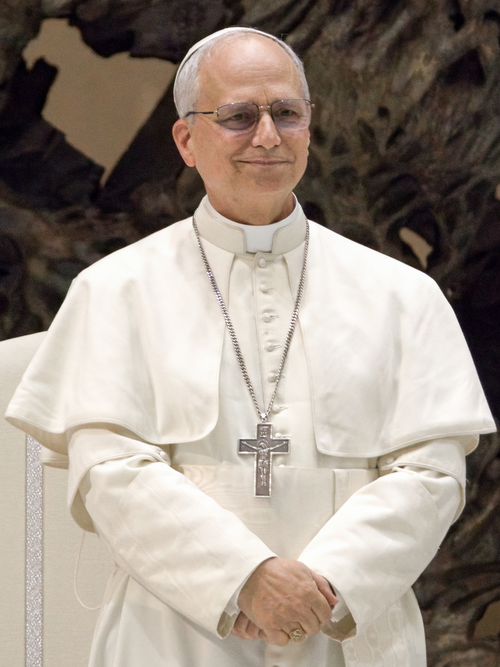
Pope Leo XIV announced to thousands gathered in Saint Peter’s Square on Sunday, 11 October, that he will undergo thoracic surgery in Rome this week to excise a recently detected nodular lesion on his lung. The 71-year-old pontiff disclosed the impending operation directly to the faithful after reciting the midday Angelus prayer, describing the growth as a small, well-defined nodule discovered at an early stage during routine diagnostic screenings. Physical frailty tests every reign early. Vatican medical advisers urged swift surgical excision to prevent secondary complications, prompting the bishop of Rome to clear his public diary and step away from administrative duties across the Holy See for a recuperation period expected to last roughly one week.
The sudden hospitalisation disrupts a packed autumn calendar of diplomatic audiences and episcopal synods inside the Apostolic Palace, forcing the papal secretariat to suspend bilateral state visits and daily pastoral engagements. Papal illness always invites palace intrigue. Senior curial officials moved quickly to tamp down speculative panic across the Catholic world by confirming that the lesion remains strictly localised within the lung tissue, requiring standard exploratory resection rather than radical organ removal or prolonged clinical seclusion. The Holy See expects the pontiff to return to his private apartments in the Domus Sanctae Marthae following short postoperative monitoring, while departmental heads manage routine ecclesiastical paperwork under delegated administrative authority.
The Roman Catholic Church has long endured the nervous tremors that accompany clinical interruptions to supreme pontifical power, where sudden surgical admissions inevitably evoke memories of extended papal declines and contested successions. A monarch’s sickbed rattles global hierarchies. By choosing immediate, candid public disclosure from the loggia window rather than secretive institutional silence, Pope Leo disarmed the inevitable rumour mills that routinely paralyse Vatican corridors whenever a reigning pontiff checks into hospital. That cool transparency reflects a calculated pastoral choice to treat biological vulnerability as an ordinary human reality rather than an existential crisis for global church governance.
The planned medical procedure comes as the Roman pontiff confronts mounting diplomatic tests across a fractured international order, having repeatedly used his Sunday platforms to plead for open humanitarian corridors and unimpeded grain shipments across war-torn supply routes. Pastoral pleas demand physical stamina. Catholic bishops from the Global South who gathered in Rome this month now watch closely to see how quickly the American-born pope recovers his full speaking voice, because moral advocacy from the chair of Saint Peter requires constant public presence to command global diplomatic attention. Vatican physicians will monitor the post-surgical biopsy closely, knowing that the institutional energy of the papacy depends directly upon the physical resilience of the man wearing the Fisherman’s ring.
Vatican observers expect the Roman Curia to operate on autopilot during the coming seven days while global dioceses hold prayer vigils for their spiritual leader. Power pauses for the surgeon’s scalpel. If the clinical intervention proceeds without infection or respiratory setbacks, Pope Leo will return to the papal apartment before next Sunday, having demonstrated that even the most exalted office in Christendom must occasionally bow to the quiet authority of preventive medicine.