
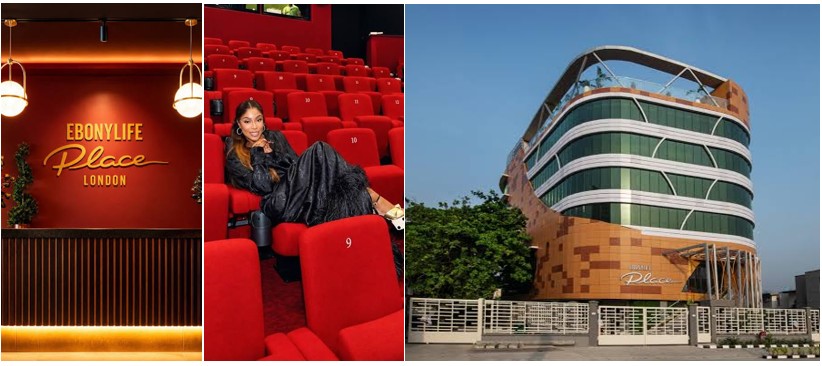
Nigerian media entrepreneur Mosunmola Abudu launched EbonyLife Place London on Thursday, 8 October, establishing Britain’s first dedicated commercial venue for Black and African cinema in the Nine Elms district. London Mayor Sadiq Khan joined the founder to cut the ceremonial ribbon and declare the complex open during the city’s international film festival. African commercial cinema claims permanent British real estate. The multi-storey venue directly replicates Ms Abudu’s 2019 Lagos model, pairing a 160-seat screening room called the Amani Auditorium with an authentic Nigerian restaurant, designer boutiques, and curated exhibition galleries.
The investment demonstrates that African entertainment conglomerates no longer need Western studio validation to export their cultural capital into prime European markets. Ms Abudu financed the London complex through her private media group rather than relying on public heritage grants or foreign patronage networks. Private enterprise beats international cultural handouts. The strategy treats African cinema as a premium commercial commodity, providing diaspora directors and Lagos screenwriters with an autonomous London platform for festival screenings, red-carpet premieres, and direct box-office returns.
City Hall seized on the launch to strengthen commercial links between London and West Africa’s primary financial centre. Mr Khan praised the venture as a vital bridge between two global cultural capitals, using the occasion to reaffirm his administration’s pledge to protect local creative industries from mounting domestic austerity. Commercial ties outlast mere political speeches. By planting roots in south-west London, EbonyLife extracts direct retail earnings from Britain’s affluent African diaspora while capturing curious metropolitan consumers eager for authentic African entertainment.
The project signals a decisive change in how African creative work travels across the international marketplace. Previous generations depended entirely on fleeting arts festivals or niche cultural institutions to display their films, books, and fashion lines to European audiences. Permanent ownership changes the entire equation. Controlling the screening room, the box-office tills, and the dining rooms ensures that African media investors keep the profits instead of surrendering commercial margins to foreign distributors.
Ms Abudu has constructed an outpost that challenges Western entertainment gatekeepers on their own domestic turf. High commercial property rents and stubborn European inflation will test whether a single independent venue can sustain full-time cinema operations without state subsidies. High risks demand sharp business discipline. If the Nine Elms venue succeeds, it will provide Nigerian corporate capital with a tested blueprint for building similar creative outposts across Paris, Toronto, and Atlanta.