
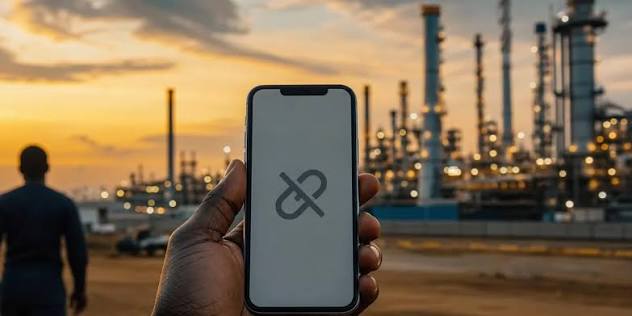
Wayve Microfinance Bank Limited says no investor bought shares in the Dangote Petroleum Refinery and Petrochemicals initial public offering through its WayvePay app. The bank made the claim on Thursday, days after the Securities and Exchange Commission warned Nigerians against investing through the platform. The episode has turned attention to how retail investors are reaching Africa’s largest share sale, which now closes on October 27.
The trouble began with a newspaper advertisement on October 6, in which WayvePay told customers it was making the refinery’s offer available on its app. On Friday, October 9, the SEC issued a public notice stating that WayvePay was “not registered by the Commission to solicit investments from the public”. The regulator added that the platform could not operate in any capacity in the Nigerian capital market, and that dealing with unregistered entities could expose investors to fraud and financial loss.
In its response, signed by its Head of Corporate Communications and Marketing, Kingsley Ezenwa, the bank said it took the commission’s concerns seriously and was engaging with the regulator. It described itself as a microfinance bank licensed by the Central Bank of Nigeria, with eligible deposits insured by the Nigeria Deposit Insurance Corporation. The bank said it wanted to separate its licensed banking business from the issues raised over the IPO.
WayvePay’s central defence is that it never handled investors’ money for the offer. According to the bank, the app was linked to Coronation Securities under a signed agreement, with subscription funds going to Coronation Securities rather than to the bank. Coronation Securities is named in the offer documents among the issuing houses and approved subscription channels for the transaction.
“Since the publication of the promotional materials, no investors has subscribed for shares in the Dangote Petroleum Refinery and Petrochemicals IPO through the WayvePay platform,” the statement said. The bank added that it had withdrawn the promotional materials and removed the IPO link from its mobile app. The SEC has not publicly said whether it accepts that account or whether any further regulatory action will follow.
The dispute sits against an offer of unusual size and reach. The refinery is selling 4.1 billion ordinary shares at ₦525 each, which would raise about ₦2.15 trillion, roughly $1.6 billion, if fully subscribed. The minimum subscription is 10 shares, or ₦5,250, a deliberately low entry point for what Aliko Dangote has called an IPO for the people. The company has said it hopes to attract as many as 10 million retail subscribers across Nigeria and the rest of Africa.
To reach that audience, the offer opened on September 14 with about 55 approved electronic application channels, the largest digital distribution network ever deployed for a Nigerian public offer. Banks, stockbrokers, fintech firms and payment companies have competed to capture retail demand. That crowded field is also what worried the regulator from the start. On the opening day, the SEC urged investors to make applications and payments only through authorised receiving agents and approved platforms, and warned against sending money to anyone offering access outside those channels.
The commission had sounded a similar alarm earlier in the year. In June, before any application had been filed, it cautioned the public against a purported Dangote refinery IPO and said no offer had been submitted to or approved by it. The pattern shows how quickly the refinery’s name has become a magnet for unofficial schemes as public interest has grown.
The offer itself has been extended. With SEC approval, the closing date moved from October 13 to October 27, a decision the company said was meant to give more African investors time to take part. Dangote said demand had already exceeded the amount the company set out to raise and that the extension was about widening participation rather than raising more money. Those subscription figures have not yet been independently published.
The refinery is also going to market with stronger numbers than a year ago. Unaudited results released this week showed a net profit of $4.73 billion for the first nine months of 2026, with revenue of $22.48 billion. Cash balances rose to $6.69 billion, moving the company from net debt of $1.73 billion in September 2025 to net cash of about $650.8 million. In August, the refinery secured a $1 billion underwriting programme, made up of a $600 million private placement and a $400 million underwriting commitment.
The company says the proceeds will help double capacity to 1.4 million barrels per day and fund fuel storage and distribution infrastructure. Because the shares are new, the money goes to the refinery rather than to existing shareholders. Trading is scheduled to begin 15 business days after allotment, and the company has cautioned that the ₦525 offer price does not guarantee where the shares will trade after listing.