
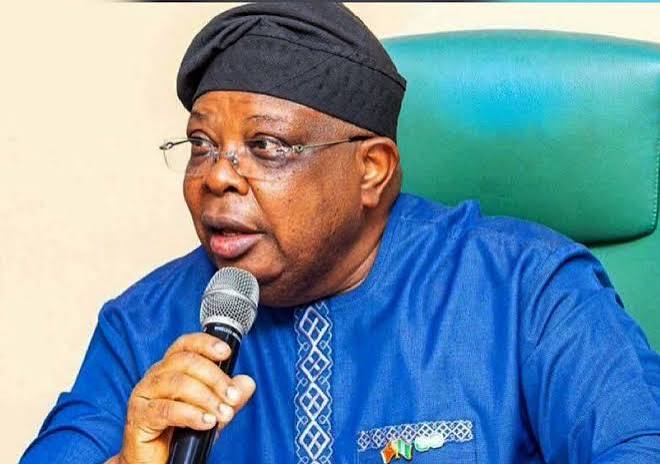
The Federal Government says it has no plan to increase electricity tariffs, even as it grapples with trillions of naira in unpaid subsidy obligations and a promise to wean the power sector off public support. The Minister of Power, Joseph Tegbe, gave the assurance on Thursday in Ibadan, describing talk of an imminent tariff hike as misinformation. “I want to say this clearly and without ambiguity: there is no plan to increase electricity tariffs,” he said.
Tegbe spoke at the flag-off of five interconnected solar mini-grids with a combined capacity of 17.7 megawatts and a 17.74 megawatt-hour battery storage system. “What we are planning is a power sector that works round the clock,” he added. He said the government’s 24-hour power drive would begin with three energy corridors: Lagos-Ogun, Abuja-Kaduna-Kano and Benin-Enugu-Port Harcourt.
The minister’s denial comes against a background of mixed signals from his own office. On July 31, he announced that the government would phase out electricity subsidy payments from 2027, while insisting there was no policy to raise tariffs beyond their current level. On September 21, he pushed back against reports that the subsidy would be withdrawn next year. Then on Tuesday, two days before the Ibadan event, he said the government could not keep covering tariff shortfalls indefinitely and still provide power to every Nigerian.
At the heart of the matter is the gap between what most Nigerians pay for electricity and what it costs to supply. Dafe Akpeneye, a commissioner at the Nigerian Electricity Regulatory Commission (NERC), said recently that only Band A customers, who are promised at least 20 hours of supply a day, pay a cost-reflective tariff. Everyone from Band B to Band E, he explained, enjoys a subsidy element in their bill.
Band A customers already absorbed a steep increase in April 2024, when NERC raised their tariff from about ₦68 to ₦225 per kilowatt-hour. The rate was later adjusted and now stands at about ₦209.50 in most distribution areas. That is still roughly three times what Band A customers paid before the review.
The cost of keeping the remaining bands below cost has piled up. NERC data show that the subsidy requirement for 2025 alone was ₦1.928 trillion, of which the government had paid only ₦76.95 billion, about four per cent, as of March this year. The unpaid balance has flowed down the value chain as debt owed to generation companies and gas suppliers.
The size of that debt depends on who is counting. The Association of Power Generation Companies puts what it is owed at about ₦6.5 trillion, and says its members receive only around 35 per cent of their monthly invoices. Tegbe, speaking in September, cited an estimated ₦3.3 trillion in outstanding debts. The difference is likely to reflect what each side counts as verified legacy debt, a question the government is working through under its Presidential Power Sector Debt Reduction Programme.
To clear the backlog, President Bola Tinubu approved a ₦4 trillion bond programme. The government issued an inaugural ₦501 billion bond in January and announced a second tranche of about ₦729 billion on July 20 to settle verified debts owed to generation companies. Together, the two tranches amount to just over ₦1.2 trillion, less than a third of the approved ceiling.
Back in Ibadan, the Managing Director of the Ibadan Electricity Distribution Company (IBEDC), Deolu Ijose, said the mini-grids would supply 22,597 customers. The Managing Director of the Rural Electrification Agency, Abba Abubakar-Aliyu, gave the breakdown as 6.9MW in Molade, Ibadan North; 3.6MW in Ogo Oluwa, Egbeda; 3.5MW in Jiboye, Ido; 1.9MW in Sooko, Lagelu; and 1.8MW in Bola, Akinyele. The project is being developed by Paras Energy and Natural Resources Development Limited with World Bank support.
Ijose said IBEDC’s existing network would be used to deliver power from the private developer, a model he described as a template for partnerships between distribution companies and investors. He cited earlier projects such as the Mokoloki mini-grid in Ogun State and the Oke-Oyi mini-grid in Kwara State. He urged host communities to protect the facilities.
The Olubadan of Ibadanland, Oba Rashidi Ladoja, praised the inclusion of rural communities and urged the Oyo State Government to complete its own hybrid power project before 2027. Governor Seyi Makinde, represented by the Commissioner for Energy and Mineral Resources, Prof. Dahud Shangodoyin, said the state’s Hybrid Independent Power Project has an 11MW capacity, with its first 5MW phase commissioned in 2024. “No single technology can meet every need,” the governor said.
For now, the Federal Government’s position is that tariffs will stay where they are. It has not yet set out how the planned subsidy exit will be funded without passing the cost to Bands B to E, or a firm date for that exit.