
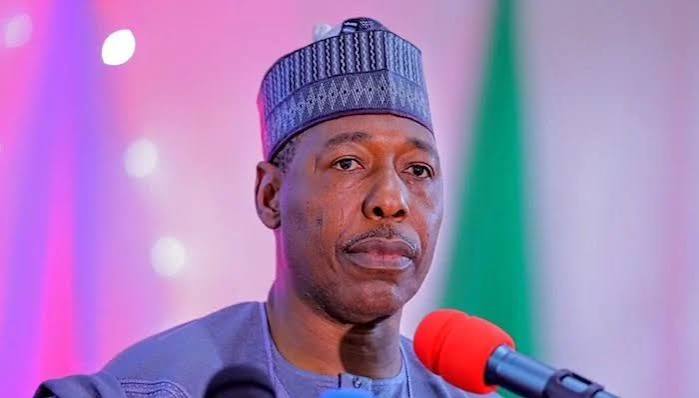
Borno State Governor, Professor Babagana Umara Zulum, says metal scavengers have stripped the state of public infrastructure, electrical materials and metals worth billions of naira. He made the claim on Saturday in Maiduguri while meeting scrap metal operators, popularly known in Hausa as Ajakuta, who have been out of business since the state banned their trade. The governor told them the losses, along with security concerns, were behind the restriction, but he also opened the door to a possible review.
The single biggest loss Zulum cited was an electricity project. “We spent more than ₦3 billion to connect an electricity distribution line from Damaturu to Maiduguri, but unfortunately, we lost all the wires to metal scavenging activities,” he said. He also accused some scavengers of vandalising schools, hospitals, streetlights, telecommunications poles and vehicles to obtain metal for sale.
Security featured just as prominently in his remarks. Zulum said intelligence available to the government showed that insurgents were using scrap trading channels to sell looted metals. “No responsible government will ignore such intelligence just to be politically correct,” he told the operators.
The governor insisted the ban was not personal and was never meant to take away anyone’s livelihood. “It is deeply concerning to me if one person loses his livelihood for whatever reason in Borno,” he said, adding that he stood to gain nothing from the ban beyond addressing security risks. He announced ₦200 million in assistance for affected operators and a two-week waiver for dealers to clear stocks gathered before the ban from 72 approved sites.
The Ajakuta trade has been under restriction for more than three years. The state government imposed the ban through an executive order on July 10, 2023, covering all 27 local government areas. At the time, Zulum said about a thousand people had been killed in the state over the years in connection with metal scavenging, many of them by explosives left behind in conflict zones. On Saturday, he again said hundreds of scavengers had died searching for metal in villages not yet safe for civilians.
Pressure to relax the ban began soon after it took effect. Following appeals from dealers and other residents, the state government set up a committee to review the ban with effect from September 30, 2024, chaired by Nasiru Ali Surundi. Its terms of reference included assessing the economic impact of the ban on operators and recommending how the trade could be run in an honest and orderly way. The outcome of that review has not been made public, and Saturday’s meeting suggests the state is still searching for a workable formula.
Zulum has now handed the burden of proof to the operators. He asked them to submit proposals showing how they could continue in business without threatening security or damaging public property. Any decision to lift the ban, he said, would depend on safeguards against the theft of public assets, and he urged dealers not to lose hope if the trade could not resume.
The governor’s account of lost power cables comes against a long record of attacks on the electricity network serving Borno. In 2024, the Transmission Company of Nigeria said insurgents bombed towers on the Damaturu to Maiduguri 330kV line, cutting supply to Maiduguri and its environs. TCN said it restored power on March 24 that year, two months after the first attack, only for two more towers to be bombed three days later. The company later reported that tower 372 on the Gombe to Damaturu to Maiduguri line was brought down in September 2024, with vandals cutting all four of its footings.
The problem is not limited to the North East. TCN said 178 transmission towers were affected in 42 incidents of vandalism across the country in the first half of 2025 alone. The figures do not separate attacks by insurgents from theft by scrap thieves, but they show how exposed the national grid has become.
Other states are wrestling with the same dilemma. Gombe State placed restrictions on scrap metal dealers, known locally as Bola Jari, earlier this year. The National Association of Scrap and Waste Dealers Employers of Nigeria said in January that the Gombe measure was temporary and meant to separate genuine dealers from criminals vandalising public infrastructure.
For thousands of young people in Borno, scrap collection was one of the few sources of income available in a state still recovering from years of insurgency. That is the balance Zulum says his government is trying to strike. The coming weeks, as the waiver runs its course and operators submit their proposals, will show whether the state settles on regulation or keeps the ban in place.