
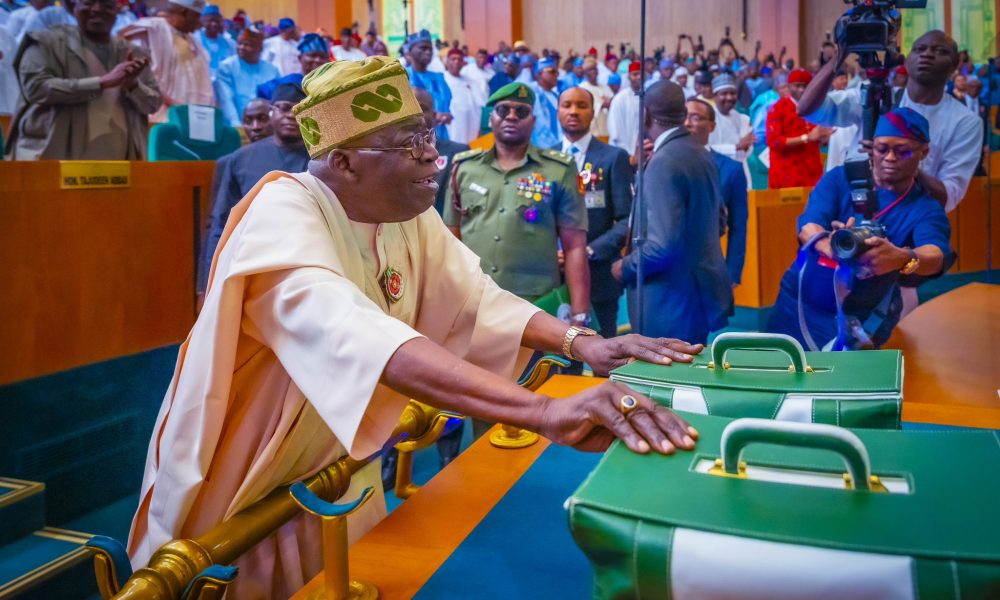
According to media reports, President Bola Tinubu is seeking Senate approval for a supplementary external borrowing plan of $20.52 billion and €1.05 billion for the 2026–2027 fiscal period. The proposed financing covers infrastructure, power, transportation, healthcare, education, agriculture, water supply, security and employment generation. Senate President Godswill Akpabio has referred the request to the relevant committees for consideration.
The central issue in the President’s proposed external borrowing is not simply whether Nigeria needs more infrastructure. It is whether the government can demonstrate that the additional debt will generate sufficient economic and social returns to justify its cost, given the country’s existing debt obligations, foreign-exchange pressures and competing demands on public revenue.
This article thus examines the arguments for and against the proposed borrowing, with emphasis on the information the Senate should require before reaching its decision.
Nigeria’s infrastructure deficit is real. Its need for reliable electricity, efficient transport networks, better-equipped hospitals, quality education and improved security is beyond dispute. But so is the country’s mounting public debt and the pressure that debt servicing places on government revenue.
That is the dilemma confronting the National Assembly following President Bola Tinubu’s request for Senate approval of a supplementary external borrowing plan of $20.52 billion and €1.05 billion for the 2026–2027 fiscal period.
According to the report before the Senate, the proposed loans would finance projects in infrastructure, power, transportation, healthcare, agriculture, education, water supply, security and employment generation. The President maintains that the borrowing would help bridge Nigeria’s infrastructure financing gap.
The question is not whether Nigeria needs development financing. It is whether the proposed borrowing, on terms yet to be fully disclosed in the report, represents a financially sustainable way to achieve it.
A debt burden that cannot be ignored
Nigeria’s public debt has increased substantially in recent years. The Debt Management Office reported total public debt of approximately ₦159.28 trillion at the end of December 2025, comprising ₦84.85 trillion in domestic debt and ₦74.43 trillion in external debt. By June 2026, the Federal Ministry of Finance’s macroeconomic dashboard reported total public debt of approximately ₦166.7 trillion. These figures cover the relevant federal and subnational government debt categories, although exchange-rate movements also affect the naira value of external obligations.
The proposed borrowing must be assessed against this background. At the Central Bank of Nigeria’s September 2025 exchange rate of ₦1,474.85 to the dollar, the dollar component alone would have been equivalent to approximately ₦30.3 trillion. The euro component would add another substantial amount, depending on the applicable exchange rate. This is an illustration, not the naira cost of a loan that has yet to be fully priced.
The combined proposal is therefore not a marginal addition to Nigeria’s financing requirements. Its ultimate impact would depend on how much is actually drawn, the disbursement schedule, interest rates, maturity periods, grace periods and the currency composition of the individual facilities.
Debt servicing is the real pressure point
Debt sustainability is often discussed in terms of public debt as a percentage of gross domestic product. That measure matters, but it does not tell the whole story.
A country may have a relatively moderate debt-to-GDP ratio and still struggle to meet its obligations if government revenue is weak. Nigeria’s narrow revenue base makes this distinction particularly important.
The International Monetary Fund’s June 2026 assessment estimated that federal government interest payments would absorb 53.2 per cent of federal revenue in 2025 and projected a ratio of 53.7 per cent for 2026. In other words, more than half of federal revenue could be consumed by interest payments alone, before considering the principal repayments and other demands on the budget. The IMF also estimated Nigeria’s consolidated fiscal deficit at 4.4 per cent of GDP in 2025. .
This is where the debate over additional borrowing becomes critical. Every naira committed to debt service is a naira that cannot simultaneously finance teachers, healthcare workers, security operations, roads or social protection.
The Federal Government’s 2026 budget, as presented by the President in December 2025, projected revenue of ₦34.33 trillion, expenditure of ₦58.18 trillion and debt servicing of ₦15.52 trillion. The projected deficit was ₦23.85 trillion, equivalent to 4.28 per cent of GDP. Debt servicing alone represented roughly 45 per cent of projected revenue. .
These figures demonstrate why the Senate must look beyond the size of the proposed loan to its implications for future budgets.
The case for borrowing
There is, nevertheless, a credible economic argument for external borrowing.
Nigeria cannot eliminate decades of infrastructure deficiencies through annual budget allocations alone. Inadequate electricity supply raises production costs, transport bottlenecks increase the price of goods, and poor healthcare and education weaken productivity. Well-selected investments can expand economic activity, create employment, improve public services and generate additional tax revenue.
External financing can also be appropriate where loans are concessional, carry longer repayment periods and finance projects whose economic benefits extend over many years. It may be reasonable to finance a durable railway, electricity transmission network or major water project over time rather than require current taxpayers to bear the entire cost upfront.
The IMF estimated Nigeria’s economic growth at 4 per cent in 2025 and projected growth of approximately 4.1 per cent in 2026. It also identified electricity, agriculture, infrastructure, security and human capital as important priorities for more inclusive growth. .
The implication is not that borrowing is automatically beneficial. It is that carefully selected, economically productive borrowing can support growth and improve the country’s capacity to repay.
However, a loan for a project that remains incomplete, is badly managed or produces little economic value leaves taxpayers with the liability without delivering the expected benefits.
The danger of borrowing without measurable returns
The proposed projects were selected following technical and economic evaluations. That is a useful starting point, but it does not provide the project-by-project information needed to assess their viability.
Which projects will receive the money? How much will each cost? What proportion will go to new projects, and what proportion will complete existing ones? What are the expected completion dates, job numbers and measurable economic benefits? How will the government determine whether the projects are delivering value?
These questions matter because the government has previously acknowledged difficulties in executing capital budgets. In his December 2025 budget speech, President Tinubu said that by the third quarter of 2025, only ₦3.10 trillion—about 17.7 per cent of the 2025 capital budget—had been released, partly because priority had been given to completing projects from the previous budget cycle. .
This is an important warning about implementation capacity. Securing a loan does not automatically produce infrastructure. If disbursement is slow, procurement is inefficient or projects are poorly supervised, borrowing costs may begin accumulating before citizens receive the promised benefits.
There is also the foreign-exchange risk. External debt must generally be repaid in foreign currency. If the naira depreciates significantly, the domestic-currency cost of servicing dollar- and euro-denominated loans increases, even when the original foreign-currency obligation has not changed.
The government therefore needs to establish not only that the projects are worthwhile, but also that the terms of the financing are appropriate for Nigeria’s capacity to repay.
What the Senate should demand
The committees examining the proposal have an opportunity to make the borrowing debate more transparent and evidence-based.
First, they should obtain a complete schedule of the proposed facilities, including lenders, interest rates, fees, maturities, grace periods, repayment currencies and expected annual debt-service obligations.
Second, the government should publish a detailed project allocation showing costs, implementing agencies, procurement arrangements, completion targets and measurable economic returns. Projects should be prioritised according to their expected public benefits, not merely the amount of financing available.
Third, the Senate should request an updated debt-sustainability assessment that incorporates the proposed facilities, existing repayment commitments, realistic revenue projections and possible exchange-rate shocks. The assessment should show how the additional obligations would affect debt service and the funding available for essential services.
Fourth, approval should be accompanied by enforceable reporting requirements. Nigerians should be able to track how much is borrowed, how much is disbursed, what has been completed and whether the promised benefits are materialising. Independent audits and public disclosure of project performance would strengthen accountability.
Finally, the government should explain what it is doing to expand non-oil revenue, improve tax compliance, reduce waste and strengthen the execution of existing capital budgets. Borrowing cannot indefinitely substitute for a stronger revenue base.
Conclusion: The terms matter as much as the money
The Senate’s decision should not be reduced to a choice between supporting development and opposing borrowing. Both the infrastructure deficit and the fiscal risks are real.
The President’s argument is that external financing can accelerate investment and address critical national needs. The countervailing concern is that additional debt could intensify pressure on public finances if the projects fail to generate sufficient returns or if repayment terms prove costly.
The information in the report establishes the proposed amount and broad sectors of expenditure, but it does not disclose enough detail to determine the full cost, affordability or likely returns of the individual loans.
The relevant test is therefore whether the government can demonstrate, with transparent figures and credible safeguards, that the proposed facilities are affordable, properly structured and linked to projects that deliver measurable benefits.
For Nigerians, the ultimate measure of success is not how much the government borrows or how many projects it announces. It is whether the resulting infrastructure works, businesses become more productive, jobs are created, public services improve and the country’s capacity to repay its obligations grows.
The Senate’s scrutiny should make those outcomes central to its consideration of the borrowing plan.